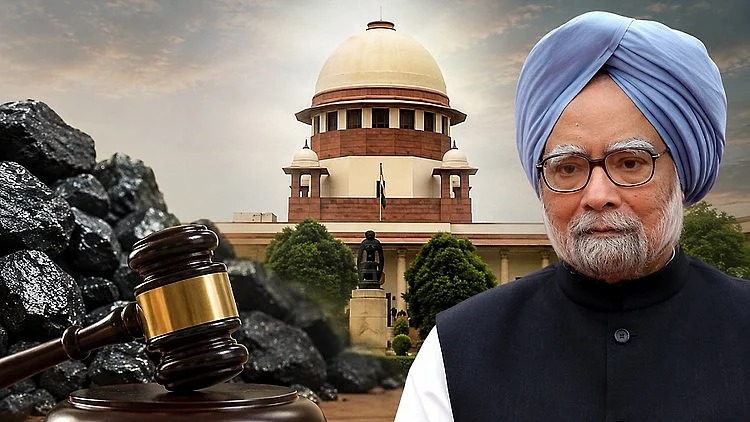
Supreme Court posthumously cleared Manmohan Singh in the Talabira-II coal allocation case.
The bench accepted CBI closure reports and overturned the 2015 summons.
Singh had challenged allegations linking him to Hindalco’s 2005 coal block allocation.
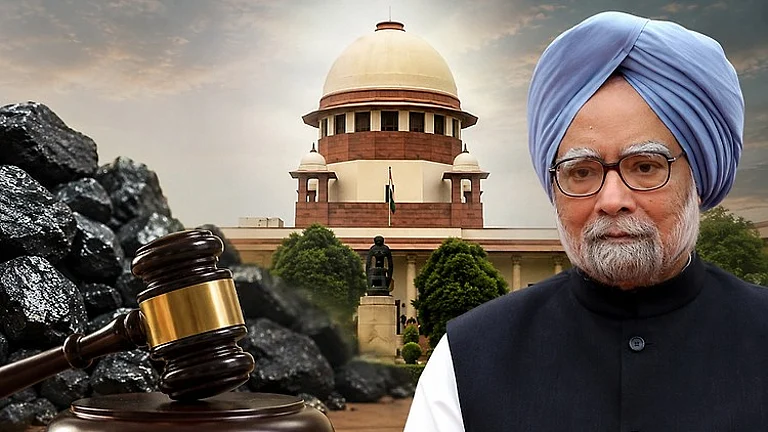
The Supreme Court on Wednesday posthumously cleared former Prime Minister Manmohan Singh in the Talabira-II coal block allocation case, setting aside a 2015 trial court order that had summoned him as an accused despite two closure reports filed by the Central Bureau of Investigation.
A three-judge bench comprising Chief Justice of India Surya Kant and Justices Joymalya Bagchi and V Mohana said there was no adequate basis for the Special CBI Court to reject the investigating agency's conclusions and proceed against Singh.
“Having regard to the relevant parameters consistently laid down by this court on acceptance of reports of the investigating agency, we are satisfied that there was no cogent reason for the learned special judge to turn down the closure reports of the CBI and take cognisance,” the bench held.
Singh died in December 2024, while his challenge to the 2015 summons was still pending. The court noted that the appeal could technically have been closed as infructuous after his death but decided to examine the legality of the order against him.
“Due to the unfortunate demise of the appellant, this appeal could be disposed of as infructuous. But with a view to consider the aspect of the learned special judge taking cognizance and summoning the appellant, we have gone through both closure reports filed by the CBI,” the order said.


What Was The Talabira-II Coal Block Case?
The case arose from the allocation of the Talabira-II coal block in Odisha in 2005, when Manmohan Singh was Prime Minister and also held charge of the coal ministry.
The dispute centred on the decision to allocate coal resources to Hindalco Industries, part of the Aditya Birla Group. The Screening Committee had initially recommended the block for a public sector company, but Hindalco later became part of the allocation arrangement.
The CBI examined whether the change in allocation involved criminal conspiracy, abuse of official position or an improper benefit to a private company.
After investigating the matter, however, the agency filed two closure reports, concluding that there was not enough evidence to prosecute Singh.
How Was The Case Linked To Coalgate?
The Talabira-II matter emerged from the broader coal block allocation controversy, widely referred to as “Coalgate”.
The controversy involved allocations of coal blocks made over several years without competitive auctions. The Supreme Court in 2014 found that the process followed for a large number of allocations was arbitrary and legally flawed, later cancelling most of the blocks concerned.
The judgment led to several separate CBI investigations into individual allocations to determine whether irregularities also amounted to criminal wrongdoing. Talabira-II was one such investigation.
Why Was Manmohan Singh Summoned Despite CBI Closure Reports?
In March 2015, Special CBI Judge Bharat Parashar rejected the agency's closure reports and summoned Singh, former coal secretary PC Parakh, industrialist Kumar Mangalam Birla and others.
The trial court took the view that Singh, as coal minister at the time, was directly involved in the decision-making process and that there was enough material to examine whether his approval benefited Hindalco.
The court alleged that the decision had enabled undue gains for the company and affected the interests of a public sector undertaking.
Singh rejected allegations of criminality and maintained that the coal allocation was an administrative decision taken under the policy framework prevailing at the time.
Who Else Was Accused?
Apart from Singh, the trial court summoned Kumar Mangalam Birla, former coal secretary PC Parakh, Hindalco Industries and company executives B Shubhendu Amitabh and D Bhattacharya.
The Special Court had taken cognisance of alleged offences including criminal conspiracy and criminal breach of trust, along with provisions of the Prevention of Corruption Act.
What Happened After The 2015 Summoning Order?
Singh moved the Supreme Court soon after the March 11, 2015 order.
On April 1, 2015, the apex court stayed the summons and all consequential proceedings against him. His challenge, however, remained pending for more than a decade.
During the latest hearing, senior advocate Kapil Sibal, appearing for Singh's legal representatives, argued that the adverse observations against the former Prime Minister should be removed.
“One of the cases concerns Dr Manmohan Singh. We want the adverse comments and remarks against him to go. The trial court has imposed vicarious liability on him and summoned him despite two closure reports for want of evidence,” Sibal submitted.
Senior advocate Abhishek Manu Singhvi also urged the court to “efface” the remarks recorded against Singh.
What Does The Latest Judgment Mean?
The Supreme Court has now set aside the trial court's March 2015 order as far as Singh is concerned and accepted the CBI's closure reports.
The decision gives Singh a posthumous legal vindication and removes the adverse findings that had remained against him for more than a decade.
However, the ruling does not automatically terminate all proceedings involving the other accused. During the hearing, the CBI pointed out that separate legal issues concerning other individuals may still survive and could require independent consideration.
For Singh, though, the Supreme Court's ruling brings the Talabira-II chapter to a definitive close.
Congress Leaders Welcomes Supreme Court Verdict
The Supreme Court’s decision drew reactions from Congress leaders, who described the ruling as a vindication of Manmohan Singh and used it to target the BJP over the political controversy surrounding the coal allocation cases.
Congress MP Pawan Khera took aim at the BJP government, saying, "As is now abundantly clear, 'India Against Corruption' was, in fact, 'Corruption Against India.'"
Senior advocate Kapil Sibal, who represented Singh’s legal side in the matter, also welcomed the verdict.
"A moment of great satisfaction for Dr Singh’s family, well wishers and for me personally. The cognisance taken by the special court was set aside today by the Supreme Court. This is a vindication of his righteousness," Sibal said in a post on X.