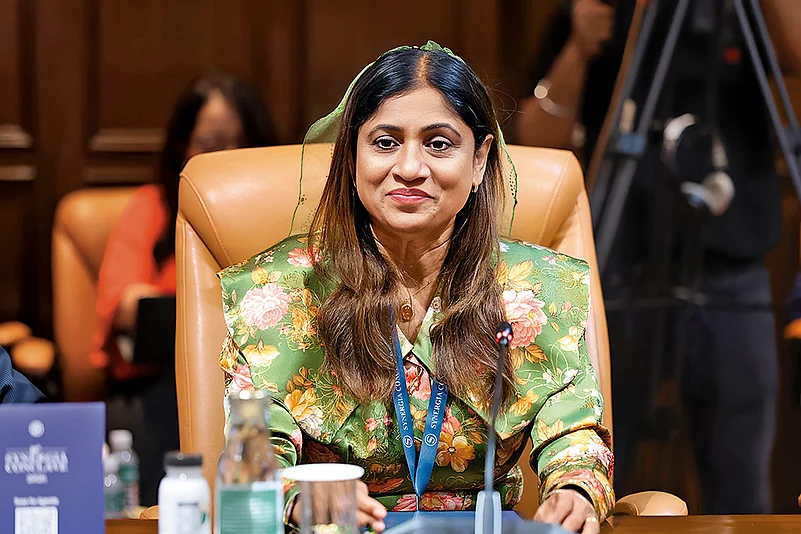
What factors contributed to the youth-led protests and the ‘India Out’ campaign in the Maldives between 2023 and 2025?
There were several factors, which included economic inequalities and limited employment opportunities. There was also a growing public concern about corruption, governance, accountability and the ineffectiveness of the existing political institutions to respond to people’s grievances.
Concerns about national identity and the increasingly polarised nature of political discourse also played a role. Narratives that portrayed political opponents as being against Islam contributed to divisions within society and heightened political tensions. Social media further enabled young people to mobilise rapidly and amplified competing political narratives.
In the case of the ‘India Out’ campaign, concerns about national sovereignty and the perceived presence or role of foreign military personnel became important issues. But at the same time, the campaign took place in a very charged political environment, where these concerns were strongly amplified through political mobilisation and nationalist rhetoric. So I think it is important to separate genuine public concerns about sovereignty from the political narratives that may have shaped or intensified those concerns.
Did the Maldives government misread the mood among young people by failing to keep a closer ear to the ground?
To some extent, yes. I think the government may have underestimated the depth of frustration among young people, particularly over economic pressures, the lack of opportunities and concerns about governance and accountability. When a government does not engage meaningfully with young people or listen closely to their concerns, a disconnect can develop. And today’s young people are politically aware, well-informed and very vocal. So, I think governments need to be much more attentive to what young people are saying and feeling before that frustration builds up.


What indicators can help distinguish a protest reflecting a genuine public concern from one that is more short-lived or narrowly driven?
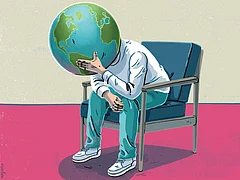
I feel a protest is more likely to reflect genuine public concern when it has broad and sustained participation, when it resonates with different sections of society and when it is driven by clearly articulated grievances rather than simply being a reaction to one particular political moment.
I believe governments should objectively look at the underlying issues. They should directly engage with the protesters and with the wider community and use tools such as independent public consultations, surveys and established institutional mechanisms to understand what people are really concerned about. Protests should not simply be dismissed as being politically motivated.
When governments do not engage or respond through credible institutions, protests can become a democratic warning signal.
How do the demands of youth movements develop over time and what approaches can governments adopt to engage with protesters early on?
Youth movements often begin with specific grievances, but can broaden into wider demands for accountability, political reform and social change as more people get involved. Governments should engage early through genuine dialogue, youth consultations, accessible institutional channels and visible responses to legitimate concerns—rather than waiting until the frustration escalates into mass protests.
Drawing on the recent experiences in the Maldives and India, what role can dialogue, public consultation and institutional mechanisms play to address youth grievances and how do these interact with the right to peaceful protests?
Dialogue, public consultations and strong institutional mechanisms can provide young people with meaningful avenues to express their grievances and influence policy before frustration escalates into street protests. However, these mechanisms should complement—not replace—the right to peaceful protests. When governments listen, engage and respond through credible institutions, protests can become a democratic warning signal rather than a crisis.
How has social media shaped the mobilisation of young protesters in both countries and how can governments balance democratic freedom with public order?
Social media has made mobilisation faster, more decentralised and more powerful by allowing young people to share their grievances, organise protests and reach large audiences instantly.
Governments must, therefore, protect freedom of expression and peaceful protests while addressing misinformation, hate speech and genuine threats to public safety—without using public order concerns as a pretext to suppress legitimate dissent.
MORE FROM THIS ISSUE

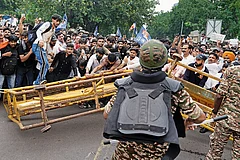
South Asian countries have experienced a number of major protest movements in recent years, with some leading to significant political changes. To what extent do you believe external actors have played a role in influencing or shaping these movements?
There is certainly a possibility that external actors can influence protest movements through funding, media narratives, diplomatic pressure or information campaigns. But I think it is important to not overstate their role.
In most cases, the underlying grievances are domestic. External actors may amplify or exploit existing discontent, but ultimately the scale and sustainability of a protest movement depends on whether there is genuine public frustration and whether the domestic political conditions are conducive to the mobilisation of people.
(This story appeared in Outlook magazine’s August 17 issue, 'Parliament on Street', which takes an incisive look at the student protests against recurring examination paper leaks, the zing of Gen-Z politics and the Jantar Mantar protest at Delhi which triggered a strong response all across India, sending out a clear reminder that while governments are formed in Parliament, democracies remain alive on the streets)