In December 1971, a Pakistani submarine called PNS Hangor attacked INS Khukri off the Gujarat coast and sent the frigate to the bottom of the Arabian Sea with 18 officers and 176 sailors on board. It remains the only Indian warship lost in combat. Fifty-five years on, the name ‘Hangor’ is back in Indian naval conversation. This time, it is attached not to one ageing diesel boat but to a new class of Chinese-built, air-independent propulsion (AIP) submarines that Pakistan is inducting at a pace India has not matched in decades.
This is the uncomfortable backdrop against which India is finally closing in on Project-75 India (P-75I), the six-submarine, AIP-equipped construction programme that has spent more years in negotiation than most of the boats it will build will spend at sea. Whether New Delhi grasps this moment or lets it slip, as it has before, will shape the underwater power balance of the Indian Ocean for a generation.
Pakistan’s Undersea Leap
The Pakistan Navy commissioned PNS Hangor, the first of a new Hangor-class boat, on April 30, 2026, at a ceremony in Sanya, China, attended by Pakistan’s president, Asif Ali Zardari. The boat carries 533mm torpedo tubes and, crucially, an AIP system that lets it stay submerged for weeks by recharging its batteries without surfacing or snorkelling.
Three sister boats, Shushuk, Mangro and Ghazi, have already been launched at the Wuchang yard in Wuhan, with four more to be assembled in Karachi under a 2015 technology-transfer deal worth an estimated $5 billion, taking the class to eight submarines by around 2028, a fleet that will push Pakistan’s tally of AIP-equipped boats past India’s own.


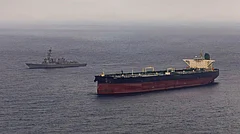

A fortnight after commissioning, PNS Hangor made an operational port call at Kota Kinabalu in Malaysia, alongside the corvette PNS Taimur, on its way back from the South China Sea. A submarine capable of an Indo-Pacific transit so soon after induction is not a coastal-defence platform, it is a statement of reach.
The Eastern Seaboard Question
The temptation in New Delhi is to file the Hangor class under “western seaboard problem” and move on, since the traditional theatre for India-Pakistan naval friction has always been the Arabian Sea. That temptation deserves to be resisted. Pakistan’s Babur-3, a submarine-launched cruise missile with a declared range of around 450 km and a nuclear-capable payload, has been tested from underwater platforms since 2017 and is the weapon most likely to arm the Hangor fleet.
To strike India’s eastern seaboard, say, a target near Visakhapatnam, a Hangor boat sailing from Karachi would need to cover a transit of well over 2,000 km, thread chokepoints around Sri Lanka and hold position undetected for weeks on a platform whose AIP endurance, however improved, still measures itself in weeks rather than months. Several defence analysts have reasonably argued that a credible submarine-launched strike on India’s east coast remains a distant prospect. But a submarine need not fire a missile to change India’s calculations, it merely has to be capable of being there, and the Sabah port call proved the Pakistan Navy can sustain a Hangor-class boat far from home waters for weeks at a stretch.
That forces India’s Eastern Naval Command, no less than its western counterpart, to plan for a boat that could loiter off the Andaman chain or the approaches to Vizag in a long crisis, stretching an anti-submarine network never built for a two-front undersea threat. Deterrence rests on capability an adversary might use, not only on capability it is certain to.
A Long Time in the Making
P-75I traces its lineage to the same 1999 Cabinet Committee on Security plan that produced the six Kalvari-class Scorpenes under the original Project-75, delivered between 2017 and 2025 with over 60 per cent imported content. P-75I was meant to be the second, more indigenous production line. A request for proposal went out only in July 2021, and after Russia, France’s Naval Group and Spain’s Navantia all fell away over technology-transfer terms or an unproven AIP system, Germany’s Thyssenkrupp Marine Systems (TKMS), paired with Mazagon Dock Shipbuilders (MDL), emerged as the sole bidder.
The Project-75I programme is now valued in the region of Rs 70,000-90,000 crore.
Cost negotiations concluded earlier this year, with the programme now valued in the region of Rs 70,000-90,000 crore, for six submarines built around an enlarged version of TKMS’ Type 214 design. An intergovernmental agreement was signed during a visit to India in January by Germany’s chancellor, Friedrich Merz.
Germany’s defence minister, Boris Pistorius, has since indicated a contract signature within months, following his April meeting in Kiel with his Indian counterpart, Rajnath Singh. What remains is a final technical sign-off on the depth of technology transfer on offer, before the Cabinet Committee on Security gives its approval.
There is a legitimate frustration in noting that a programme conceived in 1998 is only now approaching a signature, with the first submarine not expected to enter service before the early 2030s. But frustration is a poor substitute for urgency, and urgency is precisely what the Hangor-class timeline now demands of Indian decision-makers. India currently operates with 19 submarines, including three nuclear-powered ones.
What Six Subs Could Buy India
If P-75I is signed without further slippage and its six boats join the fleet roughly on schedule, the payoff extends well beyond a bigger number on a naval order of battle. It restores AIP parity, or something close to it, with Pakistan at precisely the point the older Sindhughosh and Shishumar-class boats, several now pushing past 25-30 years of service, are due for retirement rather than another life-extension.
It also arrives at a moment when the value of that undersea deterrent has already been tested. Following the April 2025 Pahalgam terror attack, the Navy surged nearly 40 warships and the INS Vikrant carrier battle group during Operation Sindoor, with submarines deployed covertly along the western seaboard credited, by the Navy’s own account, with helping pin the Pakistan Navy inside Karachi harbour for the operation’s duration. A fleet that thin should not have to be stretched that far again.
There is a wider Indian Ocean dimension too. China’s submarine fleet is expanding faster than any neighbour’s, and its presence in the region, from access arrangements across the littoral to more frequent submarine sightings, has moved from theoretical worry to fact.
India cannot out-build China, but it can, if P-75I and its successor projects land on schedule, preserve the home-water advantages of geography, familiarity and layered anti-submarine coverage that still favour the Navy in the waters that matter most to it. With around 88 per cent of India’s energy needs arriving by sea, that is the difference between secure sea lanes and a vulnerability an adversary could choose to exploit.
The Real Prize is Self-reliance
Buried inside the P-75I contract structure is arguably its most consequential feature. Under the “strategic partnership” model, indigenous content starts at 45 per cent on the first boat and is contracted to climb to 60 per cent by the sixth, with TKMS obliged to transfer genuine design and manufacturing know-how rather than merely supervise assembly, the failing that limited how much India actually absorbed from the original Scorpene programme.
That distinction matters because of something India’s own naval planners appear to have only recently connected: there is 60-70 per cent commonality between the systems that power a conventional submarine and a nuclear one, in hydraulics, fire control, auxiliary power and hull materials among them. The industrial base built for the Arihant-class ballistic-missile boats and the P-75I programme are not, it turns out, separate worlds. Feeding one strengthens the other and both feed into Project-76, the dozen wholly Indian-designed conventional submarines the Navy’s submarine design group hopes to start ordering around 2028.
The fate of Project-75 I will decide who commands the silence beneath the Indian Ocean.
Handled well, P-75I is less a one-off purchase than a bridge, the last generation of submarines India needs to import the recipe for before it can reliably write its own. Handled badly, as the Scorpene programme was in parts, it becomes another 20-year exercise in importing steel with an Indian flag painted on it.
The ripple effects of building six submarines in Mumbai extend well past MDL’s own gates. Steel Authority of India, working from its Bokaro and Rourkela plants, has spent nearly two decades perfecting DMR-249A, the specialised, corrosion-resistant hull-grade steel developed jointly with the Defence Metallurgical Research Laboratory and already supplied in thousands of tonnes for frigates, corvettes and survey vessels. A programme the size of P-75I gives that capacity reason to expand rather than merely tick over.
Exide Industries has already begun supplying indigenously manufactured submarine batteries for the in-service Scorpene fleet, units engineered to withstand vibration, deep discharge cycles and the unforgiving thermal environment of a sealed hull, described by the industry itself as groundwork for P-75I rather than a one-off achievement. Bharat Electronics and a clutch of private defence-electronics firms stand to gain similarly on sonar suites, combat management systems and electronic-warfare equipment, all named by naval planners as the next frontier for indigenisation.
Perhaps the least glamorous beneficiary is also the most important: the small and medium enterprises supplying forgings, cabling, precision components and sub-assemblies. MDL’s own shipbuilding leadership has pointed to more than 200 such firms already contributing to its naval projects, a fraction of the roughly 16,000 MSMEs woven into India’s wider defence-manufacturing base. A contract of P-75I’s scale, sustained over a decade, is exactly the kind of long-horizon order book that lets smaller Indian manufacturers invest in capability rather than survive contract to contract.
The Hour is Late But Not Lost
None of this changes the arithmetic that ought to unsettle South Block. Pakistan will likely have eight AIP-equipped submarines at sea before India commissions its first P-75I boat. China’s undersea fleet will keep growing regardless of what New Delhi decides this year. And a contract signature, whenever it finally comes, only starts a construction clock that runs the better part of a decade before the first hull touches water.
But the story of India’s submarine arm has never really been about whether it can build. The Arihant-class boats prove it can, when the political will exists. But can that will be sustained long enough and applied broadly enough to turn one contract into a functioning industrial habit?
P-75I will not by itself close the gap that Pakistan and China have opened. Signed soon, built on schedule and treated as the first chapter of an indigenous submarine industry rather than its final act, it can still ensure that the next time a name like Hangor turns up in Indian naval history, it is the Indian Navy holding the advantage of silence, not the other way round.
Anish Kumar is Strategic Affairs editor, Outlook

MORE FROM THIS ISSUE





(This story appeared in Outlook magazine’s August 17 issue, 'Parliament on Street', which takes an incisive look at the student protests against recurring examination paper leaks, the zing of Gen-Z politics and the Jantar Mantar protest at Delhi which triggered a strong response all across India, sending out a clear reminder that while governments are formed in Parliament, democracies remain alive on the streets)