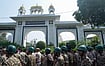
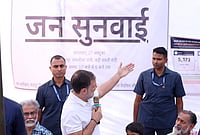
The Delhi Police wanted Sonam Wangchuk to end his fast.
The Indian administrative system needs to respect real democracy. This is the voice of a person using his own body. It is a rightful demand for future generations, mainly for students. They are the pillars of democracy.
When someone individually fights against a wrong system using his own body, the democratic government needs to respect it. Otherwise, India’s democracy will be seen poorly by the outside world. Before the situation becomes worse, the government should initiate a dialogue and solve the problem. How hard can it be to address the demand?
I feel sorry for him. Delhi is the capital city of India. Millions of students are studying here. This is the right opportunity for young people to contribute, to show civic sense and to stand by him physically.
You undertook a very long hunger strike and were force-fed. How do you feel when the government attempts to force-feed someone who is protesting in this way?
When Anna Hazare used the same tactic, the government respected him. I feel there is some discrimination. I feel a little displeased. Wangchuk is not asking for something for his personal gain. For so long—and not just in this case—he has repeatedly put himself in such a condition. We are all responsible for this because we cannot do this alone. I just feel sorry, that’s all.


The difference in my case was that people lacked civic sense. They wanted to place the responsibility and burden only on me.
Do you think such protests can influence the government? Do they still have relevance today?
The Union government removed the provision that treated an attempt to die by suicide as an offence under the Indian Penal Code [now the Bharatiya Nyaya Sanhita]. Then why are the security forces acting in such a harsh way? They are doing it in a dirty way, wearing civilian dress and carrying out such actions without transparency. The government needs to respect demonstrations as people’s rights. The right to express one’s voice and the right to dissent must be respected.
In Wangchuk’s case, the Delhi Police said they acted based on a Delhi High Court order. The order, however, only said that intervention was required if his condition became very serious. Do you think the courts should intervene in such a situation?
I think the high court is concerned about his health. But the police, if they have a duty to perform, need to do it openly and transparently. That is what I am saying.
Does this remind you of your own struggle? Do you think anything has changed since your hunger strike or has the system remained the same?
Yes, it does. The system and the way of dealing with protesters are still the same. The difference in my case was that people lacked civic sense. They wanted to place the responsibility and burden only on me. They wanted me to handle everything individually. From time to time, they supported me, but the moment when I was released without the nasal tube and my body had deteriorated, no one wanted to help seriously.
The right approach at the right moment was missing. If it had happened in Delhi, at a place like Jantar Mantar, it would not have been just about keeping someone alive in a hospital like it happened with me. There would have been real public support, like the support Mahatma Gandhi received.
MORE FROM THIS ISSUE


Now that Wangchuk was hospitalised and later released, what do you think is the future of this movement? Many people had begun speaking up because of his presence. How do you see the protest going forward?
Somehow, the Union government sees him differently. They are not giving him the kind of respect that Hazare received. With this kind of treatment, I do not know what will happen, but I want to know what the youth think. As students and as a young generation, this concerns their future. What Wangchuk is doing is not only about Ladakh. It is about the future of the whole country and its youth.
What are the young people doing? I know they do not want to miss their classes or lose their precious time. But this is the right moment and the right opportunity for them to come forward and show what they are learning. Let them do something. Stand by him. Don’t leave him alone. Take the movement forward. The youth are very important. Just keep democracy alive.
(This story appeared in Outlook magazine’s August 17 issue, 'Parliament on Street', which takes an incisive look at the student protests against recurring examination paper leaks, the zing of Gen-Z politics and the Jantar Mantar protest at Delhi which triggered a strong response all across India, sending out a clear reminder that while governments are formed in Parliament, democracies remain alive on the streets)