US tightened its naval blockade, boarding and redirecting vessels heading towards Iran.
CENTCOM inspected one tanker and disabled another during blockade enforcement operations.
Strait of Hormuz tensions intensified as US expanded maritime restrictions on Iran.
America is stepping up enforcement of its naval blockade against Iran. US Central Command (CENTCOM) announced the heightened restrictions, as reported by Times of India.
Under the blockade, US forces have redirected 12 commercial vessels. CENTCOM stated that American forces also boarded two tankers and disabled two ships that allegedly ignored repeated warnings while attempting to reach Iran.
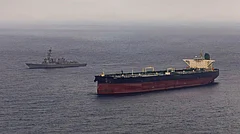
These operations underscore Washington's increasingly assertive approach to enforcing maritime restrictions on Iran. US naval forces are maintaining a visible presence across key shipping lanes to monitor vessel movements and carry out inspections.
Tankers Boarded and Disabled
On July 25, US forces conducted a verification boarding of the Comoros-flagged oil tanker M/T Charminar in the Arabian Sea. CENTCOM stated that the operation aimed to ensure the vessel complied with the blockade before allowing it to continue. The inspection concluded without incident, and the tanker resumed its journey.

On July 24, US forces disabled the Mozambique-flagged M/T Lavine in the Gulf of Oman. The vessel had allegedly ignored repeated warnings and made several attempts to continue towards Iran. CENTCOM confirmed that the M/T Lavine is no longer transiting to Iran following the operation.


Strait of Hormuz Tensions
The Arabian Sea and the Gulf of Oman form a strategic gateway to the Strait of Hormuz, one of the world's busiest energy chokepoints. A substantial share of global crude oil exports passes through these waters.
CENTCOM stated in its latest operational update that US forces remain "highly vigilant, focused, lethal and ready".


.jpg?auto=format%2Ccompress&fit=max&format=webp&w=376&dpr=2.0)