At least 18 migrants died while attempting to cross from Morocco into Spain’s Ceuta territory.
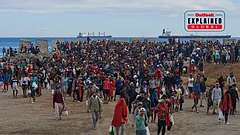
Thousands of migrants entered Ceuta as border security was overwhelmed and humanitarian concerns grew.
Spain sought emergency measures as authorities investigated the sudden surge in crossings.
At least 18 migrants have died while attempting to reach Spain’s territory of Ceuta after thousands crossed the border from Morocco in a sudden surge that overwhelmed the enclave and triggered a humanitarian crisis along the frontier.
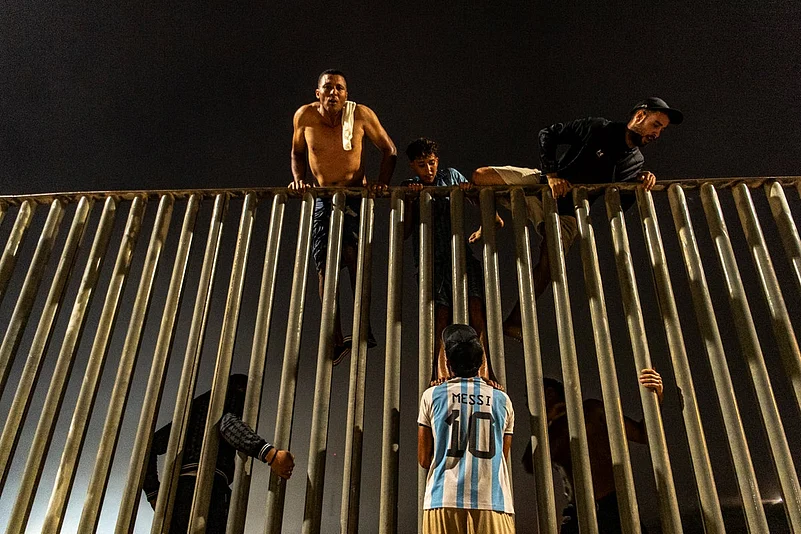
The deaths came as migrants, including unaccompanied children, families and mostly young men, attempted to enter Ceuta by swimming across waters near the border or crossing the breakwater fence at Tarajal beach. Associated Press reported that many of those who died drowned, while others were killed in a stampede during attempts to cross the border area.
The crisis escalated on Thursday and continued overnight after thousands of migrants breached the frontier with Morocco and entered Ceuta. Spain’s state broadcaster RTVE showed images of burned cars on the Moroccan side of the border following reported clashes.
Rachid Sbihi, who leads a local workers association representing Civil Guard officers, described the situation as a “serious humanitarian crisis”, saying thousands of migrants, including unaccompanied children, were sleeping in parks and on pavements, while others were wandering through the streets.
“People are still entering. The reinforcements that have arrived are only helping the injured and other humanitarian efforts,” he said. “It’s chaotic.”


What is Ceuta and why does it belong to Spain?
Ceuta, which sits on a historic isthmus on Africa’s northern coast, has been a Spanish possession since 1580. Its population includes Christians and Muslims, Spanish and Moroccan residents, and day workers who cross the border. Behind the border fence, migrants from across Africa continue attempting the route in search of a better life in Europe.
Why are people fleeing Morocco?
Among those who died were migrants who attempted the crossing by sea. Ahmed Karim, a 33-year-old Moroccan, said he entered Ceuta because of the lack of jobs in Morocco.
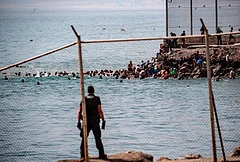
To reach Ceuta, located on the northern African coast, migrants often swim from the Moroccan town of Fnideq, covering around 3 miles (5 kilometres) to reach Spanish territory. Others attempt the crossing from the nearby town of Belyounech, where the distance is shorter.
On Friday morning, the waters near the border fence were filled with buoys as crowds of mostly young men gathered near the crossing point. Video footage showed groups of migrants, mainly Moroccans, walking across breakwaters and onto local roads. According to Associated Press, most appeared to be young men, but women and small children were also among those attempting to enter. Some migrants were also trying to return to Morocco, according to a freelance photographer working for the agency.
How has Spain responded?
Spanish Prime Minister Pedro Sánchez was expected to visit Ceuta on Friday morning along with Interior Minister Fernando Grande-Marlaska. French Interior Minister Laurent Nunez said France would strengthen border checks with Spain, writing on X that he had activated the Rapid Intervention Border Force.
Moroccan authorities have not publicly commented on the crossings, and Morocco’s Interior Ministry did not respond to requests for comment.
What triggered the latest migrant surge?
It was not immediately clear what triggered the sudden increase in attempted crossings. Spain is a major arrival point into Europe for migrants seeking better economic opportunities or trying to escape violence in their home countries.
The escalation at the Spain-Morocco frontier followed a rise in migrants attempting to reach Ceuta, mainly by swimming, on Wednesday.
Ceuta authorities had previously linked the increase to a Spanish Supreme Court ruling earlier this month that prevented authorities from immediately returning migrants who arrive by sea without due process. The ruling does not apply to migrants entering Spain by land, including those climbing over the border fence.
However, some activists in Morocco questioned whether the ruling was responsible for the surge, arguing that most migrants would likely have been unaware of such legal decisions.
Morocco-Spain border: Why is Ceuta at the centre?
Migrants from Morocco also attempted to cross into Melilla, Spain’s other territory in North Africa.
Associated Press reported that there was widespread disorder in Bni Nsar, the Moroccan town bordering Melilla, where migrants clashed with police, threw rocks and set police vehicles on fire, according to local media and rights groups. Security forces were reportedly injured and dozens of people attempting to cross were arrested.
Omar Naji of the local branch of the Moroccan Association of Human Rights, which monitors migration attempts and helps families identify bodies, said attempts to cross into Melilla had already been recorded in recent weeks. He said the latest increase appeared to have been driven by the situation in Ceuta.
Like Ceuta, Melilla is a Spanish autonomous city on the North African coast. Many Moroccans consider both cities to be occupied territory.
Migrants frequently attempt to enter Melilla by climbing the 19-foot (6-metre) fence separating the enclave from Morocco. In 2022, thousands of sub-Saharan migrants attempted to cross the border, resulting in dozens of deaths in one of the deadliest incidents on the route.
Juan Jesús Vivas, the head of Ceuta’s regional government, had asked Spain’s national government to declare an emergency, citing national security concerns. He called for additional police forces and the deployment of the army along the border “to guarantee the inviolability of the frontier and citizen safety.”
He had warned that migrant reception centres were already overwhelmed on Wednesday, with hundreds of people sleeping on the streets. Thousands, and possibly tens of thousands, are believed to have arrived since then.
Spain’s Interior Ministry, which tracks irregular migration, did not confirm the number of migrants who entered Ceuta in recent days but said it would publish its next migration report on Monday.
The ministry said legislation covering national emergency declarations does not classify migration flows as a risk to national security. It added that government agencies were “coordinating to respond with speed and efficacy to the situation in Ceuta.”