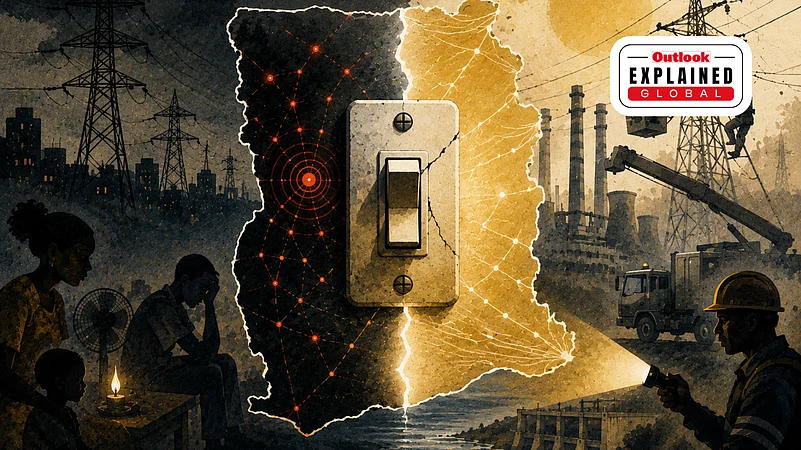
Ghana suffered a nationwide blackout after multiple power plants tripped simultaneously
The outage has revived concerns over the resilience of the country's electricity grid despite recent reforms
Investigators are examining the cause as engineers restore power and assess structural weaknesses
The power disruption that struck Ghana in the early hours of Wednesday, has revived concerns about the resilience of the country's electricity system, despite years of reforms aimed at moving beyond the era of chronic blackouts known locally as "dumsor."
According to the Ghana Grid Company Ltd (GRIDCo), the National Interconnected Transmission System experienced a major disturbance at about 3:11 AM, causing the simultaneous tripping of several generating plants and interrupting electricity supply across the grid. While engineers have begun restoring power and a technical investigation is underway, the incident has once again exposed the vulnerabilities of a system that remains susceptible to large-scale disruptions.
The timing of the outage is notable. Just two days earlier, the International Monetary Fund completed the sixth review of Ghana's Extended Credit Facility programme, highlighting progress in the country's economic reforms while stressing the need for continued structural improvements. Earlier this year, the government also announced that it had cleared $1.47 billion in energy-sector arrears, easing financial pressure on power producers and restoring a World Bank payment guarantee.
Those developments had fuelled optimism that Ghana's electricity sector was entering a more stable phase. Yet for many Ghanaians, the outage revived memories of dumsor, the prolonged electricity crisis that defined much of the last decade and underscored that financial recovery does not necessarily guarantee a more resilient electricity network.



What Triggered The Blackout?
According to GRIDCo, the disturbance began shortly after 3 AM when several generating plants disconnected from the national grid almost simultaneously, interrupting electricity supply.
The company has not identified the affected power stations or disclosed what triggered the initial disturbance. Instead, it has launched a comprehensive technical investigation while activating established restoration procedures.
GRIDCo said engineers and system operators were working with other power-sector stakeholders to restore electricity as quickly as possible without compromising system safety.
Power was restored in phases across affected areas as engineers worked to stabilise the network. Citi Newsroom reported that restoration efforts continued throughout the day.
Until the investigation is completed, it remains unclear whether the outage resulted from equipment failure, transmission instability, operational error or another technical fault.
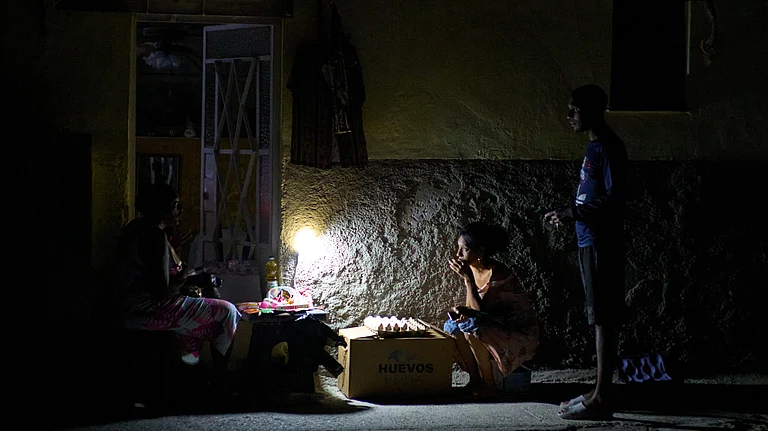
Why Did One Disturbance Cause Such A Large Outage?
Modern electricity grids operate as tightly balanced systems where electricity generation must constantly match demand.
When a major disturbance occurs, such as the sudden loss of a generating unit or instability on a transmission line automatic protection systems disconnect equipment to prevent wider damage. Although these safeguards protect critical infrastructure, they can also trigger cascading failures if multiple generators disconnect within seconds.
GRIDCo's description of the "simultaneous tripping" of generating plants suggests the disturbance spread rapidly through the interconnected network rather than remaining confined to a single facility.
Such cascading failures are uncommon but illustrate how interconnected electricity systems can amplify a single disruption into a nationwide outage.
Has Ghana's Power System Improved?
Despite the blackout, Ghana's electricity network has made measurable progress in recent years.
According to the Energy Commission's 2025 Annual Report, reliability indicators remained within regulatory targets, while the average time required to restore faults improved compared with the previous year. Voltage quality also improved, reflecting greater day-to-day stability across much of the network.
These gains marked a significant departure from the dumsor years between 2012 and 2016, when households and businesses experienced prolonged rolling blackouts driven by fuel shortages, inadequate generation capacity and mounting financial pressures across the energy sector.
Since then, additional generation capacity, improved fuel supplies and financial restructuring have made widespread outages far less common.
The World Bank's Ghana Country Partnership Framework (2022–2026) notes that Ghana now has one of the highest electricity access rates in Sub-Saharan Africa, with policy increasingly focused on improving the sector's financial sustainability, operational efficiency and long-term reliability.

Where Do The Weaknesses Remain?
The latest blackout demonstrates that operational improvements have not eliminated deeper structural vulnerabilities.
The Energy Commission's 2025 Annual Report found that 23.04% of distribution transformers were operating above 70% of their rated capacity—more than double the regulatory benchmark of 10%—highlighting pressure points across parts of the distribution network.
The report also identified continuing challenges including ageing infrastructure, vegetation-related faults and delays in addressing technical compliance issues.
Infrastructure is only one part of the problem. The World Bank has warned that despite increased generation capacity, the long-term sustainability of Ghana's electricity sector remains constrained by the financial health of electricity distributors and broader governance challenges.
Although the Mahama administration announced in January that it had cleared $1.47 billion in energy-sector arrears, helping restore a World Bank payment guarantee, international institutions have continued to stress that financial reforms must be matched by sustained investment in transmission and distribution infrastructure.
Why The Blackout Matters
The significance of the outage extends beyond a single morning without electricity.
It illustrates that while Ghana has made considerable progress since the dumsor crisis, the grid remains vulnerable to disturbances capable of disconnecting multiple generating plants simultaneously.
For policymakers, the investigation is likely to focus not only on identifying the immediate technical trigger but also on whether further investment is needed to strengthen transmission infrastructure, improve system redundancy and reduce the risk of cascading failures.
Its findings could shape the next phase of Ghana's electricity reforms as the country seeks to support economic growth with a more reliable and resilient power system.

What Happens Next?
GRIDCo says restoration efforts remain underway and that engineers are continuing to work with other power-sector institutions to return electricity safely to affected customers. The company has also launched a comprehensive technical investigation to determine the precise cause of the disturbance.
For Ghana, restoring electricity is the immediate priority. The longer-term challenge is ensuring that a single disruption cannot again cascade across the national grid.
Whether the latest blackout proves to be an isolated technical failure or a sign of deeper structural weaknesses will depend on the findings of GRIDCo's investigation.