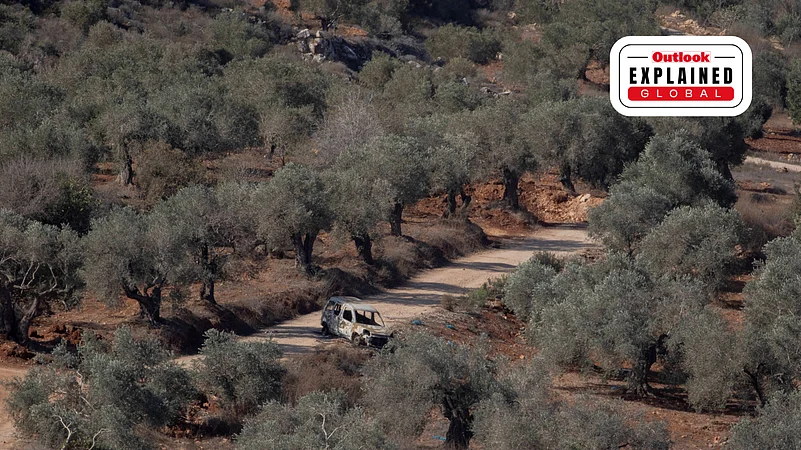
Over 3,000 settler attacks recorded in West Bank between January 2025 and June 2026
Two mosques torched; Palestinian officials describe campaign to intimidate residents
More than 700,000 Israeli settlers live across occupied West Bank and East Jerusalem
The torching of two mosques in the occupied West Bank has once again drawn attention to one of the most volatile aspects of the Israeli-Palestinian conflict: the increasing frequency and intensity of attacks by Israeli settlers on Palestinian communities.
According to the Palestinian news agency WAFA, settlers recently set fire to two mosques in separate villages in the northern West Bank, alongside assaults on homes, farmland, and property, and the establishment of new outposts. Palestinian officials describe this as an organized campaign to intimidate residents and expand Israeli control over occupied territory.
The incidents are not isolated. Data compiled by the United Nations Office for the Coordination of Humanitarian Affairs (OCHA) shows that attacks by Israeli settlers resulting in Palestinian casualties or property damage have risen sharply over the past two years.
Between January 2025 and June 2026 alone, OCHA recorded 3,033 settler attacks that resulted in casualties and/or damage to Palestinian property, alongside eight Palestinian fatalities and 151 injuries directly attributed to settler attacks.
This is unfolding amid Israel's Gaza operations, rising West Bank tensions, and continued settlement expansion. While Palestinian-settler clashes have occurred for decades, rights groups say attacks have escalated in scale and frequency since October 2023, raising concerns about growing instability.

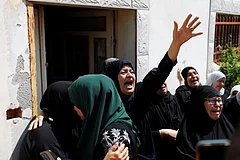


Who Are The Settlers?
Israeli settlers are civilians who live in Jewish settlements established in the occupied West Bank, including East Jerusalem. Israel captured the territory from Jordan during the Six-Day War in 1967 and has since overseen the construction and expansion of hundreds of settlements and smaller settlement outposts.
Today, over 700,000 Israeli settlers live across the occupied West Bank and East Jerusalem. Many settlements are large suburban communities with schools, businesses and public infrastructure connected to Israel proper, while smaller outposts often consist of a handful of caravans or temporary structures built on surrounding hilltops.
The distinction matters: many settlements have received some form of authorization from Israeli governments, while outposts were often built without formal approval before later gaining retroactive recognition or state support. Under international law, though, both are widely considered illegal, since they involve transferring an occupying power's civilians into occupied territory.
The distinction matters: many settlements have received some form of authorization from Israeli governments, while outposts were often built without formal approval before later gaining retroactive recognition or state support. Under international law, though, both are widely considered illegal, since they involve transferring an occupying power's civilians into occupied territory.
Israel disputes that interpretation, arguing that the West Bank is disputed rather than occupied territory and maintaining that the status of settlements should ultimately be resolved through negotiations.
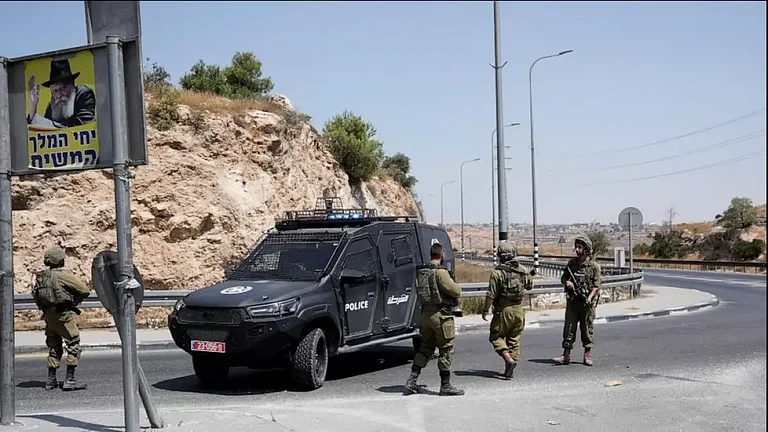
Why The West Bank Matters
Unlike the Gaza Strip, which Israel withdrew from in 2005, the West Bank remains under a complex system of Israeli military occupation established after the Oslo Accords of the 1990s.
The agreements divided the territory into three administrative areas. Area A, comprising the main Palestinian cities, is administered by the Palestinian Authority. Area B is jointly administered by Israel and the Palestinian Authority. Area C, which makes up about 60 per cent of the West Bank, remains under full Israeli civil and military control and contains nearly all Israeli settlements.
Because Area C also includes much of the West Bank's agricultural land, open space and strategic road network, it has become the centre of disputes over settlement expansion, land ownership and access to natural resources. Most violent incidents involving settlers occur either within or around these areas, where Palestinian villages and Israeli settlements often exist in close proximity.
From Settlements To Outposts
Successive Israeli governments have expanded settlements in the West Bank over several decades, though the pace has varied according to domestic political priorities.
Alongside officially recognised settlements, recent years have seen the rapid growth of settlement outposts. These smaller communities are frequently established on hilltops overlooking Palestinian villages and farmland before gradually expanding into permanent settlements.
Palestinian officials say the process often begins with temporary caravans, livestock pens or agricultural projects before roads, electricity and other infrastructure are introduced. Several of the latest incidents reported by WAFA illustrate this trend.
In Salfit Governorate, local authorities said settlers established another outpost near Yasuf, marking the third such outpost in the area within two days. In the northern Jordan Valley, officials reported that Israeli authorities transported additional mobile homes to the Tayasir area as part of preparations for another settlement expansion project. Palestinian officials argue that such developments further fragment Palestinian communities and increase friction between nearby residents.
Israeli authorities, meanwhile, frequently describe many of these measures as security-related or as administrative decisions concerning state land, while rejecting accusations that settlement activity is intended to displace Palestinians.
The ICJ reached this conclusion in its July 2024 advisory opinion, finding that Israel's settlement policy breaches international law and that states should not recognize the situation created by the occupation as lawful. Though non-binding, the opinion carries significant legal and diplomatic weight, reinforcing longstanding UN positions on settlements.
The expansion of settlements has also altered the security landscape across the West Bank. As settlements spread into areas surrounding Palestinian villages, the number of potential flashpoints has increased. Access roads, agricultural land and grazing areas have increasingly become sites of confrontation, particularly during olive harvests, religious festivals and periods of heightened regional tensions.
These structural changes provide much of the backdrop against which settler attacks have become more frequent, even as Israeli officials argue that broader security threats and repeated attacks against Israelis have required a stronger military presence across the territory.
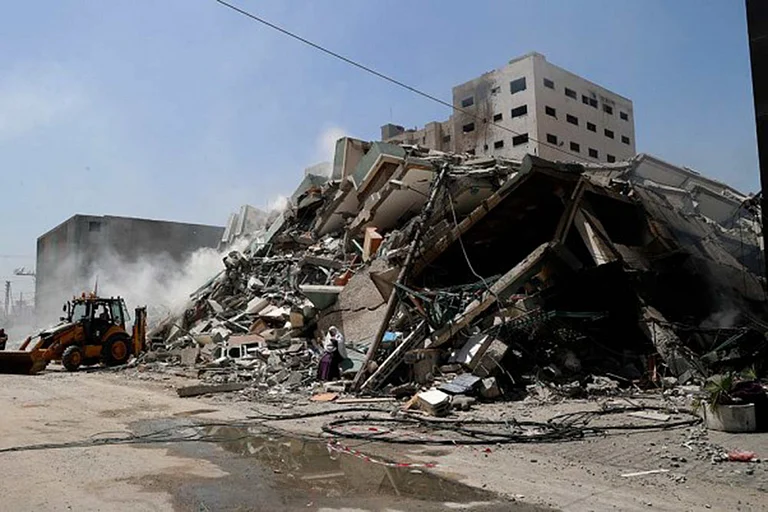
Humanitarian Consequences
For Palestinians living in the West Bank, settler violence extends beyond individual attacks.
According to OCHA, the territory has witnessed hundreds of Palestinian fatalities and thousands of injuries since the beginning of 2025, alongside widespread destruction of homes, agricultural infrastructure and community facilities. The same reporting period recorded more than 40,000 displaced Palestinians across the West Bank, with displacement driven by military operations, demolitions, access restrictions and settler violence.
In rural areas, attacks on olive groves, water pipelines and livestock have affected livelihoods that depend heavily on agriculture. Families often require military permits or coordinated access to reach farmland located near settlements, while humanitarian agencies have documented repeated disruptions during harvesting seasons.
The destruction of mosques, homes and schools has also heightened fears among communities already living under prolonged occupation. Humanitarian organisations argue that repeated attacks, even where casualties are limited, contribute to an atmosphere of insecurity that encourages displacement from vulnerable villages.
International Response
The increase in settler violence has drawn renewed international scrutiny.
In its advisory opinion issued in July 2024, the International Court of Justice concluded that Israel's continued presence in the occupied Palestinian territory, including its settlement policy, is contrary to international law and stated that Israel should end its settlement activities. The court also called on states not to recognise as lawful the situation arising from the occupation.
The Office of the UN High Commissioner for Human Rights has similarly warned that continuing military operations, settlement expansion and attacks by settlers are worsening the humanitarian situation across the occupied Palestinian territory, while OCHA has repeatedly urged greater protection for Palestinian civilians and accountability for attacks on communities.
Israel disputes key aspects of the ICJ opinion and maintains that many questions surrounding the status of the West Bank should be resolved through direct negotiations rather than international judicial bodies. Israeli officials also argue that military operations in the territory are primarily aimed at preventing militant attacks and protecting civilians following the security crisis that began in October 2023.
As settlements continue to expand and tensions remain elevated following the Gaza war, humanitarian agencies warn that attacks on Palestinian communities are likely to remain a persistent feature of life across the territory.
For many diplomats and analysts, the growing cycle of settler violence has become not only a humanitarian concern but also a central obstacle to efforts aimed at achieving a negotiated resolution to one of the world's longest-running conflicts.