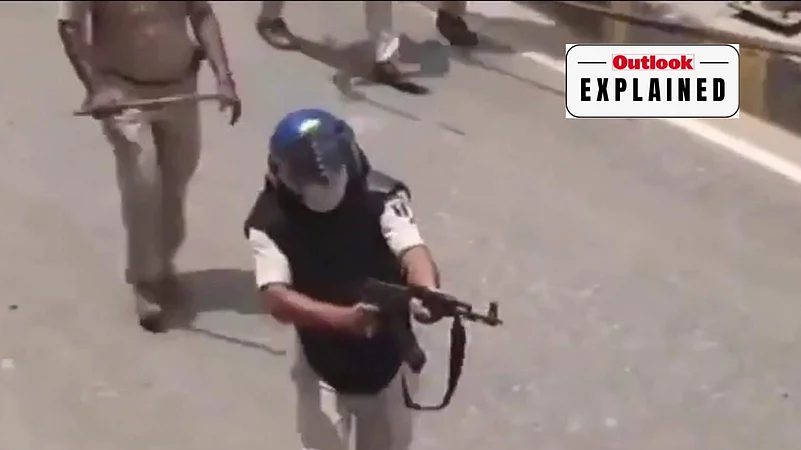
Bihar Police suspended a constable for firing an AK-47 during the Siwan protest.
Police rules require force during protests to remain necessary, proportionate and minimal.
Officials said the constable had no orders to open fire.
The suspension of a Bihar Police constable after he was filmed firing an AK-47 during a student protest in Siwan has raised questions over when police can use firearms during demonstrations and whether assault rifles are meant for crowd-control duties.
There is no central law that specifically regulates the use of an AK-47 at protests. Since “Police” and “Public Order” are State subjects, weapon deployment is largely governed by state police manuals, standing orders and standard operating procedures. However, the broader legal principle is clear: force must be necessary, proportionate and kept to the minimum required.
What Happened During The Bihar Student Protest?
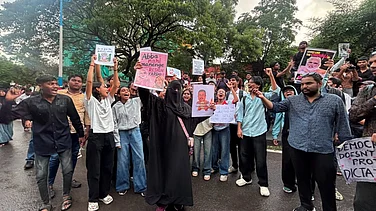
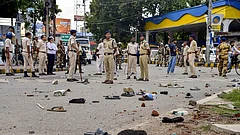
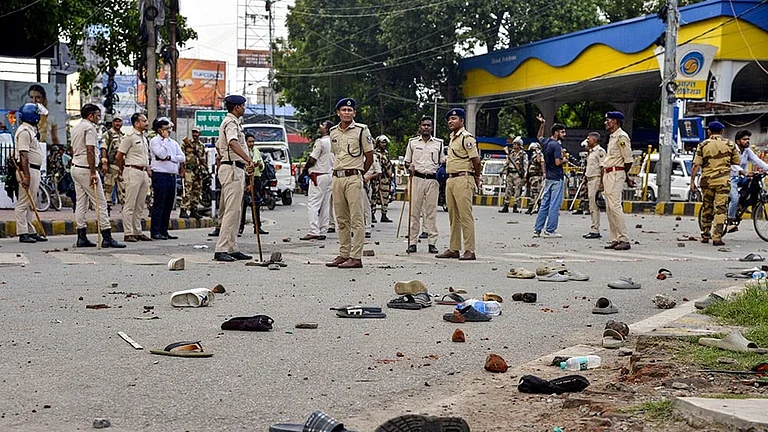
The incident took place in Siwan on July 25 during the Bihar bandh held amid protests over the NEET paper leak.
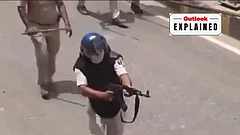
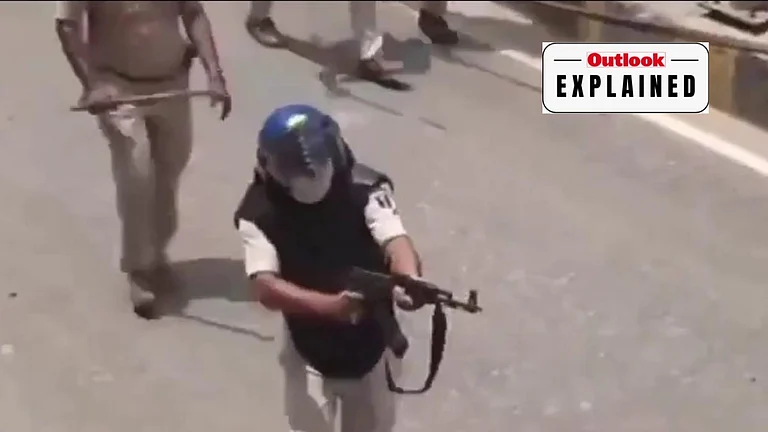
Videos circulating online showed constable Abhishek Kumar carrying an AK-47 and firing rounds into the air during clashes with protesters. Bihar Police headquarters said he fired four rounds after being “besieged” by a mob.
According to Reuters, senior Bihar Police official Nilesh Kumar said the constable was attached to a unit dealing with serious criminals, explaining why he had been issued an assault rifle. Police said no one was injured in the firing.


Why Was The Constable Suspended?
Siwan SP Puran Kumar Jha told PTI that Kumar was suspended with immediate effect and departmental proceedings were initiated.
“There were clear instructions to the police force not to open fire during the demonstration,” Jha said.
Deputy Inspector General Nilesh Kumar also told Reuters, “The AK-47 was used by the constable wrongly.”
The inquiry is expected to examine whether Kumar had permission to fire, whether the threat justified the use of the weapon and whether crowd-control procedures were followed.
When Can Police Legally Use Firearms During Protests?
Article 19(1)(b) of the Constitution guarantees the right to assemble peacefully and without arms, subject to reasonable restrictions in the interest of public order.
Under Section 148 of the Bharatiya Nagarik Suraksha Sanhita (BNSS), an Executive Magistrate or authorised police officer can order an unlawful assembly to disperse. If it refuses, force may be used.
But this does not amount to unrestricted permission to use firearms.
Sections 149 and 150, which deal with situations involving the armed forces, underline that the least possible force and injury should be used while dispersing an assembly.
The Supreme Court has also stressed proportionality. In Anita Thakur v Government of J&K, it held that police should use only the minimum force necessary and stop once the threat has subsided.
Are AK-47s Permitted For Crowd Control?
State police forces can possess AK-47s and other assault rifles, but such weapons are generally meant for specialised units dealing with terrorism, insurgency, organised crime or other high-risk operations.
Their presence in a police armoury does not make them routine crowd-control weapons.
Police crowd-control procedures states Authorities are expected to begin with warnings, persuasion and barricading before moving to measures such as tear gas or other dispersal methods. Firearms are meant to be a last resort when lesser measures fail and there is a serious threat to life or public safety.
What Safeguards Exist Against Excessive Force?
Police firing is subject to internal and judicial scrutiny. Officers are required to document why firing took place, how much ammunition was issued and how many rounds were used.
Senior authorities can then examine whether the action was necessary and justified.
If police action results in death, the National Human Rights Commission requires the state to report the incident and submit records such as post-mortem reports, inquiry findings and investigation documents.
So far, Bihar Police’s own statements indicate that the firing was unauthorised and contrary to instructions issued for the protest.