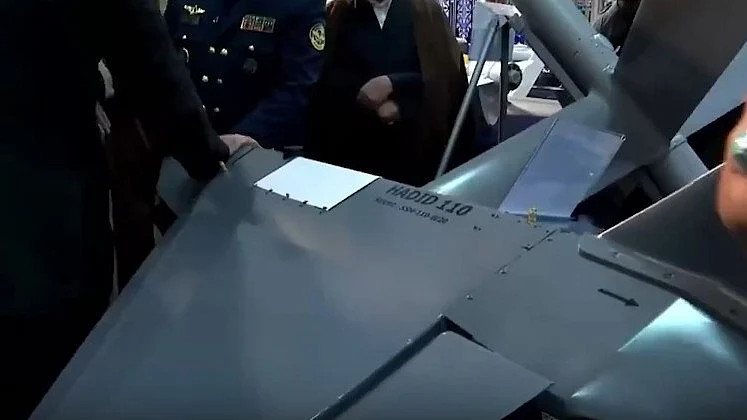
Iran has unveiled the Hadid-110, an upgraded loitering munition it claims is faster, flies lower and is harder for air-defence systems to detect
The drone shows Tehran's broader strategy of investing in asymmetric warfare, using increasingly sophisticated unmanned systems to challenge technologically superior adversaries
While many of its claimed capabilities remain independently unverified, the Hadid-110 highlights the growing importance of drones in modern warfare and evolving air-defence challenges
Iran has unveiled an upgraded version of its Hadid-110 suicide drone, claiming the weapon is faster, capable of flying closer to the ground and more difficult for air-defence systems to detect. According to The Telegraph, the Islamic Revolutionary Guard Corps (IRGC) has presented the upgraded drone as a new addition to Iran's expanding arsenal of one-way attack systems designed to complicate the operations of technologically superior adversaries.
The announcement comes as loitering munitions and unmanned aerial systems have become increasingly important in modern warfare. From Ukraine to the Middle East, relatively inexpensive drones have demonstrated an ability to threaten high-value military assets, force defenders to expend costly interceptors and place sustained pressure on sophisticated air-defence networks.
While many of the Hadid-110's capabilities remain based on Iranian claims that have not been independently verified, the drone shows a broader trend in Iran's defence strategy: investing in increasingly capable unmanned systems rather than attempting to compete directly with advanced air forces.
What Has Changed In The Hadid-110?
The Hadid-110 represents Iran's continued effort to develop faster and more specialised loitering munitions. Unlike the better-known Shahed-series drones, which generally rely on slower propeller-driven engines, Iranian officials describe the Hadid-110 as a jet-powered platform intended to reduce response times for defending forces.

According to Iranian officials, the upgraded version incorporates improvements aimed at increasing speed, lowering its flight profile and reducing detectability by radar systems.
Those characteristics, if confirmed, would present a different challenge from earlier generations of Iranian drones. A smaller unmanned aircraft flying quickly at low altitude can reduce the time available for radar operators to detect, identify and intercept an incoming threat, particularly when terrain or ground clutter affects radar coverage.
Iran has not publicly released detailed technical specifications relating to the drone's radar signature, electronic warfare capabilities or operational range. As a result, independent assessments of its battlefield performance remain limited.

How Are Loitering Munitions Different From Conventional Missiles?
Loitering munitions combine elements of both drones and guided missiles.
Unlike conventional missiles, which are typically launched towards a predetermined target along a largely fixed flight path, loitering munitions can remain airborne while searching for or confirming targets before striking. Some systems can also receive updated targeting information after launch, allowing operators to adapt to changing battlefield conditions.
Rather than relying solely on speed and explosive power, loitering munitions integrate surveillance, target acquisition and precision strike capabilities within a single platform.
Although they generally carry smaller warheads than ballistic or cruise missiles, their comparatively low cost and operational flexibility allow militaries to deploy them in larger numbers. Recent conflicts have shown that swarms of relatively inexpensive drones can strain sophisticated air-defence systems by forcing defenders to respond repeatedly to multiple incoming threats.
Could It Challenge US And Allied Air Defences?
Iran's claim that the upgraded Hadid-110 is harder to detect shows a wider challenge confronting modern militaries: the growing use of smaller, faster and lower-flying unmanned systems that are more difficult to identify and intercept.
The effectiveness of this strategy has been highlighted during the recent conflict involving Iran and the United States. The conflict has cost Washington around $37.5 billion, with 18 US service members killed. The fighting has underscored the growing role of drones alongside ballistic missiles and conventional air operations.
A significant part of that pressure has come from Iran's expanding use of one-way attack drones. Compared with advanced interceptor missiles, loitering munitions are relatively inexpensive to produce and can compel defenders to maintain continuous surveillance, deploy electronic warfare assets and expend costly interceptors against comparatively cheap platforms.
If the Hadid-110's claimed improvements in speed, low-altitude flight and reduced radar visibility prove accurate, they could further compress the time available for air-defence operators to detect, classify and engage incoming threats.
However, many uncertainties remain. The drone's actual radar cross-section, resistance to electronic warfare, operational reliability and effectiveness under combat conditions have not been independently verified.
The US Department of Defense has repeatedly identified unmanned aerial systems as one of the principal challenges facing modern militaries, arguing that counter-drone operations increasingly require an integrated combination of radar, electro-optical sensors, electronic warfare, directed-energy technologies and conventional interceptors rather than relying on missile defence alone.
Ultimately, the question is not simply whether the Hadid-110 is stealthier than earlier Iranian drones. It is whether its combination of speed, flight profile and potential mass deployment could increase the pressure on existing air-defence networks.
What Does It Reveal About Iran's Military Strategy?
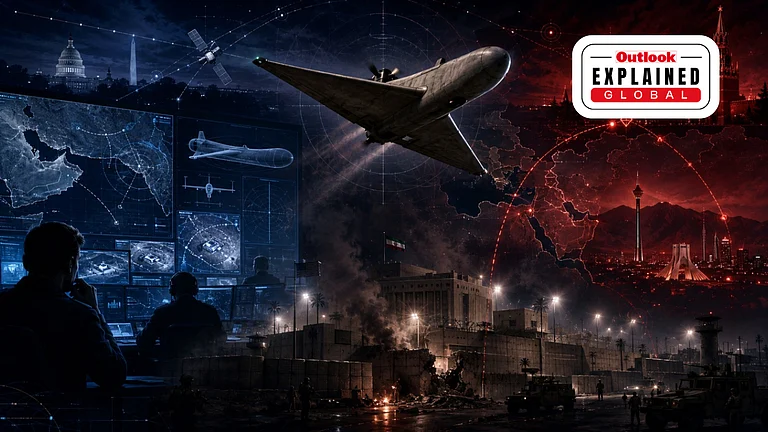
The Hadid-110 reflects a broader shift in Iran's defence doctrine towards asymmetric warfare.
Rather than attempting to match the United States or regional rivals in conventional air power, Tehran has spent decades investing in capabilities that allow it to impose disproportionate costs on stronger militaries. Ballistic missiles, cruise missiles, drones and proxy forces have become central pillars of that strategy.
The emergence of faster loitering munitions suggests Iran is seeking to move beyond large numbers of relatively inexpensive drones towards more specialised systems capable of posing greater challenges to advanced air-defence networks.
The approach mirrors a wider transformation in warfare. Conflicts in Ukraine, the Red Sea and the Middle East have demonstrated that drones are no longer simply supporting battlefield operations; they have become central instruments of surveillance, precision strikes and strategic deterrence.
Whether the Hadid-110 ultimately performs as advertised will depend on battlefield testing rather than official claims. Even so, its unveiling illustrates how competition in unmanned warfare is increasingly shifting from producing larger numbers of drones to developing platforms that are faster, more survivable and more difficult to defeat. For air-defence planners, that evolution may prove just as significant as the drone itself.