Alternative-fuel vehicles—CNG, hybrids and EVs—accounted for 40.35% of India's passenger vehicle sales in June 2026, marking the first time petrol and diesel vehicles have fallen below a 60% market share.
The shift is being driven primarily by lower running costs, rising fuel prices, expanding model choices and government support, making alternative fuels a financially attractive option for many buyers.
While CNG infrastructure and EV adoption continue to grow, challenges such as uneven charging networks and E20 fuel compatibility mean the transition will vary across regions and vehicle segments.
The number arrived quietly in the Federation of Automobile Dealers Associations' June 2026 retail data: 40.35%. For the first time in India's automotive history, more than two in every five new passenger cars sold in a month ran on something other than pure petrol or diesel. CNG took the largest share at 24.3%, followed by hybrids at 8.3% and electric vehicles at 7.8%. Combined petrol and diesel, the combination that has defined Indian car culture since the 1990s, slipped below 60% of the market for the first time.
The milestone is both statistical and behavioural. For decades, the Indian car buyer's mental model was simple: small cars ran on petrol, large diesel vehicles handled highway driving, and electric vehicles were for enthusiasts willing to manage range anxiety and charging challenges. That model is now becoming obsolete.

Why Are More Indians Choosing Alternative-Fuel Vehicles?
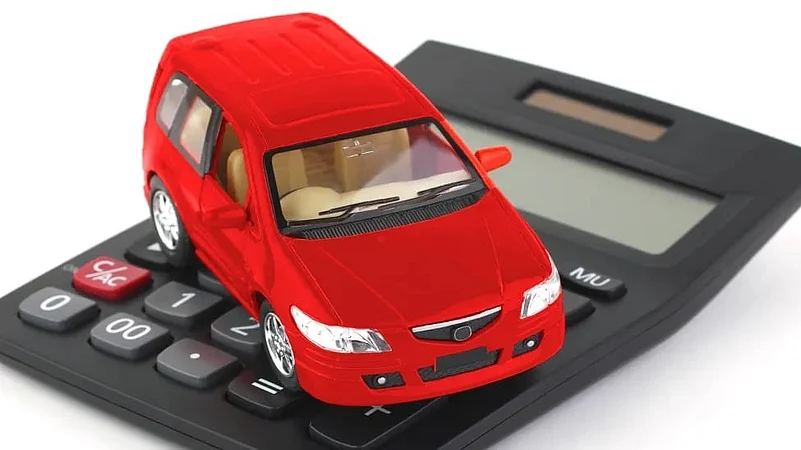
The primary driver is running cost. Indian petrol prices have remained elevated — shaped by global crude prices disrupted by Russia's war in Ukraine, the closure of the Strait of Hormuz in February 2026, and domestic taxation structures that have not been restructured despite changes in global oil markets. For a buyer calculating total cost of ownership over five to seven years, the per-kilometre economics are now decisively in favour of alternatives.
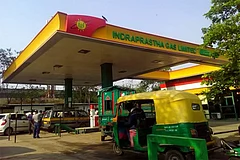


One of the drivers is the normalisation effect. When Tata Motors was selling 80,000 EVs per year and Maruti Suzuki's CNG variants were appearing in every showroom, alternative-fuel vehicles stopped being an exotic choice and became a mainstream consideration.
EVs, Hybrids Or CNG: Which Offers The Best Value?
The answer depends sharply on where you live and how you drive. EVs make strong sense if you live in a metro, have home charging access, drive mostly in the city, and cover under 80 km daily. Running costs drop to ₹1–1.5 per kilometre versus ₹6–8 for petrol. But for buyers in Tier-2 cities, without home parking, or making frequent long-distance trips, the infrastructure is not yet there. An EV that cannot be charged at home is not competitive in total cost against CNG or hybrid alternatives.
Strong hybrids have emerged as the most broadly applicable alternative for 2026. They offer 30–40% better fuel efficiency than comparable petrol vehicles, work without any charging infrastructure, and are generally E20-compatible. Their main limitation is cost: strong hybrid variants typically command a ₹2–3 lakh premium over comparable petrol models.
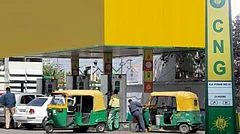
CNG dominates the data because it is the most accessible and lowest-risk alternative for mass-market buyers. It requires no charging infrastructure, offers familiar refuelling behaviour, costs ₹2–3 per kilometre to run, and is available in factory-fitted variants from Maruti, Hyundai, Tata, and Kia that come with full warranties. Its limitation is range: CNG tanks are smaller than petrol tanks, and CNG station density drops sharply outside cities.

Are Charging And Refuelling Networks Keeping Pace?
Partially, and unevenly. CNG infrastructure has expanded significantly over the past three years: the city gas distribution network now covers more than 700 districts, and CNG stations are a standard feature of most National Highway corridors. The practical limitation is not station existence but station density in smaller cities.
EV charging infrastructure tells a more complicated story. Public fast chargers have been installed at major highways, fuel stations, and shopping malls in metro areas. However, the majority of EV users outside metros find that public charging is too slow or too scarce for their needs. Range anxiety is no longer the primary concern for most EV buyers; charging anxiety has replaced it.
Is This A Temporary Shift — Or A Permanent Market Change?
The structural conditions suggest this is permanent. Manufacturers have committed billions to CNG and EV platform development that cannot be unwound on a short cycle. Government policy — E20 mandates, EV subsidies under PM-eBus Sathi and FAME-III — is aligned in one direction. Used-car values for pure-petrol vehicles are already under pressure in metro markets. And the household economics that are driving the shift are not going to reverse: petrol prices are unlikely to fall structurally, and running-cost differentials will persist.
The wild card is the E20 mandate itself. From April 1, 2026, every Indian petrol pump sells only 20% ethanol-blended fuel as the standard grade. Cars manufactured before March 2023 were not designed for E20 and face a 3–7% mileage loss, and in some cases warranty complications. This creates an unintended incentive for pre-2023 petrol car owners to switch to alternatives at their next purchase — accelerating the shift, but through a route that adds consumer complexity rather than clarity.
What Does This Mean For India's Oil Dependence?
India imports approximately 85% of its crude oil, spending hundreds of billions of dollars annually. Every percentage point of the passenger vehicle market that shifts to CNG or EV reduces, at the margin, the country's crude import bill. The June 2026 40% milestone is not yet transformative at the macroeconomic level, passenger vehicles are one segment of a vast oil consumption picture.
The Russia-Ukraine-Hormuz disruptions that elevated oil prices throughout 2025 and 2026 have paradoxically accelerated the shift they were supposed to make harder to manage, by making petrol more expensive, they made the running-cost case for alternatives stronger than any government subsidy or environmental campaign had managed to do. The market is doing what policymakers spent years trying to engineer.