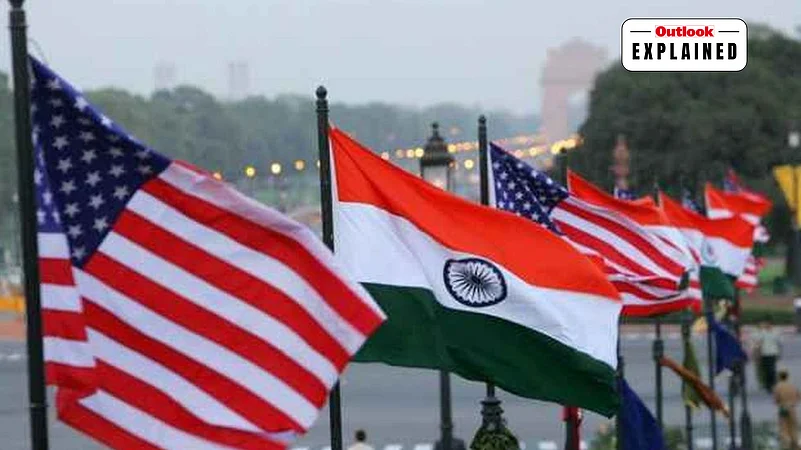
The US Senate has advanced the Lindsey O. Graham Sanctioning Russia and Iran Act of 2026, which would authorise President Donald Trump to impose tariffs of up to 100% on imports from major buyers of Russian oil, including India.
India's Russian crude imports rose sharply after the 2026 Strait of Hormuz crisis disrupted Gulf oil supplies, with Washington previously granting a temporary waiver to help India manage its energy security needs.
The bill does not automatically impose tariffs, leaving the final decision to the US president, who can waive or delay the measures—giving India room for diplomatic negotiations even as the threat looms over bilateral trade.
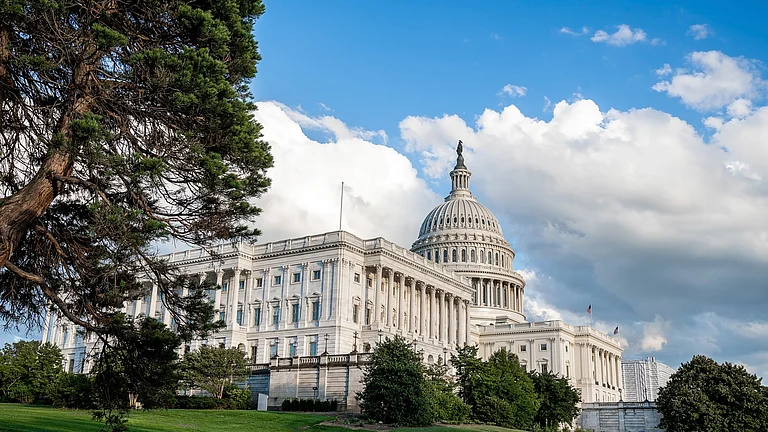
On July 29, 2026, the United States Senate voted 86–12 to advance the Lindsey O. Graham Sanctioning Russia and Iran Act of 2026 past its first procedural hurdle. The bill is named after Senator Lindsey Graham, the Republican from South Carolina who had championed it for months and who died on July 11; his sister, Senator Darline Graham, appointed to complete his term, said passing the legislation would honour his legacy. Ukrainian President Volodymyr Zelensky was in Washington that same day, meeting with senators in what Ukrainian officials described as a diplomatic push for stronger Western action against Moscow.
For India, the 86–12 vote is the most serious legislative threat to its energy import strategy since Russia's invasion of Ukraine in February 2022. The bill's language explicitly targets the world's five largest buyers. India is number two.


Why Could India Face 100% US Tariffs?
The bill's tariff mechanism is specific. Under the proposed legislation, 100% tariffs would be imposed on imports from countries identified as the world's five largest purchasers of Russian crude oil or natural gas, or among the top five facilitators of Russian oil sanctions evasion.
Senator Blumenthal, co-author of the bill alongside the late Lindsey Graham, identified China, India, Slovakia, Hungary, and Azerbaijan as the countries expected to fall within the scope of the measure. The legislation also directs the US Trade Representative to review the list every 180 days, ensuring that countries cannot escape coverage by temporarily reducing purchases.
A 100% tariff on US imports from India would be catastrophic for bilateral trade. India exported approximately $83 billion in goods to the United States in FY2026, making it one of India's most important export markets. A 100% tariff would effectively double the cost of Indian goods at the US border, pricing most of them out of the market.
What Is The New US Senate Russia Sanctions Bill?
The Lindsey O. Graham Sanctioning Russia and Iran Act of 2026 is a bipartisan piece of legislation originally conceived by Democratic Senator Richard Blumenthal and the late Republican Senator Lindsey Graham. It is intended to tighten sanctions on Russia's political leadership, financial institutions, energy sector, and the so-called shadow fleet — vessels used to evade existing oil export restrictions.
The bill gives President Trump authority to impose the tariffs — the president can also waive them if he determines that a country is taking adequate steps toward compliance. The 86–12 procedural vote clears the first legislative hurdle but leaves further debate and a final vote still to come.
Why Is India Buying Russian Oil?
The answer changed dramatically in February 2026. The US-Iran military confrontation that month led to the closure of the Strait of Hormuz, through which approximately 40% of India's oil imports had historically flowed.
The sudden loss of Gulf supply access created an emergency for India's energy planners. Russian crude, available at a discount, arriving through different sea routes, and not dependent on Hormuz transit, became the logical emergency substitute.
Washington recognised this. The US government issued a temporary waiver on Russian oil purchases specifically to help India manage the Hormuz-driven supply crisis. India took full advantage: June 2026 Russian crude imports surged 34%, representing approximately 36% of Russia's total crude export earnings for the month. India and China together account for roughly 70% of Russia's energy export revenues.
Does The Bill Automatically Impose Tariffs?
No. The bill authorises President Trump to impose tariffs, it does not mandate them. This distinction is operationally significant. Trump retains the discretion to waive tariffs for countries taking steps toward compliance, to use the threat as leverage in negotiations, or to delay action if other geopolitical considerations make immediate tariffs counterproductive.
India's position in the current India-US Bilateral Trade Agreement negotiations, which are targeting $500 billion in annual trade by 2030, gives both sides reason to find a diplomatic off-ramp. The waiver mechanism in the bill is precisely the kind of instrument that would allow the US to maintain the threat while giving India a structured path to reduced Russian oil purchases that does not require an immediate economic confrontation.
How Much Russian Oil Does India Import?
India is the world's second-largest buyer of Russian crude, behind only China. Before the Ukraine war began in 2022, India imported minimal quantities of Russian oil. By November 2024, Russian crude accounted for over 35% of India's total oil imports. By June 2026, following the Hormuz crisis, that figure had surged to a record high. India and China together now account for approximately 70% of Russia's total energy export revenues.
The strategic and commercial logic for India is clear, Russian crude is significantly cheaper than alternatives, India has no domestic oil production sufficient to meet its needs, and the Hormuz closure made the usual Gulf sources temporarily unavailable. The moral and geopolitical logic in Washington is equally clear: every dollar India pays for Russian oil partially finances Russia's military operations in Ukraine.
What Could This Mean For India-US Trade?
The immediate practical consequence depends on whether the bill passes Congress and is signed into law — and then whether Trump exercises the tariff authority. If the full 100% tariff were applied to Indian exports to the US, it would represent a bilateral trade catastrophe far larger than the 50% tariff Trump imposed on India in August 2025 following Russian oil purchase threats, which already significantly disrupted Indian export industries. Indian software, pharmaceutical, and textile industries all lobbied intensively against those earlier tariffs.
India's diplomatic response is likely to follow the pattern established in 2025: External Affairs Minister Jaishankar's office has confirmed that India's concerns have been communicated through diplomatic channels. India will make the case that its Russian oil purchases are not a geopolitical choice but an energy security necessity. Whether that argument prevails in Washington, or whether it prevails in the White House's tariff calculations, will determine what India-US trade looks like by the end of 2026.