Burkina Faso's military leader Ibrahim Traoré has returned to international attention over concerns about civic freedoms and human rights
Despite criticism, Traoré remains popular among many African youth who view him as a symbol of sovereignty and anti-colonial politics
His leadership reflects wider political and security shifts across the Sahel, where military-led governments are reshaping regional alliances
Burkina Faso's military leader Ibrahim Traoré has returned to international attention following a series of developments that have renewed scrutiny of his government.
In recent weeks, Burkina Faso was added to CIVICUS' global Watchlist over concerns about civic freedoms. The Office of the UN High Commissioner for Human Rights also expressed concern over the authorities' decision to close its country office, warning that the move could undermine independent monitoring of the human rights situation. At the same time, the government sought to counter claims that recent legislation on religious freedoms could pave the way for the introduction of Sharia law.
Nearly four years after seizing power in September 2022, Traoré remains one of Africa's most closely watched military leaders. To critics, his government has overseen a narrowing of political and civic freedoms while struggling to contain a deepening humanitarian crisis. To many of his supporters, however, he represents a new generation of African leaders challenging longstanding Western influence and advocating greater national sovereignty.
The contrasting perceptions have made Traoré one of the continent's most polarising political figures. The debate surrounding his leadership increasingly reflects wider questions about military rule, security and democratic governance across the Sahel.
How Did Ibrahim Traoré Rise To Power?
Traoré came to power on 30 September 2022 after leading a military mutiny that culminated in a coup, removing Lt. Col. Paul-Henri Sandaogo Damiba, who himself had seized power only eight months earlier.



In announcing the change, officers from the Patriotic Movement for Safeguard and Restoration (Mouvement patriotique pour la sauvegarde et la restauration, MPSR) accused Damiba of failing to address the country's deteriorating security situation as jihadist violence continued to spread across large parts of Burkina Faso.
Traoré subsequently became head of the transitional military government, promising to restore security and reclaim territory from armed groups linked to Al-Qaeda and the Islamic State.
Since then, his administration has prioritised military operations against jihadist groups, expanded recruitment into the armed forces and sought new security partnerships after relations with several Western governments deteriorated.
Why Has He Returned To The Spotlight?
The latest international attention stems from several developments that have raised fresh questions about the direction of Traoré's government.
CIVICUS added Burkina Faso to its July 2026 Watchlist, citing what it described as a deterioration in civic freedoms, including restrictions on civil society organisations, journalists and dissenting voices.
Amnesty International has also criticised the dissolution of several non-governmental organisations, while the Office of the UN High Commissioner for Human Rights expressed concern over the closure of its country office and warned that it could weaken independent human rights monitoring.
The government also drew attention following public debate over whether Burkina Faso could adopt elements of Sharia law.
In June 2026, the government issued a statement reaffirming that Burkina Faso would remain a secular republic and rejected interpretations that recent legislation on religious freedoms was intended to introduce religious governance. Officials said the measures were designed to regulate religious activities while preserving social cohesion and national unity.
The clarification followed public debate over the scope of the new legislation rather than any formal proposal to replace the country's secular constitutional framework.
Why Has He Gained Popularity?
Traoré's appeal extends beyond Burkina Faso itself.
Among sections of African youth, particularly on social media, he has become a symbol of anti-colonial politics, national sovereignty and resistance to perceived foreign influence. His criticism of France, calls for greater African self-reliance and emphasis on domestic control over natural resources have resonated with audiences frustrated by years of insecurity and political instability.
His image has also been shaped by comparisons with Burkina Faso's former revolutionary leader Thomas Sankara. Sankara remains an influential figure across Africa for his anti-imperialist politics, emphasis on self-reliance and social reforms. Supporters often compare Traoré with Sankara and portray him as carrying forward elements of that legacy, although historians and analysts caution that the political, economic and security circumstances facing the two leaders are fundamentally different.
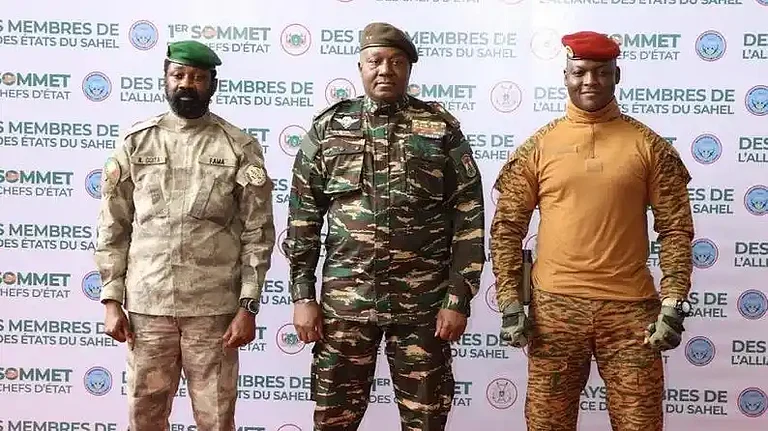
Regionally, Burkina Faso has strengthened ties with Mali and Niger after the three military-led governments created the Alliance of Sahel States (AES) in 2023. The three governments subsequently announced their withdrawal from ECOWAS and have promoted the AES as an alternative framework for regional security cooperation.
Burkina Faso has also deepened defence and security cooperation with Russia while reducing military engagement with several traditional Western partners.
Why Do Critics Remain Concerned?
Despite his popularity among some audiences, Traoré's government has faced mounting criticism from international organisations and rights groups.
Freedom House continues to classify Burkina Faso as "Not Free", citing restrictions on political rights and civil liberties. CIVICUS and Amnesty International have expressed concern over shrinking civic space, while the UN Human Rights Office has criticised measures affecting independent monitoring and civil society.
The security situation also remains severe.
According to UNHCR and other UN agencies, millions of people require humanitarian assistance in the country, while more than two million people remain internally displaced by conflict. Successive UN reports continue to document attacks by armed groups, allegations of human rights violations and worsening humanitarian conditions across large parts of Burkina Faso.
The military government maintains that its security operations have helped recover territory and improve stability in some regions, but independent UN assessments indicate that violence remains widespread and humanitarian needs continue to grow.
Why It Matters
Traoré's leadership reflects a broader political transformation unfolding across the Sahel.
Military governments now govern Burkina Faso, Mali and Niger, each arguing that previous civilian administrations failed to contain jihadist violence or safeguard national sovereignty. Together, the three countries have distanced themselves from traditional Western security partnerships while strengthening cooperation through the Alliance of Sahel States.
The trajectory of Burkina Faso is therefore being watched far beyond its borders. Supporters view Traoré as a leader seeking to redefine relations between African states and external powers. Critics argue that increasing restrictions on civic freedoms, continued insecurity and a worsening humanitarian crisis raise doubts about whether military rule has delivered the stability it promised.
As Burkina Faso continues to confront insurgency, humanitarian pressures and growing international scrutiny, Traoré remains one of Africa's most closely watched military leaders. To supporters, he is a defender of sovereignty seeking to reshape Burkina Faso's place in the region. To critics, he heads an increasingly authoritarian military government that has yet to deliver the security improvements it promised.