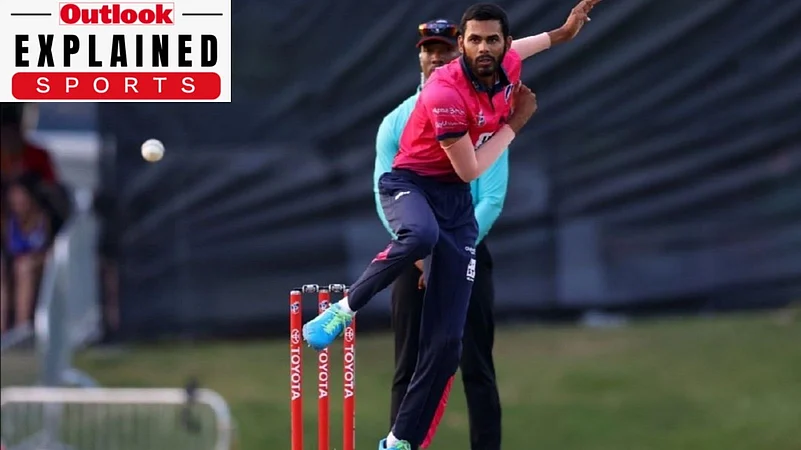
USA cricketer Bodugum Akhilesh Reddy received an eight-year ban from the ICC for match-fixing approaches
The suspension stems from an incident during the Abu Dhabi T10 2025 tournament
The penalty reinforces the ICC's zero-tolerance stance on corruption, echoing past multi-year bans
The International Cricket Council (ICC) has handed United States international cricketer Bodugum Akhilesh Reddy an eight-year ban from all forms of cricket following multiple breaches of anti-corruption codes.
The 26-year-old off-spinner, who has represented the USA in four T20 internationals, was found guilty of multiple grave offenses under the anti-corruption codes. Backdated to commence from November 21, 2025—the date of his initial provisional suspension—this punishment effectively sidelines the player until late 2033, casting a long shadow over his promising international career.
Facing charges connected to corrupt behavior during high-profile franchise action, Reddy's defense crumbled under scrutiny. The resulting multi-year sanction reflects the governing body's zero-tolerance policy toward individuals attempting to compromise the foundational fairness of international and franchise cricket leagues.
Why Akhilesh Reddy Was Banned?
The investigation traces back to a series of events during the 2025 Abu Dhabi T10 tournament in the United Arab Emirates, specifically centering on an incident involving Reddy and an unnamed teammate, designated as 'Player A', prior to an Aspin Stallions match.



According to evidence presented to the tribunal, Reddy called the teammate into his hotel room and instructed him to "give runs" to opponents while bowling, allegedly on instructions tied to team management. Swiftly rejecting the corrupt proposal, the teammate immediately reported the approach to his agent and the ICC's Anti-Corruption Unit within an hour, sparking a formal inquiry.
Beyond the direct match-fixing solicitation, Reddy faced separate charges for obstructing the subsequent investigation. Investigators discovered that he had manually deleted WhatsApp conversations and call logs with the reporting teammate from his mobile phone.
Although Reddy attempted to defend the digital cleanup as routine "data hygiene," the tribunal rejected the explanation as implausible, noting that his chats were already set to auto-delete. Consequently, the independent panel handed down concurrent seven-year bans for match-fixing and soliciting a participant, alongside a consecutive one-year term for destroying digital evidence, totaling eight years.
Historical Precedents And The ICC's Stance on Corruption
Long before Reddy's lengthy suspension, the ICC and various national boards established a firm precedent of imposing severe, multi-year bans to deter corrupt actors within professional cricket.
Landmark cases—such as the heavy bans levied against high-profile international players caught in various domestic league scandals over the past decade—regularly feature similar lengths ranging from five to ten years, or even lifetime exclusions for repeat or masterminding offenses.
By consistently penalizing not just active fixing, but also the failure to report approaches and the intentional destruction of evidence, the governing body aims to send an unambiguous message.
For instance, former Pakistan captain Salman Butt was handed a 10-year ban (with 5 years suspended) and fast bowler Mohammad Asif received a 7-year ban (with 2 years suspended) following the infamous 2010 Lord's spot-fixing scandal.
Similarly, Bangladesh all-rounder Mohammad Ashraful was slapped with an 8-year suspension for his role in fixing during the 2013 Bangladesh Premier League (BPL), while West Indies veteran Marlon Samuels received a 2-year ban in 2021 for breaching anti-corruption codes.
Governing bodies have also shown zero tolerance for players who attempt to cover up tracks; former Zimbabwe captain Heath Streak was handed an 8-year ban in 2021 for accepting corrupt approaches and breaching disclosure rules, and New Zealand's Lou Vincent received a life ban for match-fixing and failing to report approaches.