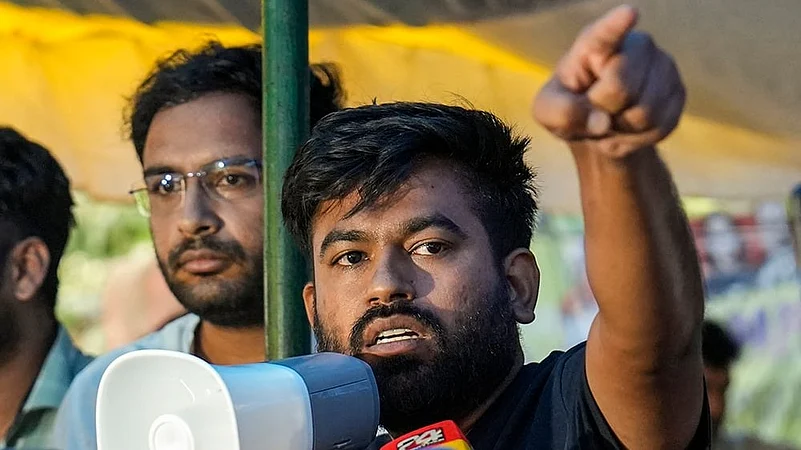
CJP founder Abhijeet Dipke defended his foreign education funding amid RTI scrutiny.
He said a Boston University scholarship and education loan financed his studies.
Dipke rejected comparisons with protests in Bangladesh and backed student demonstrators.
Days after spearheading a high-profile agitation over alleged irregularities in the NEET examination, Cockroach Janta Party (CJP) founder Abhijeet Dipke has come under scrutiny over how his overseas education was financed. Dipke, however, maintained that his studies were funded through a scholarship and an education loan that remains unpaid.
Speaking to PTI in an exclusive interview at his residence in Maharashtra’s Chhatrapati Sambhajinagar on Monday, Dipke also rejected comparisons between the CJP-led demonstrations in Delhi and the 2024 uprising in Bangladesh that resulted in the fall of Sheikh Hasina’s Awami League government.
Exiled Bangladeshi author Taslima Nasreen had drawn parallels between the two movements.
“Protests in Bangladesh, Nepal are being used to defame us; we are different,” Dipke said.
The 30-year-old also played down an RTI-based demand for an investigation into his educational expenses and family finances, saying he had nothing to conceal.
A Surat-based RTI activist had said on Saturday, August 1, that he sought an inquiry into the finances of Dipke’s father, a retired government employee, questioning how he had supported his son’s education abroad.
“Those who wish to investigate my education funding are free to do so,” Dipke said.


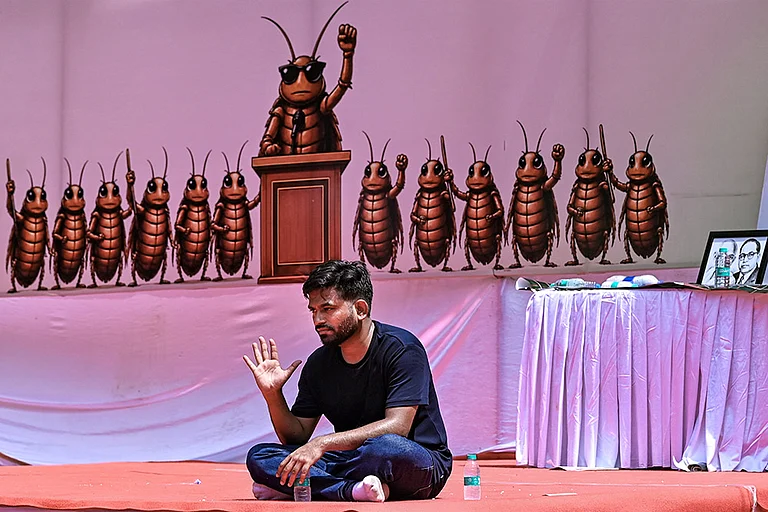
Explaining how his studies were financed, he added, “I received a scholarship from Boston University, and for the remaining amount, I took an education loan. It is still pending and has to be repaid. The fight is not personal.”
Dipke completed a Master of Science degree in Public Relations from Boston University’s College of Communication. He returned to India in June and subsequently emerged as one of the leading faces of the agitation against the alleged NEET-UG paper leak.
The protests brought students and young people from several parts of the country to Delhi, where they demanded reforms in the examination system and the resignation of then Union Education Minister Dharmendra Pradhan.
The movement gained considerable support among Gen Z and eventually culminated in Pradhan’s resignation last week.
CJP-led demonstrations were also held in several other cities. Some protests, however, witnessed clashes and police action, with cases registered against student demonstrators in Delhi, Mumbai, Kolkata and Bihar.
Dipke said he hoped the Maharashtra government would withdraw police complaints lodged against students who participated in the agitation.
“Maharashtra has always led the nation through its progressive legacy,” he said.
“I hope the state government will not harass any student. They have done nothing wrong — they were only fighting for their future,” Dipke added.
He also addressed the controversy involving 15-year-old Ruchika Singh, who was accused of making objectionable remarks against Prime Minister Narendra Modi during the Delhi protest. Dipke argued that remarks made by minors should not be treated as criminal offences.
“If registering an FIR and deploying the entire state machinery against a 15-year-old is the standard, then FIRs should also be filed against political leaders and IT cell members,” he said.
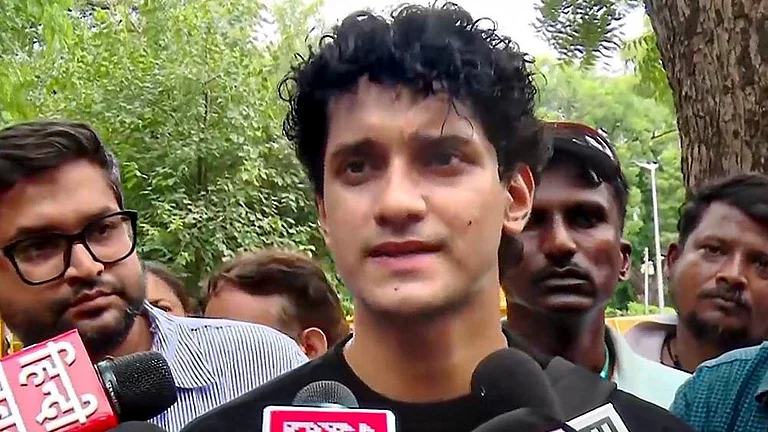
Reflecting on the broader issues raised by the protests, Dipke said education in India had become increasingly unaffordable and inaccessible for ordinary families.
He added that the recent movement had placed greater responsibility on the CJP and said the organisation would soon expand its team.