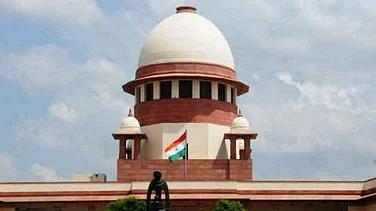
The Rajasthan High Court questioned the 2018 Hill Policy, saying it appeared to have been drafted by private agencies without consulting environmental or wildlife authorities.
The explainer looks at why the policy was introduced, how the 2024 version differs, and why both have faced criticism from environmental groups.
It examines what's at stake for Udaipur's hills, lakes, groundwater and biodiversity as the legal battle expands beyond a single hotel project.
The Rajasthan High Court has put the state's Hill Policy under intense scrutiny after raising alarm over rampant construction in the Aravalli hills around Udaipur. Hearing a petition related to a hotel project, the court observed that Udaipur's hills were being pushed "to the verge of extinction" and questioned whether the 2018 Hill Policy had been drafted by private agencies without consulting experts on environment, wildlife, climate or pollution.
The case has now evolved beyond a dispute over a single hotel. It has reopened a larger debate over whether Rajasthan's hill development policies have prioritised commercial construction over ecological protection in one of India's most fragile landscapes.
Why was the Hill Policy introduced?
Rajasthan introduced the Hill Policy in 2018 to regulate construction on the hills surrounding Udaipur. The city, famous for its lakes, rolling hills (locally called magris) and wildlife sanctuaries, had witnessed a rapid increase in hotels, resorts and luxury developments catering to tourism.
The policy sought to create guidelines for development in hill areas while allowing economic activity under the principle of "sustainable development". However, environmental groups argued from the outset that the policy legalised construction in ecologically sensitive zones instead of strengthening protections.


The Rajasthan High Court has now questioned how the policy was framed, observing that it appeared to have been prepared by "certain private external agencies" without consulting statutory authorities responsible for environment, climate, wildlife and pollution.
What changed in the 2024 policy?
The Rajasthan government introduced a revised Hill Policy in 2024 after years of legal challenges and criticism over the earlier framework.
The current litigation itself revolves around this change. Basant Hotels Pvt. Ltd., which began construction after receiving approvals under the 2018 policy, argues that the stricter provisions of the 2024 policy cannot be applied retrospectively to its project.
At the same time, environmental organisations such as the Jheel Sanrakshan Samiti have challenged the 2024 policy as well, arguing that it still fails to adequately protect the Aravalli ecosystem. They have sought its cancellation, the creation of a state-level Hill Conservation Authority and a fresh regulatory framework based on scientific and environmental principles rather than urban planning considerations.
Another criticism is that the policy primarily governs hills within notified urban limits, leaving many ecologically connected rural hill systems outside its regulatory framework.
Why is the policy controversial?
A court-appointed inspection found extensive hill cutting around Udaipur and noted that numerous hotels had already been built across the surrounding hills. According to the commissioners, the petitioner's property mainly differed because it was located on a steeper slope.
The report also found that officials of the Udaipur Development Authority appeared unfamiliar with the applicable hill regulations.
Based on these findings, Justice Sameer Jain remarked that under the guise of sustainable development, "hundreds of hotels, resorts and commercial properties have mushroomed" near lakes, sanctuaries and sensitive hill ecosystems.
The High Court has now directed the government to produce the complete records behind both the 2018 and 2024 Hill Policies, including the names of their authors, reports prepared by private consultants and details of every commercial permission granted around the disputed property.
Why do environmentalists remain concerned?
The controversy comes at a time when the Aravalli range itself is under renewed debate.
Recently, the Supreme Court accepted the Centre's new definition of an Aravalli hill, classifying hills based on a minimum local relief of 100 metres. Environmentalists argue that such a definition could leave many smaller but ecologically important hillocks outside regulatory protection, although the Union government maintains that the change is intended to create uniformity while continuing to safeguard the ecosystem.
Conservationists have consistently argued that the Aravallis function as one interconnected landscape rather than isolated hills. Even low-lying scrub-covered hills help recharge groundwater, prevent desertification, connect wildlife habitats and regulate local climate.
They fear that fragmented regulations, combined with expanding construction and mining, could permanently damage these ecological functions.
What is at stake for Udaipur?
For Udaipur, the issue goes beyond individual hotel projects.
The Aravalli hills act as natural catchments feeding the city's famous lakes, help recharge groundwater and support forests that are home to leopards, hyenas, birds and other wildlife. They also stabilise slopes, reduce soil erosion and form ecological corridors linking surrounding habitats.
Unchecked hill cutting and construction could increase runoff, reduce groundwater recharge, fragment wildlife habitats and permanently alter the landscape that underpins Udaipur's tourism economy.
Recognising these wider implications, the Rajasthan High Court has indicated that it may initiate a suo motu public interest litigation under the Public Trust Doctrine to examine the ecological survival of Udaipur itself. The outcome could determine not only the future of Rajasthan's Hill Policy but also how development is balanced with conservation across the Aravallis.