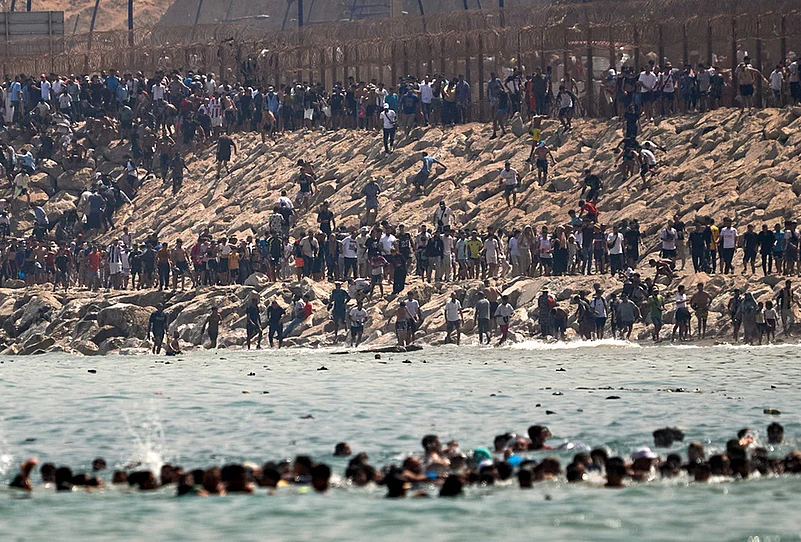
Ceuta, a Spanish enclave in North Africa, has become a major migration route from Morocco into EU territory.
Economic hardship, misinformation and favourable conditions contributed to the latest migrant crossings into Ceuta.
Many migrants returned to Morocco after finding that reaching Ceuta did not guarantee onward travel into Europe.
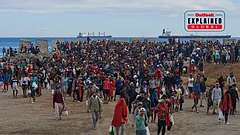
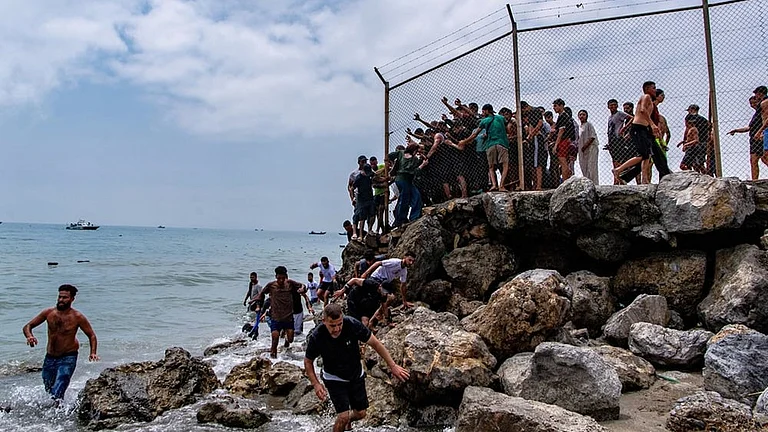
For thousands of migrants who crossed from Morocco into Spain’s North African enclave of Ceuta, reaching European territory did not mean the journey continued as many had expected. Many arrived hoping to move further into Europe, but within days a large number returned to Morocco after finding themselves unable to travel onwards and facing uncertainty about what would happen next.
The latest arrivals have brought renewed attention to Ceuta, a small Spanish enclave on the African continent that has long been at the centre of Europe’s migration debate. Its unusual geography, political status and border with Morocco make it one of the European Union’s most sensitive entry points. The latest crossings also highlight how economic pressure, misinformation and migration rules influence the decisions of people attempting to reach Europe.
What is Ceuta and why does Spain control it?
Ceuta is a Spanish autonomous city located on the northern coast of Africa, surrounded by Morocco except for its coastline. Covering less than 20 square kilometres, it has a population of around 85,000 people and, along with Melilla, is one of Spain’s two enclaves on the African continent.

The territory has been under Spanish control for centuries. It first came under Portuguese rule in 1415 before becoming part of Spain in the seventeenth century. Morocco continues to claim Ceuta and Melilla as its territory, arguing that both are remnants of European colonial rule. Spain rejects this claim and considers the two enclaves an integral part of the country.
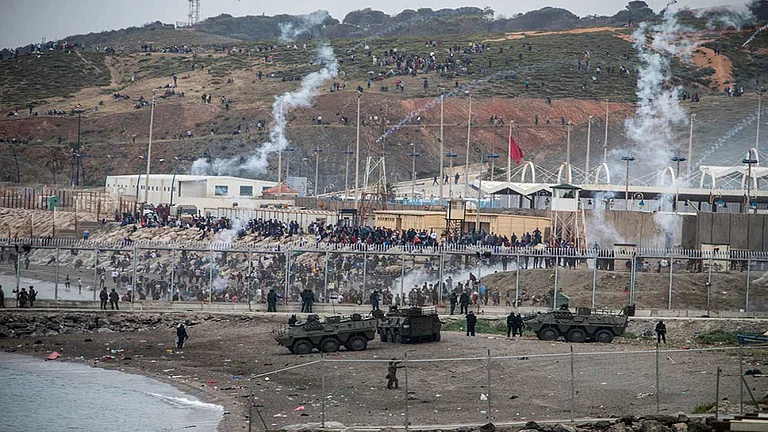
Ceuta’s importance comes from its location. It is Spanish territory and therefore part of the European Union, making it one of the EU’s only land borders with Africa. For migrants travelling through North Africa, reaching Ceuta can represent a possible route into European territory without attempting longer sea journeys to mainland Europe.
However, arriving in Ceuta does not automatically allow migrants to continue into mainland Spain or other EU countries. Those who enter irregularly must go through identification and administrative procedures. Depending on their circumstances, they may apply for protection or face return procedures if they do not have permission to remain.
Why did migrants cross into Ceuta?
The latest surge was shaped by several factors.
Reuters reported that economic difficulties and unemployment in Morocco contributed to the movement, especially among young people looking for better opportunities abroad. For many migrants, Ceuta represents one of the closest possible routes into Europe and a chance to find work or improve their living conditions.
Another factor was misinformation circulating online. Spanish authorities said rumours spread on social media suggesting that migrants who reached Ceuta would not be returned because of a recent Spanish court ruling that was widely misinterpreted online. These claims created expectations among some people that reaching the enclave would guarantee their ability to stay in Spain.
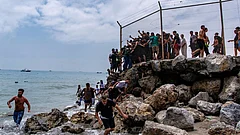
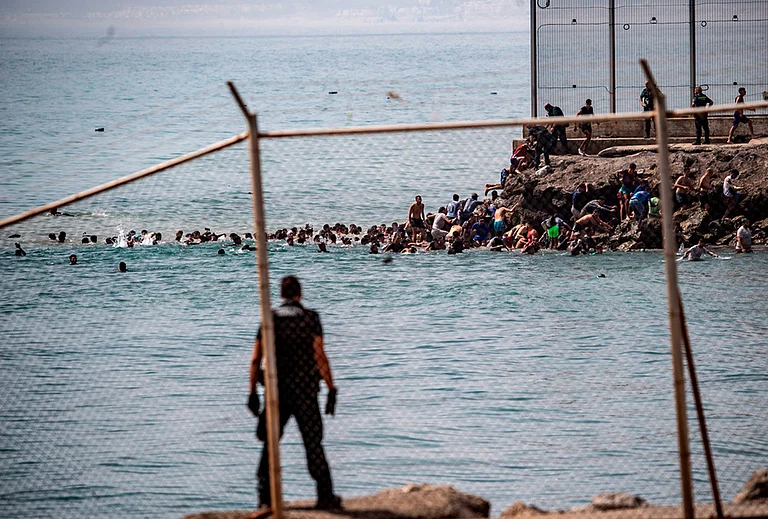
Weather conditions also played a role. Calmer seas made swimming routes around Ceuta’s coastal barriers easier, allowing large numbers of people to attempt the crossing within a short period.
Spanish authorities have also pointed to the role of smuggling networks and online misinformation in encouraging migrants to take the route. The journey remains dangerous, with people attempting to cross through waters and border areas that are heavily monitored.
Why did many migrants return to Morocco?
The return of many migrants became one of the defining features of the latest crossings.
For many who entered Ceuta, the situation after arrival was different from what they expected. Reaching the enclave placed them on EU territory, but it did not provide immediate access to mainland Spain. Movement from Ceuta to mainland Spain and other Schengen countries is subject to border checks, and migrants who enter irregularly must complete legal procedures before any onward travel.
The Associated Press reported that many migrants returned after realising they had limited options inside Ceuta. Some chose to return voluntarily, while Spanish authorities also worked with Morocco on managing returns.
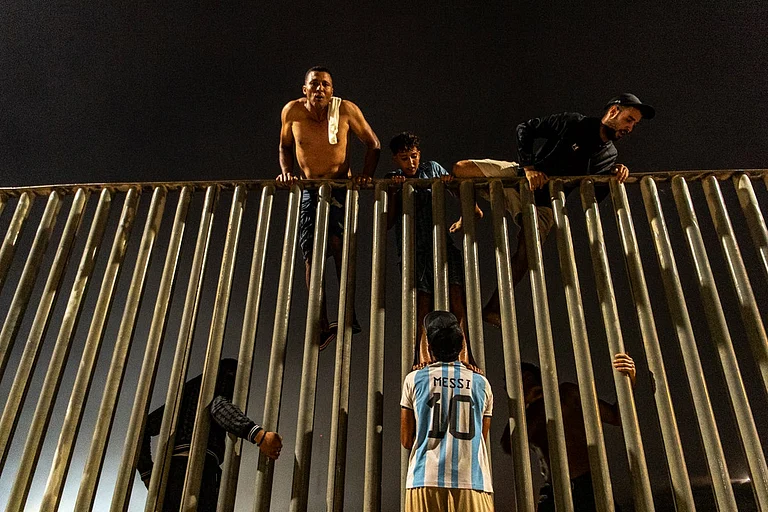
The difference between what many migrants expected and what they encountered after arrival was a key factor. Some migrants believed that crossing into Ceuta would quickly open a route into Europe. Instead, many faced uncertainty, temporary accommodation and a lengthy process before knowing whether they could remain.
Ceuta also has limited capacity to handle sudden increases in arrivals. As authorities increased border security and expanded processing measures, some migrants decided that returning to Morocco was the most practical option.
Spain and Morocco have long cooperated on migration control, including efforts to manage returns. That cooperation played a role in reducing the number of people remaining in Ceuta after the surge.
Why does Ceuta remain a migration flashpoint?
Ceuta’s position makes it a recurring challenge for Spain and the wider European Union. The enclave sits at the meeting point of African migration routes and Europe’s border system, making it one of the most visible entry points into EU territory.
The relationship between Spain and Morocco has also shaped migration patterns around Ceuta. The two countries work closely on border management, but migration has occasionally become linked to diplomatic tensions. The 2021 Ceuta migration crisis, when thousands entered the enclave in a short period, showed how quickly border issues can become political disputes.
The latest surge has again raised questions about Europe’s approach to migration, balancing border controls with humanitarian concerns. Human rights groups have repeatedly warned about the risks faced by people attempting irregular crossings, particularly those trying to swim around coastal barriers or enter through fortified borders.
Ceuta’s importance goes beyond its size. The enclave shows how geography has placed a small Spanish territory at the centre of a wider debate over migration, border security and relations between Europe and North Africa. For many migrants, the journey ended almost where it began — at the Morocco border — but the pressures pushing people towards Ceuta continue to shape one of Europe’s most closely watched migration routes.