Thane City police arrested mastermind Bijendra Gupta, who confessed that the syndicate planned to leak the Maharashtra State Eligibility Test (SET) paper for assistant professors.
Former printing press employee Sanjay Kumar Sharma allegedly promised Bijendra Gupta the SET question papers, which were scheduled for printing in July.
The Maharashtra Teachers Eligibility Test (TET) 2026, originally scheduled for June 28, was postponed after Thane police busted the paper leak syndicate.
Thane City police have disrupted a major examination syndicate by busting the Teachers Eligibility Test (TET) 2026 question paper leak case. The intervention occurred just two days prior to the scheduled test.
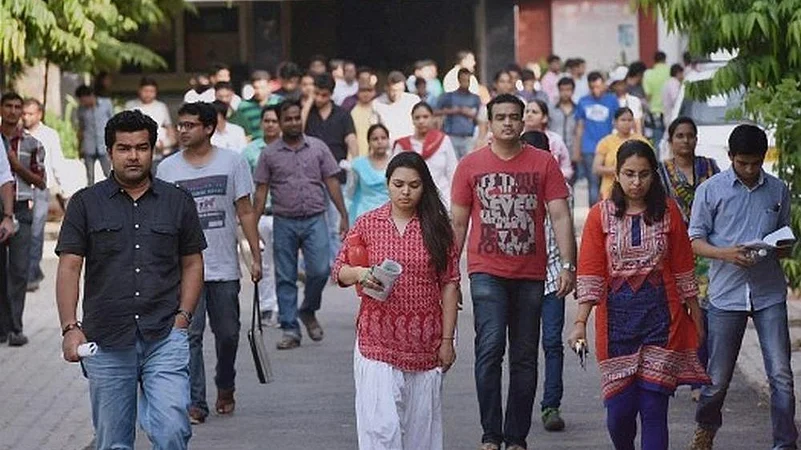
Nearly 6 lakh teachers were scheduled to take the TET on June 28, 2026 across 1,028 centres. The state postponed the exam immediately following the police action.
The alleged mastermind behind the operation, Bijendra Gupta, confessed to Thane City police investigators that the gang intended to expand its operations. Their next target was the State Eligibility Test (SET) for assistant professors, The Indian Express reported.
Targeting The Assistant Professors
Police investigations revealed deep links within the printing industry. Sanjay Kumar Sharma was a former employee at Mahim Patran Pvt Ltd, the Agra-based press where the TET papers were printed.
A police officer said, "During interrogation, Bijendra Gupta told us that Sanjay Kumar Sharma, a former employee at the Agra-based printing press from where the TET paper was leaked, had promised to get him the SET paper as well, which was to be printed and dispatched in July."

Police officers are currently verifying if the SET papers were also printed at Mahim Patran Pvt Ltd. Press authorities did not respond to requests for comment from The Indian Express.
"Gupta has also claimed that Sharma has been in touch with gangs linked to leaking papers across the country and would promise to get them papers in advance in exchange for money," the officer said according to The Indian Express. Gupta was arrested on July 25 and Sharma along with two employees of the printing press was held on July 4.
Savitribai Phule Pune University (SPPU) conducts the assistant professor test. The SET exam, originally scheduled for July 26, was postponed to September. This delay resulted from candidate requests regarding the Pandharpur Wari pilgrimage and MPSC exam clashes.
An SPPU official stated, "We have not received any communication from the police. The SET has been postponed purely because of technical reasons. The exam on July 26 was postponed because there was demand from many candidates, especially those from areas along the Pandharpur Wari (pilgrimage) route, as they would have faced difficulties in commuting."
How The Leak Unfolded
The illicit scheme began on June 2. Agra press employee Babulal Kushwaha overheard his superiors discussing the Maharashtra test materials.
Kushwaha immediately tipped off Sharma. Sharma subsequently contacted Gupta through a middleman named Sonu. Gupta then bought four TET papers for Rs 8,000.
Gupta used his coaching class network to sell the papers to candidates. He charged prices ranging from Rs 80,000 to Rs 1.5 lakh per paper.
The operation crumbled when Deputy Commissioner of Police (Zone II) Dr Pavan Bansod received a tip-off about illicit sales in Bhiwandi. He initiated a decoy operation that led to the arrest of three suspects from Haryana and Bihar on June 26.
Investigators have made over 15 arrests connected to the syndicate. Police officers said that examination papers of one state are generally printed in a different state to maintain secrecy.
How Exam Gangs Operate
Interrogations exposed the extensive methodologies employed by criminal networks to compromise academic integrity. Offline leak methods include staking out printing presses and luring junior staff into corruption.
Syndicates often deploy extreme concealment tactics. Operatives hide smuggled papers inside shoe insoles—a strategy observed during the Bihar Public Service Commission leak in 2024.
Another prevalent offline method involves cultivating direct relationships with the academics responsible for drafting the assessments. This specific tactic was deployed to execute the NEET 2026 paper leak.
The gangs also utilise sophisticated digital strategies. Online leak methods involve running authorised computer centres to facilitate cheating.
In these digital schemes, syndicates allow proxy candidates to take the test after the original applicant clears biometric verification. Alternatively, operators use remote access software to answer questions while the candidate simply sits at the terminal.