India on Tuesday said discussions on the renewal of the Ganga Water Treaty with Bangladesh will take place through existing bilateral mechanisms, including the Joint Rivers Commission. The existing agreement is to expire in December 2026.
While addressing a Bi-Weekly Media Briefing, Official Spokesperson for the Ministry of External Affairs, Randhir Jaiswal was asked if there was an update on Parliamentary Panel’s message that India must start renewing the Ganga Water Treaty. Jaiswal said that there are several technical level structures as well which support discussion between the two sides on water issues.
What Did MEA Say?
Responding to the query, Jaiswal said, “There are 54 rivers that are shared between India and Bangladesh and there is a Joint Rivers Commission which is a bilateral mechanism and there are several technical level structures as well which support discussion between the two sides on water issues. And any discussion on Ganga Water Treaty also will be held as part of the bilateral mechanism that we have in place.”
What Is The Ganga Water Treaty?
The India-Bangladesh Ganga/Ganges Water Treaty was signed on December 12, 1996 and is expiring in December 2026. Discussions for its renewal are yet to commence between the two countries.
Inputs on drinking water and industrial water requirements have also been received from all stakeholders, including from the Government of West Bengal, which have been taken into account while formulating the Government’s views. An authorised representative from the Government of West Bengal took part in inter-ministerial discussions held on the matter on October 30, 2023, March 15, 2024, May 31, 2024 and also on March 26, 2025, where a collective view was formulated.

Why Was It Signed?
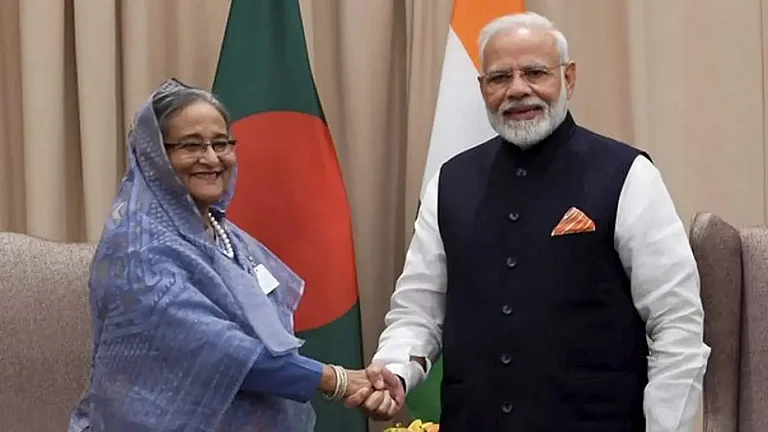
The India-Bangladesh Ganga Water Sharing Treaty was signed on December 12, 1996 by former Prime Ministers Deve Gowda and Sheikh Hasina. It set the foundation that brought an end to the dispute over sharing of waters for a period of 30 years.
How Does The Water-Sharing Formula Work?
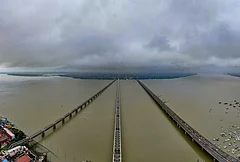
As per The Print, the treaty set a minimum quantum of water to be released at the Farakka Barrage in West Bengal during the first six months of the year (1 January to 31 May) based on a formula and an indicative schedule from assessing the flow of water between 1949 and 1988. The treaty says that if the water at Farakka Bridge falls below 70,000 cusecs, both India and Bangladesh would get 50 per cent share. Different allocation formulas apply when flows are higher, with provisions for consultations during exceptionally low flows. Water is measured every 10 days at Farakka.
In the period between March 11 and May 10, both India and Bangladesh are guaranteed 35,000 cusecs of water for three alternating 10-day periods.
How Is The Treaty Implemented?
Under the framework of the Joint Rivers Commission (JRC), technical-level meetings continue to be held with Bangladesh on all water-related issues of mutual interest. The meetings provide a structured platform for data sharing and joint monitoring.
India and Bangladesh share 54 rivers, of which seven have been identified earlier for developing a framework of water-sharing agreements on priority. The Joint Rivers Commission of India and Bangladesh was constituted in the year 1972 as a bilateral mechanism to address issues of mutual interest on common / border / transboundary rivers.
What Happens After December 2026?
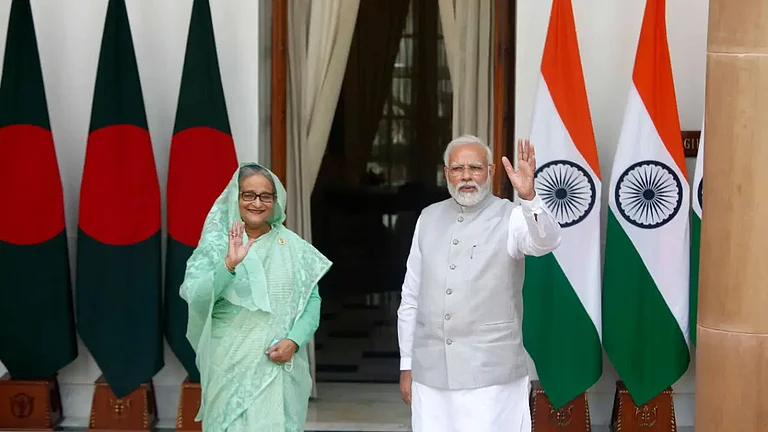
The Parliamentary Standing Committee on External Affairs, led by Congress leader Shashi Tharoor, said on July 30 in a report tabled in Parliament that the government must initiate talks with Bangladesh, as per PTI.
It is titled "Action Taken by the Government on the Observations/ Recommendations contained in the Ninth Report of the Committee on the subject 'Future of India-Bangladesh Relationship'". The topic is sensitive for both countries, led by Bangladesh Prime Minister Tarique Rahman and Prime Minister Narendra Modi.
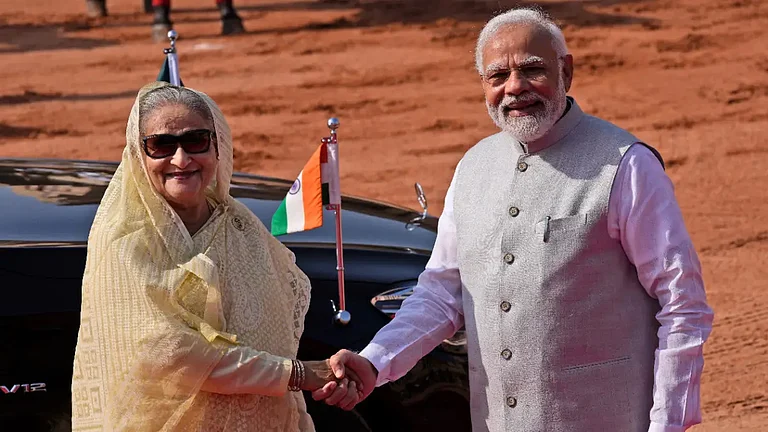
As per The Telegraph India, assessments by the Intergovernmental Panel on Climate Change and regional climate models suggest that South Asia is moving toward more intense precipitation events, punctuated by longer dry spells. Such volatility has made water availability far more unpredictable, weakening the reliability of treaty assumptions rooted in older climatic patterns.
Water-sharing has remained an important issue in India-Bangladesh ties, with the Teesta river also featuring prominently in bilateral discussions. A proposed water-sharing agreement on the Teesta was not signed amid opposition from the then West Bengal Chief Minister Mamata Banerjee.