A mass migrant surge into Ceuta has renewed focus on Spain's North African enclaves and Europe's only land borders with Africa
Ceuta and Melilla are central to EU migration policy, border security and cooperation with Morocco
The enclaves remain flashpoints where migration, sovereignty and diplomacy frequently intersect
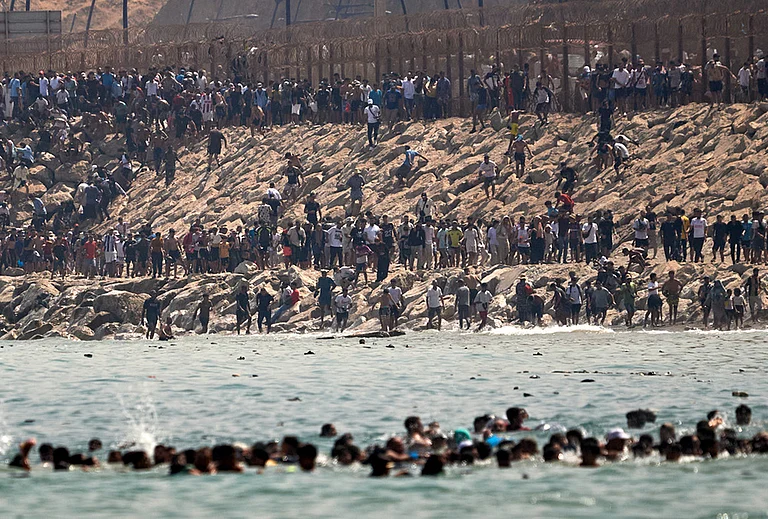
Spain's North African enclaves of Ceuta and Melilla have once again become the focus of Europe's migration debate after tens of thousands of migrants crossed into Ceuta from Morocco, exposing the strategic importance and vulnerability of the European Union's only land borders with Africa.
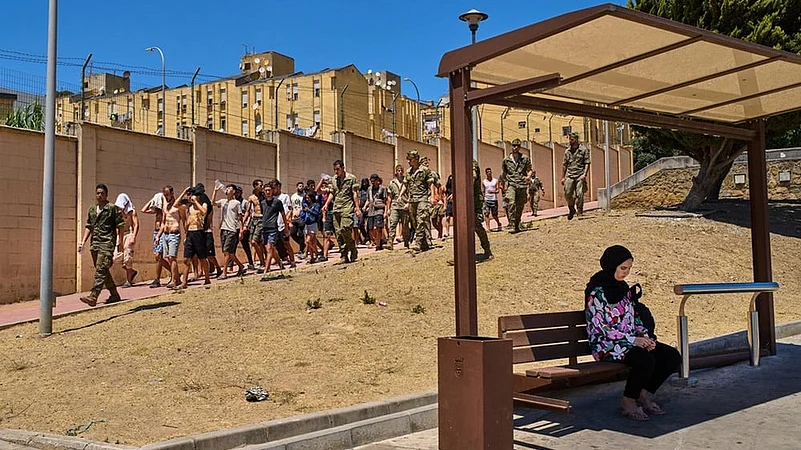
The latest crisis saw Spain restore control over Ceuta after a mass influx from Morocco left dozens dead and prompted emergency security measures. Spanish Prime Minister Pedro Sánchez described the crossings as "a violation of Spain's territorial sovereignty", while Madrid worked with Moroccan authorities to return thousands of migrants.
Why Ceuta And Melilla Matter
Ceuta and Melilla are Spanish autonomous cities located on Morocco's Mediterranean coast. Although geographically in Africa, they are part of Spain and, therefore, the European Union.
They represent the EU's only land frontiers with Africa and serve as external borders of the Schengen Area. While the Schengen acquis applies fully to both cities, special border rules require identity and document checks for travellers leaving Ceuta or Melilla for mainland Spain or other Schengen countries.
For decades, the enclaves have been key entry points for migrants seeking to reach Europe, making them central to the EU's migration and border security policies.


Latest Border Crisis
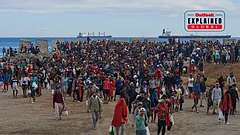
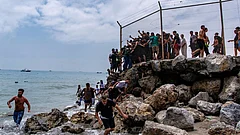
Around 60,000 migrants crossed into Ceuta over two days after a Spanish Supreme Court ruling earlier in July limited the immediate return of migrants intercepted at sea. Although the judgment did not apply to people crossing by land, Ceuta's authorities linked it to the sharp increase in arrivals.
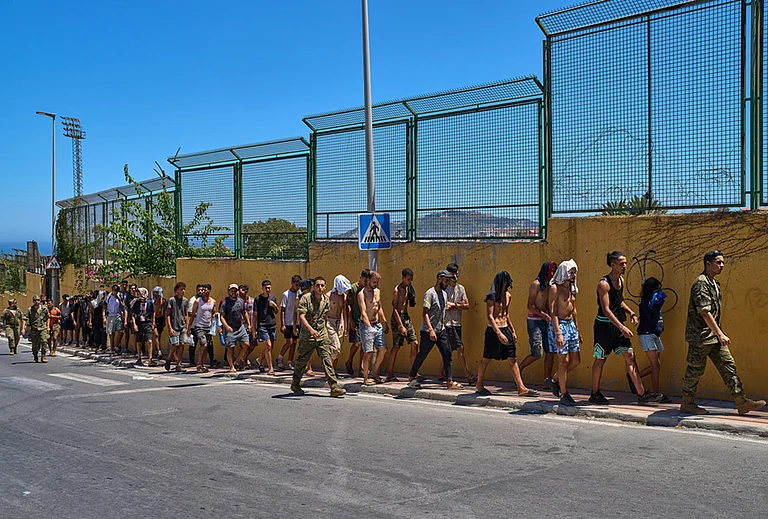
Spanish authorities later regained control of the enclave with Morocco's cooperation, while thousands of migrants voluntarily returned after struggling to find food, shelter and medical assistance.
The crisis also prompted wider European responses. Italy temporarily suspended open-border travel arrangements with Spain, France reinforced security along its border with Spain, and diplomatic tensions emerged after Italian officials criticised Spain's migration policies.
Europe's Border Challenge
The renewed pressure on Ceuta highlights the broader challenges facing the European Union's external border management system.
Under the European Integrated Border Management (EIBM) framework, border security is shared between EU member states and the European Border and Coast Guard Agency (Frontex). The strategy identifies Ceuta and Melilla as strategically important southern entry points requiring coordinated surveillance, migration management and security cooperation.
The latest events also underline the dependence of European migration management on cooperation with Morocco, whose border enforcement has often played a decisive role in limiting irregular crossings into the enclaves.
Why It Matters
Ceuta and Melilla remain at the centre of overlapping disputes over migration, border security and sovereignty. Every major surge in crossings not only tests Spain's ability to manage its borders but also shapes broader EU migration policy and diplomatic relations with Morocco.
The latest crisis has reinforced how developments at Europe's smallest land borders can rapidly become a continent-wide political and humanitarian challenge.