



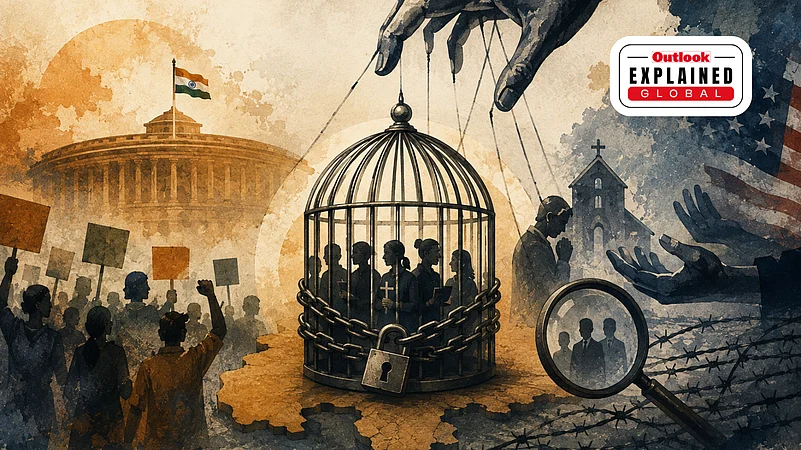
The FCRA Amendment Bill 2026 proposes stricter rules for foreign funding, registration and compliance for NGOs in India
The government says the changes will improve transparency, accountability and national security oversight
US lawmakers and rights groups argue the Bill could further restrict civil society organisations, including Christian charities
The Foreign Contribution (Regulation) Amendment Bill, 2026, introduced in Parliament, proposes significant changes to how foreign contributions are regulated in India. According to the government, the amendments are designed to strengthen transparency, tighten oversight and prevent the misuse of overseas funding.
However, the proposal has drawn criticism from opposition groups, international human rights organisations and some US lawmakers, who argue it could further restrict the functioning of non-governmental organisations (NGOs), including faith-based charities.
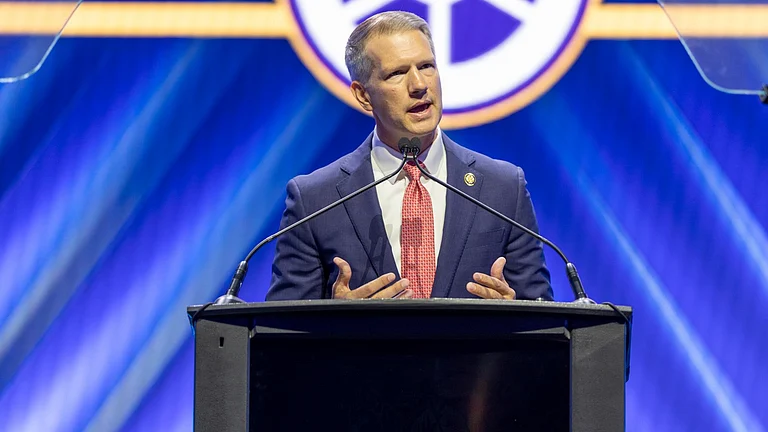
The debate has also taken on a diplomatic dimension after US Congressman Riley Moore publicly criticised the Bill, arguing that it would disproportionately affect Christian organisations operating in India and urging Washington to raise the issue with New Delhi.
What Does The Bill Propose?
The Foreign Contribution (Regulation) Amendment Bill, 2026 seeks to amend the Foreign Contribution (Regulation) Act, 2010, which governs how individuals, associations and organisations receive and use foreign donations.
According to the government's official explanation, the amendments are intended to improve regulatory oversight, enhance accountability and ensure that foreign contributions are not used for activities considered detrimental to national interests.


Among the key proposals are tighter conditions for registration and renewal of organisations receiving foreign funds, enhanced disclosure and reporting requirements, expanded powers for authorities to suspend or cancel registrations, and stricter compliance obligations for recipients of foreign contributions.
The Bill also seeks to strengthen enforcement mechanisms by providing greater powers for inspection, investigation and monitoring of organisations covered under the Act.
According to the Press Information Bureau (PIB), the government argues that the changes are necessary to address evolving financial risks, improve transparency and ensure that foreign funding is utilised only for lawful purposes.
Why Does The Government Say The Changes Are Needed?
The government maintains that foreign contributions require effective regulation because they can influence public institutions, policymaking and national security.
According to the PIB, the amendments aim to modernise the existing law by strengthening compliance mechanisms, improving monitoring of fund utilisation and preventing diversion or misuse of foreign contributions.
The government has also argued that the proposed changes create a more robust regulatory framework without preventing legitimate organisations from receiving overseas funding, provided they comply with statutory requirements.
Why Is The US Concerned?
Although the Bill is an Indian domestic law, it has attracted criticism from some American lawmakers and international rights groups who argue that it could further restrict the activities of foreign-funded NGOs, including Christian charities, missionary groups and faith-based humanitarian organisations operating in India.
Among the most vocal critics is US Congressman Riley Moore, who argued that the legislation would disproportionately affect Christian organisations working in India. In a statement posted on X, Moore described the proposed amendments as "a direct attack on Christians in India" and claimed they would "make it nearly impossible for Christian ministries and humanitarian organisations to receive support from abroad."
Moore also urged the US administration to raise the issue with New Delhi, writing that "religious freedom must remain central to the US-India relationship" and calling on Washington to ensure that "our allies protect the fundamental rights of religious minorities."
His criticism reflects broader concerns among some US conservative lawmakers and Christian advocacy groups, which have for several years argued that India's FCRA framework has disproportionately affected churches, Christian charities and faith-based humanitarian organisations by making it more difficult to receive overseas funding.
What Are Critics Saying?
Beyond the reaction in the United States, international human rights organisations have also criticised the Bill.
Amnesty International has urged Parliament to reject the proposed amendments, arguing that they would further restrict access to foreign funding for NGOs and deepen existing constraints on civil society. The organisation said the proposed changes risk undermining the work of organisations involved in human rights advocacy, humanitarian assistance and social development.
Critics argue that India's FCRA regime has progressively narrowed the operating space for civil society organisations by increasing compliance requirements and expanding government oversight. They contend that additional restrictions could make it harder for smaller organisations to sustain their activities, particularly those dependent on international grants.
The Indian government has rejected these concerns, maintaining that the legislation applies equally to all organisations irrespective of their religious affiliation or ideological orientation. It says the objective is to regulate foreign funding, not to restrict legitimate civil society activity.
Why Does The Bill Matter?
The proposed amendments come at a time when India has increasingly tightened oversight of foreign funding over the past decade, with hundreds of organisations losing or failing to renew their FCRA registrations.
Supporters of the Bill argue that stronger regulation is necessary to ensure transparency, accountability and protection against the misuse of foreign funds. Critics counter that additional compliance requirements could further shrink civic space and affect organisations engaged in humanitarian, educational, religious and rights-based work.
The controversy has also become part of broader international discussions on religious freedom and civil society in India. While some US lawmakers have framed the Bill primarily as a threat to Christian organisations, international rights groups have focused more broadly on its potential impact across the non-profit sector.
As Parliament debates the legislation, the outcome will determine whether India adopts a significantly stricter foreign funding regime. The Bill is also likely to remain a subject of international attention, particularly as it intersects with questions of civil society, religious freedom and the balance between national security and democratic freedoms.


.jpg?auto=format%2Ccompress&fit=max&format=webp&w=376&dpr=2.0)












