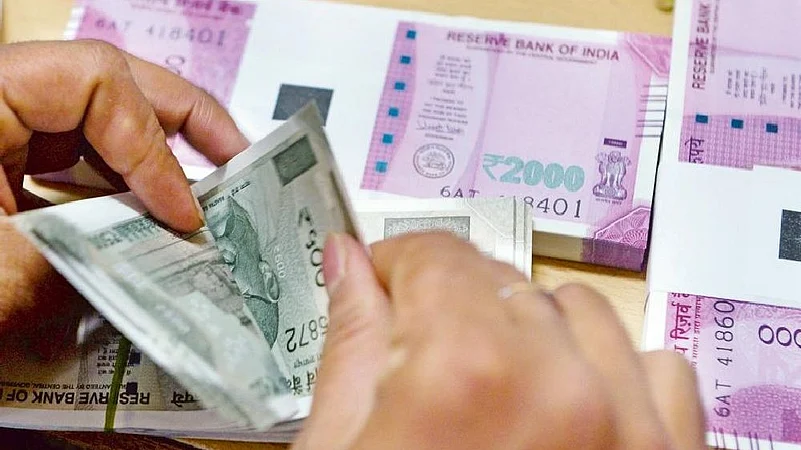
Centre amends FCRA rules, tightening foreign funding norms for NGOs.
NGOs must select predefined activities and disclose operational regions.
New FCRA rules expand disclosure of donors, websites, and social media.
The Union government has tightened the regulatory framework governing foreign funding received by non-governmental organisations (NGOs), introducing a series of amendments that require organisations seeking global contributions to disclose more information about their activities, sources, management structure and geographical areas of operation.
The move, announced by the Ministry of Home Affairs (MHA) through a gazette notification, is specifically focused on excluding proselytisation from several categories eligible for registration under the Foreign Contribution (Regulation) Act (FCRA).
What Has Changed?
At the heart of the amendments is a new requirement that NGOs specify the exact purpose for which they intend to receive foreign funds. Organisations will now have to select their activities from a predefined list under five broad categories: social, economic, educational, cultural, and religious.
They must also identify the States and Union Territories (UTs) where they plan to operate. These details will form part of the registration certificate issued under the FCRA, effectively linking organisations to approved activities and geographical areas.
The government has also introduced additional fees, requiring NGOs to pay extra charges for every additional purpose or State/UT included in their application.


Details of Websites and Social Media Required
The amended rules significantly increase disclosure obligations for NGOs. Organisations applying for registration or renewal must now provide details of their websites, social media accounts, and publications. Annual returns will also need to include detailed activity reports in addition to financial statements.
Another change concerns foreign donations routed through intermediary remittance channels or donor-advised funds. NGOs will now have to disclose the ultimate donor, allowing authorities to trace the original source of funding more effectively.

Broadened Definition of Key Functionary
The government has broadened the definition of a "key functionary" beyond office-bearers and directors. The revised rules now cover trustees, partners in firms, members of governing bodies, the Karta of a Hindu Undivided Family (HUF), and any individual exercising control over an organisation’s management.
The amendments also state that associations with foreign nationals as key functionaries will ordinarily not be eligible for FCRA registration or prior permission. However, exceptions may be granted in specific cases by the Central government, while persons of Indian origin are exempt from this restriction.
Tighter Conditions For Receiving and Retaining Foreign Funds
The Centre has introduced measures aimed at ensuring that only active organisations continue to hold FCRA registrations. NGOs seeking renewal must demonstrate that they have spent at least ₹10 lakh in foreign contributions on approved activities during the previous two financial years.
For organisations receiving funds through the "prior permission" route, subsequent instalments of foreign contributions will be released only after at least 75% of the previous instalment has been utilised. The government may also conduct field inquiries to verify fund utilisation before approving further disbursements.
Action on Religious Activities
The amendments provide a more detailed framework for religious organisations seeking foreign funding. Permitted activities include the maintenance of places of worship, religious education, preservation of faith traditions, and spiritual programmes.
However, the rules explicitly state that certain activities, including religious education and documentation of faith traditions, must be carried out while excluding proselytisation. The inclusion of this condition is likely to attract attention given the ongoing debate surrounding foreign-funded religious activities in India.
What’s the Need?
The government always pushed to improve transparency, accountability and traceability in the receipt and utilisation of foreign contributions. The Ministry of Home Affairs (MEA) stated that the amendments will bring greater uniformity to FCRA filings, reduce duplication in reporting requirements, and strengthen monitoring mechanisms.
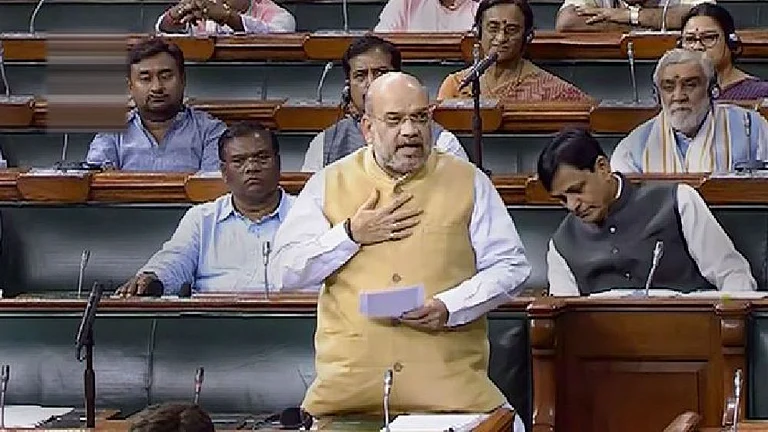
Union Home Minister Amit Shah has previously stated that foreign funding “cannot remain unmonitored” and stressed that strict action will be taken against organisations found violating provisions of the FCRA.
Impact on NGOs
Aakar Patel, Chair of Board at Amnesty International India, in March of this year warned against the stringent use of FCRA, claiming that its has been “cynically amended and misused to harass, intimidate and censor human rights defenders and NGOs carrying out vital human rights work across India.”
Aakar Patel said that as of 26 March 2026, official data shows that 21,933 organizations had lost their FCRA licenses, depriving them of essential funds and often resulting in their closure or severe restrictions on their activities.
“Our research has demonstrated that those most impacted are organizations associated with minority rights, right to freedom of expression, environmental rights and climate action,” he said.
Additionally, the Foreign Contribution Regulation Amendment Bill, 2026, introduced by the government in March, seeks to further tighten oversight of foreign-funded NGOs. The Bill proposes setting up a Designated Authority to manage and control the assets and funds of organisations whose FCRA licences have been cancelled, surrendered or denied renewal.
These actions signals government approach to make foreign-funded NGOs more accountable to both the state and the public.
Impact on NGOs
Aakar Patel, Chair of Board at Amnesty International India, in March of this year warned against the stringent use of FCRA, claiming that its has been “cynically amended and misused to harass, intimidate and censor human rights defenders and NGOs carrying out vital human rights work across India.”
Aakar Patel said that as of 26 March 2026, official data shows that 21,933 organizations had lost their FCRA licenses, depriving them of essential funds and often resulting in their closure or severe restrictions on their activities.
“Our research has demonstrated that those most impacted are organizations associated with minority rights, right to freedom of expression, environmental rights and climate action,” he said.
Additionally, the Foreign Contribution Regulation Amendment Bill, 2026, introduced by the government in March, seeks to further tighten oversight of foreign-funded NGOs. The Bill proposes setting up a Designated Authority to manage and control the assets and funds of organisations whose FCRA licences have been cancelled, surrendered or denied renewal.
These actions signals government approach to make foreign-funded NGOs more accountable to both the state and the public.