The US seized Venezuela’s leader and shifted from anti-drug operations to securing oil supplies.
Trump has issued threats or warnings to Colombia, Mexico, Cuba, Iran and Greenland.
European allies have pushed back as Trump signals military options beyond the region.
After months of targeting what the US described as Venezuelan “drug boats”, the Trump administration seized Venezuela’s leader, Nicolás Maduro, and his wife in a military operation on January 3.
In the aftermath, Delcy Rodríguez was installed as interim president. Although she initially adopted a hard line against Washington, her stance has since softened. President Donald Trump said on Tuesday that Venezuela will now hand over between 30 million and 50 million barrels of oil to the United States.
What began as an effort to halt what the Trump administration said was an extensive drug-trafficking operation that flooded the United States with thousands of tonnes of cocaine has now shifted, with the Trump administration seeking to boost oil trade with Venezuela, the country holding the world’s largest oil reserves.
However, Trump does not seem to be deterred, despite criticism from global leaders pointing out that the US violated international law. He has issued warnings to several other governments — including those of Colombia, Cuba, Mexico, Iran and Greenland.
The United States has long dominated Latin America, a region that has come to be described over time as “the American backyard”. Washington has a lengthy record of intervention across Latin American states, employing methods that have ranged from direct military action and alleged CIA-backed coups to the imposition of economic sanctions and open support for brutal dictatorships such as those of Fulgencio Batista in Cuba and Augusto Pinochet in Chile.

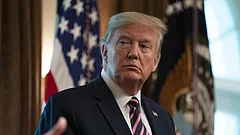

In fact, from the issuance of the Monroe Doctrine in 1823, when the US warned European powers that it was prepared to go to war to preserve the inviolability of the Western Hemisphere, the United States sought to assert undisputed primacy over the region.
Now Trump, the two-time President, has warned multiple Latin American leaders, even using uncouth language. He said on Sunday: “We are in the business of having countries around us that are viable and successful and where the oil is allowed to freely come out.” American dominance in the Western Hemisphere will never be questioned again, Trump added.
Here are a few countries that are in America’s cross-hairs:


Cuba: Bearing The Brunt of Sanctions
The island nation, located 145 km south of Florida, has been under US sanctions since the early 1960s. The two countries have had a strained relationship since Fidel Castro overthrew a US-backed government more than six decades ago.
After the Cuban Revolution in 1959, Washington imposed increasingly severe economic and diplomatic penalties on Havana, culminating in a comprehensive embargo in the early 1960s and the severing of diplomatic ties.
Throughout the Cold War, economic isolation became a central element of US policy toward Cuba. In 1992, the Cuban Democracy Act tightened restrictions on trade and travel, and in 1996 the embargo was expanded into law through the codification of Helms-Burton Act.
Efforts to normalise ties emerged during the Obama administration, which restored diplomatic relations and eased travel and trade restrictions in a period known as the “Cuban thaw.”
However, many of these reforms were reversed under subsequent administrations, including the Trump presidency, which reinstated sanctions and redesignated Cuba as a state sponsor of terrorism.
As a result of decades-long unilateral restrictions, Cuba has grappled with acute shortages of food, medicine, electricity, water, and essential machinery and spare parts, while a growing exodus of skilled workers — including doctors, engineers and teachers — is placing further strain on the country.
In the current context, Cuba has maintained close ties with Venezuela, which reportedly supplied about 30 per cent of its oil in exchange for Cuban doctors and medical personnel working in Venezuela.
With Maduro now out of power, Havana could face significant vulnerability if those oil supplies were to collapse.
With fresh tensions brewing over the preexisting older ones, Trump said on Sunday that military intervention was unnecessary in Cuba, arguing that the country was “ready to fall”.
“I don’t think we need any action,” Trump said. “It looks like it’s going down.” He added, “I don’t know if they’re going to hold out, but Cuba now has no income. They got all their income from Venezuela, from the Venezuelan oil.”
At a rally on Saturday outside the US Embassy in Havana, Cuban President Miguel Díaz-Canel pledged not to allow the Cuba–Venezuela alliance to collapse without resistance.
“For Venezuela, of course for Cuba, we are willing to give even our own life, but at a heavy cost,” Díaz-Canel said.


Colombia: When Cocaine Becomes the Bone of Contention
The diplomatic relations between these two countries has ranged from cooperation to contention.
US involvement in Colombia can be traced back to the early twentieth century, when President Theodore Roosevelt dispatched the gunboat USS Nashville to prevent Colombian forces from suppressing a separatist uprising in Panama.
Colombia only formally recognised Panama in 1922 after the United States agreed to pay $25 million in compensation, marking a limited thaw in relations.
Another turning point came with the 1928 Banana Massacre, an incident that underscored growing resentment towards US intervention, driven largely by commercial and military interests during the Banana Wars.
After Cuba’s revolution in 1959, Washington shifted its regional strategy towards containing the spread of communism through economic and political development. Under President John F. Kennedy’s Alliance for Progress, Colombia emerged as a major recipient of US assistance, receiving millions of dollars in loans to support projects aimed at promoting peaceful social change, including infrastructure development and land and tax reforms.
However, amid criticism that the programme focused on short-term financial goals over long-term reform, it was eventually discontinued in 1973.
Nonetheless, this was not the end of US involvement in the country. US military advisors worked with the Colombian army to employ a counterinsurgency strategy, which was inspired by Castro’s success in Cuba.
By the 1970s, the US had a new problem with Columbia: Cocaine. Colombian cocaine was sold for as much as $50,000 per kilogram in the United States. Columbia became ground zero for a shift in US policy in Latin America, away from counterinsurgency towards a focus on counternarcotics. Washington worked closely with the Colombian National Police to eradicate interdict drug trafficking networks.
As violence, kidnappings and drug trafficking intensified over the decades, President Clinton signed Plan Colombia into law, launching a new bilateral strategy aimed at helping Colombian forces restore order.
In the two decades following the launch of Plan Colombia in 2000, US and Colombian policies converged around intensive investment in counter-narcotics operations, military cooperation and state-building.
However, even though the impact was tangible, the partnership rested on an uneven footing, with US funding shaping policy priorities while Colombia bore the social and security costs associated with militarisation.
By the mid-2010s, this shared framework began to unravel. The 2016 Peace Accords and the suspension of aerial fumigation signalled a shift towards development-led strategies and rural reform.
Washington, however, continued to assess progress largely through metrics such as eradication levels and drug seizures. These tensions deepened further after Gustavo Petro came to power in 2022, pledging to “end the war on drugs.”
With the return of Trump, Columbia has again been caught in the centre of a flashpoint.
Trump and the Colombian President Gustavo Petro have had a difficult relationship, which has now strained further. On Sunday, Trump described the South American leader as “a sick man who likes making cocaine and selling it to the United States”. He is not going to be doing it very long, Trump added, stating that Petro should “watch his a**”.
Petro responded that he would be prepared to “take up arms” to defend his country if necessary, as the United States issues threats against him and his government.
“I swore not to touch a weapon again,” Petro said. “But for the homeland I will take up arms again.”


Mexico-America: The Gulf Widens
Migration has been the root of the dispute between the United States and Mexico, its neighbour to the south. Trump’s rise to power in 2016 was marked by his calls to "Build the Wall" along the US border with Mexico.
On his first day back in office in 2025, he signed an executive order to rename the Gulf of Mexico the "Gulf of America". It is still caught in the Trump administration’s crackdown of focusing on deportation.
Additionally, Trump has frequently accused Mexico of failing to do enough to rein in drug cartels.
On Sunday, he said drugs were “pouring” through Mexico and that “we’re going to have to do something.” He added that the cartels are “very strong” and warned that “Mexico has to get their act together.”
In a phone interview with Fox News, Trump said he had asked Mexican President Claudia Sheinbaum whether she wanted assistance from the US military to root out drug cartels.
Sheinbaum has repeatedly rejected US intervention in Venezuela and the seizure of Nicolás Maduro, while firmly opposing any foreign military action in the region.
“Mexico reaffirms a principle that is neither new nor open to ambiguity,” she said at a news conference on Monday. “We categorically reject intervention in the internal affairs of other countries.”
Responding to Trump’s claims that Mexico has not done enough to combat drug trafficking, Sheinbaum said: “Mexico cooperates with the United States, including for humanitarian reasons, to prevent fentanyl and other drugs from reaching its population, especially young people.”
“We do not want fentanyl or any drug to get near any young person — whether in the United States, in Mexico, or anywhere else in the world.”
Again dismissing the prospect of US military action on Mexican soil, Sheinbaum said she did not believe the United States was seriously considering an invasion of Mexico.
Trump has made similar assertions in the past. In May 2025, he claimed that Sheinbaum had refused an offer to deploy US troops to Mexico because of her fear of drug cartels


Iran: Old American Adversary
Trump also reiterated his warnings to Iran, where anti-government protests over a tanking economy, amid an increased deployment of armed security forces, have entered a second week.
The United States bombed several of Iran’s key nuclear facilities in June last year, amid Israel’s 12-day war with the country. At the end of last month, Trump cautioned Iran against any effort to revive its nuclear and ballistic missile programmes. After meeting Israeli Prime Minister Netanyahu, Trump said he had been told that Iran is “behaving badly. … I hear that Iran is trying to build up again, and if they are, we’re going to have to knock them down.”
With the fresh protests, Trump said: “If they start killing people like they have in the past, I think they’re going to get hit very hard by the United States,”
Last week, he said that if Iran “kills peaceful protesters, which is their custom, the United States of America will come to their rescue. We are locked and loaded and ready to go.”
Iran’s supreme leader, Ayatollah Khamenei, has stated that the Islamic Republic “will not yield to the enemy” and that rioters should be “put in their place.”

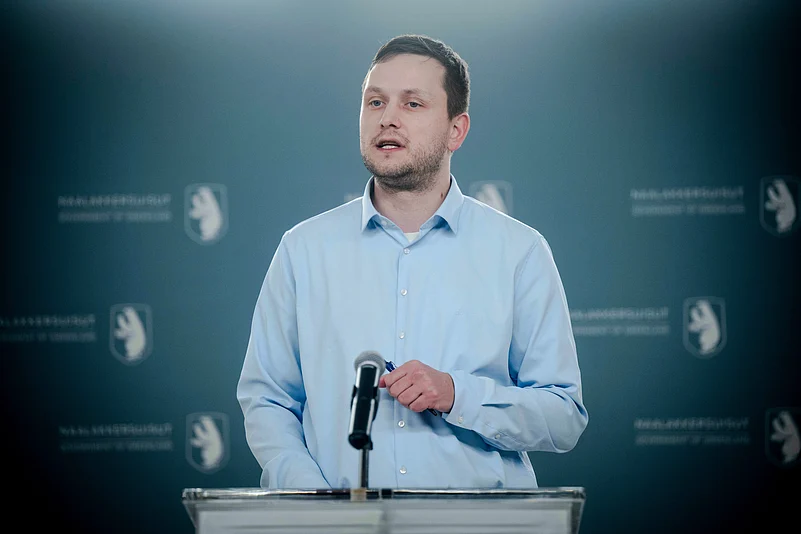
Greenland: Test of NATO Unity
The United States already maintains a military presence in Greenland through the Pituffik Space Base, but Trump has made clear that he wants control of the entire island.
"We need Greenland from the standpoint of national security", he told journalists, adding that the region was "covered with Russian and Chinese ships all over the place."
The Arctic island lies almost 3,200 km north-east of the United States.
The White House said on Tuesday that President Donald Trump is weighing options to acquire Greenland, including the possible use of the U.S. military, reviving his long-standing ambition to take control of the strategically important island despite objections from European allies.
According to a White House statement, Trump views the acquisition of Greenland as a national security priority aimed at "deter our adversaries in the Arctic region."
"The president and his team are discussing a range of options to pursue this important foreign policy goal, and of course, utilizing the U.S. military is always an option at the commander-in-chief's disposal," the statement said.
Eight senior European leaders have come together to defend Greenland, the autonomous Danish territory, amid escalating rhetoric from Trump’s administration suggesting the United States could take control of the mineral-rich Arctic island.
In a joint statement, the leaders said Greenland’s security must be safeguarded collectively through NATO, and in full accordance with the will of its population.
"Security in the Arctic must be ... achieved collectively, in conjunction with NATO allies including the United States by upholding the principles of the UN Charter, including sovereignty, territorial integrity and inviolability of borders," the leaders wrote, hours after Trump said Washington "needs" Greenland.
Trump, a Nobel Peace Prize aspirant, has also stated over and over that Canada should join the US as the 51st state. With his second term defining his foreign policy ambitions and trade tariffs, Trump has altered the 1823 Monroe Doctrine and its promise of US supremacy in the western hemisphere, re-branding it the "Donroe Doctrine".