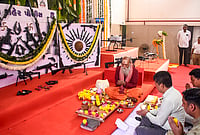
In a development that could transform the lives of people with severe facial injuries, AIIMS Delhi has announced the launch of India’s first face transplant programme. Doctors say they hope to carry out the country’s first such surgery within a year, once permissions and a suitable donor are available.
For many patients, this is more than medical news. It is hope after years of disappointment, as those who may qualify are often survivors of acid attacks, major burns, or gunshot wounds.
Most have already undergone numerous reconstructive operations—sometimes a dozen or more. Yet, they may still struggle to speak clearly, chew food, breathe comfortably, close their eyes, or show expressions. Along with physical difficulty comes social isolation because the face is central to identity.
“A transplant is not about beauty. It is about basic function and dignity. In spite of very advanced reconstruction procedures, there are patients for whom we are not able to achieve the result they want. For some of them, face transplant may be the only option,” said Dr. Maneesh Singhal, Head of Plastic, Reconstructive, and Burns Surgery at AIIMS, Delhi.
He added: “These patients cannot eat properly, cannot speak, cannot close their eyelids, and live with pain. The aim is to restore function.”
Dr. Singhal emphasised that careful candidate selection remains essential. The team must identify motivated and medically stable candidates. Patients with active infections, uncontrolled systemic illness, or cancer do not qualify, he said.


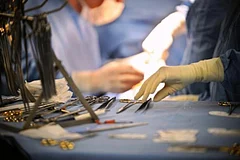
The surgery involves taking skin, blood vessels, nerves, muscles, and sometimes bone from a person who has been declared brain dead and transplanting them onto the recipient. Surgeons then spend long hours joining tiny vessels and nerves under a microscope so blood flow returns and movement may gradually recover.
Even after a successful operation, the journey is far from over.
Patients must take medicines for the rest of their lives to prevent the body from rejecting the transplanted tissue. These drugs can have side effects and make regular hospital visits essential.
Dr. Dipankar Bhowmick, Head of Nephrology at the institute, said AIIMS has long experience in managing such treatment in kidney transplant patients. “The anti-rejection drugs are the same. We use a triple-drug regimen—steroid, tacrolimus, and mycophenolate,” he explained.
Finding the right donor is another major hurdle.
“But it is not easy to find a suitable donor,” Dr. Singhal said. Doctors must match blood group and medical factors but also try to ensure similarity in skin tone and sex. Everything must move quickly once consent is obtained. “A harvested face skin only survives for two hours,” he noted.
Because of the complexity, a large team will be involved—plastic surgeons, anaesthesiologists, transplant experts, psychiatrists, and rehabilitation specialists. Mental health evaluation is crucial since patients must be prepared for lifelong medication, follow-up, and the emotional adjustment to a new face.
Worldwide, only a limited number of hospitals perform such procedures. With this programme, India steps into a highly specialised field of medicine.
For patients who have exhausted every other option, the transplant may offer something priceless: the ability to eat, speak, blink, smile—and return to everyday life with renewed confidence.
Dr. Indranil Sinha, Associate Chief of Plastic Surgery at Brigham and Women’s Hospital (Harvard Medical School), Boston—an internationally recognised expert in composite tissue allotransplantation and face transplant surgery who is leading a training programme in this regard at AIIMS Delhi—acknowledged that the skill set and infrastructure at AIIMS were at par with international standards, and he committed his full support to the program.
Dr. Sinha has been part of 10 face transplants in the US. He said the operation typically lasts between 16 and 24 hours because of the complexity involved in connecting multiple blood vessels, nerves, muscles, and sometimes bone in a single sitting. He emphasised that months of preparation precede the actual surgery.
Dr. Preethy K., Assistant Professor from the Department of Psychiatry, AIIMS Delhi, emphasised the importance of rehabilitation and counselling throughout the course of treatment, while Dr. Shashank Chauhan, Additional Professor, and Dr. Shivangi Saha, Assistant Professor, said that “we have experience with complex facial reconstructions and aesthetic surgeries, which will be helpful to initiate face transplants at AIIMS, Delhi.”