Aravind Siva’s first Tamil feature film, The Tablet had its world premiere at the Bengaluru International Film Festival.
The film is set in Sivakasi, Tamil Nadu stars Dr. Raichal Rebecca and Hemanathan.
It follows the lives of a precocious child and his cautious mother, making ends meet under the weight of a hidden diagnosis.
Aravind Siva’s first Tamil feature film, The Tablet, set in Sivakasi, Tamil Nadu, builds into a slow burn. If one were to expect overt sentimentality, intense interactions and altercations from a film that deals with the stigma of being HIV positive in a small town, one would be inevitably disappointed. What the film offers instead is a glimpse into the lives of a precocious child and his cautious mother, making ends meet under the weight of a diagnosis hidden even from the son. Their lives are somewhat protected by this well-kept secret—though that protection comes at the cost of the exhausting labour required to guard it.
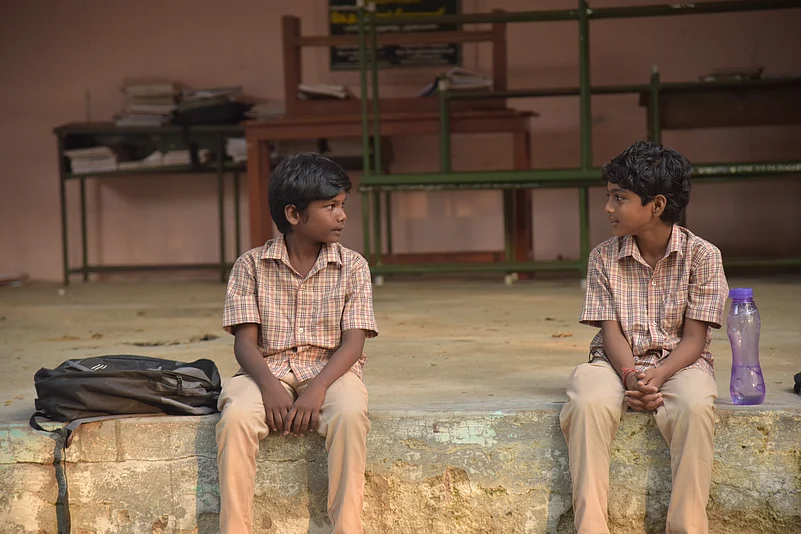
The action rises when Prabhu (Hemanathan)—a sixth grader who has been told by his mother Kayal (Dr. Raichal Rebecca) that the ART medicine he takes every day to reduce the viral load in his body is merely an immunity pill—wants to extend that immunity to his best friend. He gives one tablet to his friend, thus unleashing a series of events that threaten the very secret that shields them from being ostracised. In the process, the film explores the lingering agony that takes form and follows a family, often as fear of being othered.
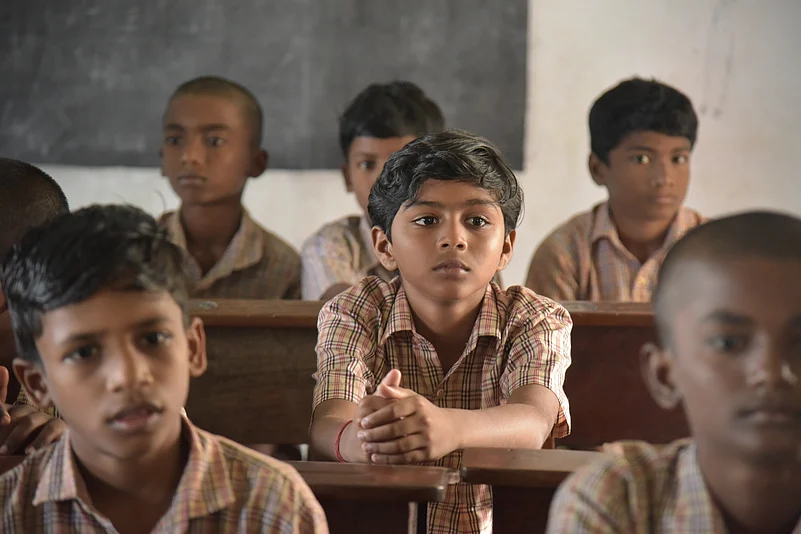
The film also touches upon a few raw nerves while tackling questions about whether keeping one’s HIV diagnosis under wraps is the only way to sustain friendships and social relationships. Who does one tell their truth to, if at all—and when does one begin to break at the seams from holding things together? If a child takes his Anti-retroviral Therapy pills to school to give his friend what he believes is an immunity pill, who is to blame here? Is it the mother, who knows that divulging their truth to her son would break his heart and further complicate their lives? Or the child, who merely wanted to share his immunity with his friend? Or is it, perhaps, the society that barely allows one to live a truth that cannot even be told? Amidst all this, how does a mother ensure that her son also has a childhood filled with dreams—like seeing the ocean one day?



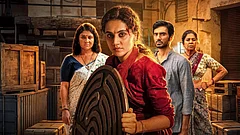
Siva takes a few creative calls that make all the difference: he chooses to show rather than tell, without being verbose or preachy—to a point where restraint becomes the film’s superpower. The diagnosis is revealed halfway through the film when Kayal, with great trepidation, goes to a medical store to buy ART medicines, only to learn that they are administered through government hospitals. One doesn’t hear the word “HIV” being uttered until the penultimate scene of the film. Kayal is watchful and alert, and no one, not even the audience, is privy to what she does not intend to share. Her despair is palpable when she waits at the government hospital: too scared to communicate her urgency (she could lose her job if she does not return in time), yet too rattled to keep waiting as the hospital attendant snaps at her for not taking a seat. The camera waits with her at the hospital, letting the audience register her impatience and restlessness.
Dr. Raichal Rebecca brilliantly breathes life into Kayal while carrying the heaviness of an anxious mother, always on the lookout for things that could potentially risk their lives. Kayal is the sole breadwinner of the family, who prepares food, sends her son to school, works at a grocery store, and returns home to more chores before calling it a night. She squirms when her colleague asks for a bite of her ice cream, despite her awareness that HIV cannot be transmitted through saliva.
Kayal’s secret makes her uncomfortable, but her survival instinct makes her push forward and continue to interact with people. Thus, her interactions are complex and panic-laden, and Rebecca perfectly grasps Kayal’s pulse—down to her inimitable sighs and guarded posture.
Hemanathan’s performance as Prabhu makes one’s heart ache. His curiosity and high spirits and lightheartedness often relieve the tension of the screenplay. Prabhu has questions he needs answers to. More importantly, he is young…he can dream. The harsh realities of life have not crushed him yet. Hemanathan pours hope in abundance into Prabhu, further accentuating the contrast between him and Kayal.
Another interesting creative choice Siva made was to keep the story strictly centred on the lives of a mother–son duo, unfolding over the span of a few days following the missing tablet. The screenplay does not clarify when or how they were diagnosed, or what happened to Prabhu’s father. What came before is of little consequence to the plotline. The narrative remains linear, which adds to the buildup. The camera largely remains static, except when it deliberately breaks the pattern—especially in a scene where Kayal is booking bus tickets. DOP Vinoj Kaveri has beautifully captured Sivakasi as the film’s backdrop.

At the heart of The Tablet lies a story about survival shaped by silence—about a mother who must withhold the truth to protect her child, and a child who continues to dream despite the weight he unknowingly carries. Kayal and Prabhu do their best to protect each other from things beyond their control. Their lives become an ode to tenderness when Kayal opens the tiffin box to check if her son has had enough food through the day, or calls her brother Guna for help from a location away from her house, lest her son finds out.
Siva allows tenderness, fear and dignity to coexist within his frames. In doing so, the film rejects pity and favours empathy. After its world premiere at the Bangalore International Film Festival, one can only hope that The Tablet travels far beyond festival circuits, because stories told with this much care, restraint and humanity deserve not just funding, but audiences willing to sit with their silences long after the screen fades to black.