Kohrra Season 2 is directed by Sudip Sharma along with Faisal Rahman and created/written by Gunjit Chopra, Diggi Sisodia and Sudip Sharma.
The series stars returning talents like Barun Sobti alongside Mona Singh, Rannvijay Singha, Pooja Bhamrrah, Anurag Arora and Prayrak Mehta in its ensemble cast.
It premiered on Netflix on February 11, 2026.
Three years after it first debuted, Kohrra returns with a second season that is not content with mere repetition. Mona Singh’s presence and Suvinder Vicky’s glaring absence from this season prove just that. The makers wanted to shift the poles this time around and they do so with oodles of finesse. Created by Sudip Sharma, Gunjit Chopra and Diggi Sisodia, and directed by Sharma and Faisal Rahman, the new chapter of Kohrra retains the moral fog of the original while sharpening its gaze. In a TV-scape that is scattered with high-profile crime dramas struggling to justify their continuations, Kohrra does something rare and actually ups the stakes by digging deeper.
Like the first season, a body is discovered in the early hours of the dawn, just as the winter fog has started to lift. The victim, Preet (Pooja Bhamrrah), is an NRI yet again. Assistant Sub-Inspector Amarpal Garundi (Barun Sobti), newly married and newly transferred to the fictional Dalerpura from Jagrana, joins Sub-Inspector Dhanwant Kaur (Mona Singh), who has returned to duty after a year-long suspension. Kaur and Garundi’s investigation goes beyond asking who killed Preet and peels back the layers on the kind of ecosystem that made her death possible. On paper, the motifs of a gritty police procedural remain standard. However, in execution, it becomes an autopsy of patriarchy and the horrid roots of its intersectional warfare in this society.



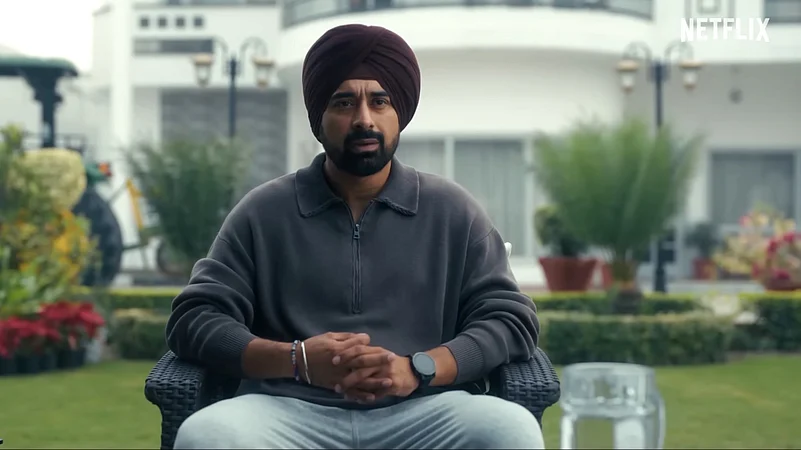
The series subtly dismantles the idea that victims must be virtuous to deserve justice. In flashbacks, we see how often Preet was abused at the hands of the men in her life. Whatever privilege she has for being an upper caste, upper class person, she loses most of it in being a woman. In a parallel storyline we see a young boy, in search of his long-lost father, Arun (Prayrak Mehta) receiving similar kind of unconscionable violence simply for his so-called “lower” status. The cruelty in these unspoken, unscrutinised power dynamics is mundane. The way Preet and Arun meet their fates in the story also contains plenty to be analysed and dissected across the intersections of gender, class and caste dynamics.
There is a striking variety of female characters in this season of Kohrra. Some are loud, recklessnand disobedient. Others move within the system’s confines, internalising its hierarchies as survival strategy. That is how patriarchal bargaining works for them. Preet exists in that tension. In death, she is described as mercurial; the opposite of a “perfect victim.” Nearly every man questioned about her seems to agree on this—her philandering brother, the childhood friend’s husband, her own unfaithful husband, the lover she picked up in Dalerpura. Even extended family members circling inheritance disputes provide testimonies laced with character assassination.
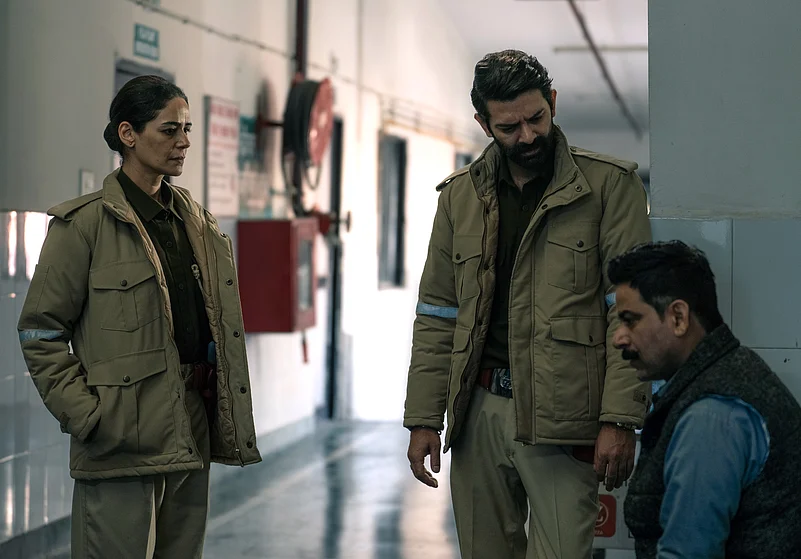
But there is more to explore this season than superficial politics. In addition to matters of misogyny and masculinity, this season also delves into parental loss, issues of fidelity and most importantly bonded labour, aka modern day slavery. Punjab’s inherent problems with drug and alcohol abuse issues are further delved into. And none of the issues are presented as isolated pathologies. The writing insists on understanding systems.
Even technically, the show has grown more assured. The camera is restless when it needs to be, handheld during chase sequences with breathless and fast cuts and patient when scenes demand stillness. Steady frames allow the signature silences of Kohrra to accumulate. The sound design also resists the urge to manipulate. There is no sentimental score nudging the viewer toward outrage or outburst or even the very rare gags.
Every performance, grand or small, lands. Sobti modulates Garundi’s mix of emotional intelligence and moral complexities deftly. For all his understanding of gender roles, even Garundi does not hesitate to slip into casually sexist commentaries when the audience in front of him changes. Singh’s Kaur avoids the trap of becoming a symbolic “strong female officer”; she is brittle, grieving and occasionally unfair. Rannvijay Singha brings an everyman duplicity to the husband who oscillates between remorse and entitlement. Anurag Arora, Pooja Bhamrrah and the rest of the supporting cast fill out a town that feels lived in rather than constructed for plot convenience.
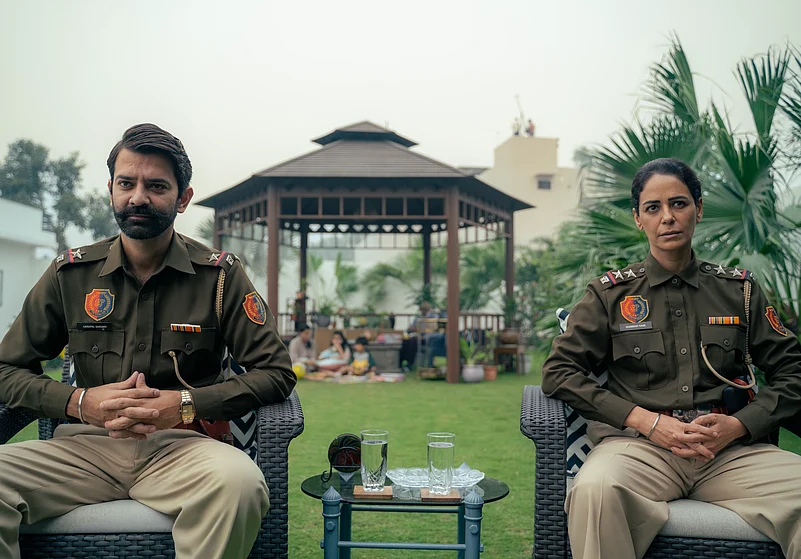
The comparison with other recent crime dramas is inevitable. Where some series—like the recent Daldal starring Bhumi Pednekar, and Delhi Crime season three starring Shefali Shah and Huma Qureshi—resort to loud and convoluted confrontations about gender politics, Kohrra embeds its critique in its details. Here, Kaur’s authority is undercut more patronisingly; Preet’s agency and personhood questioned more realistically; Silky’s (Muskan Arora) character and loyalty laid out in subtler progressive notes.
Sudip Sharma’s recent track record with sequels has been solid. The sophomore seasons of both Paatal Lok (2020-2025) and Kohrra have outdone their first seasons. The central murder investigations in these noirish dramas are compelling, but they are not engineered for shock value. The real tension lies in watching characters confront or evade their own complicity. A second season often carries the burden of legacy but Pataal Lok as well as Kohrra have exceeded it.