Indian actress Madhubala breathed her last on February 23, 1969.
In popular memory, Madhubala has often been painted through a distinct lens of tragedy.
But to see her only through this melancholic lens is to miss the range, craft and intelligence that made her one of the most versatile artists of her time.
In popular memory, Madhubala has often been painted through a distinct lens of tragedy, a label partly shaped by the immortal sorrow of Mughal-e-Azam (1960) and partly by stories of heartbreak, by the knowledge that a congenital heart condition shadowed her adult life and by the devastating brevity of her luminous life and career. But to see Madhubala only through this melancholic lens is to miss the range, craft and intelligence that made her one of the most versatile artists of her time.
Across roughly two decades, she appeared in around seventy-three films—an output remarkable not just for its volume but for its variety. She moved easily between genres at a time when the industry often cast female actors within narrow boundaries. She could inhabit romantic fantasy, light comedy, noir-tinged drama, historical spectacle and musical entertainment without visible strain.
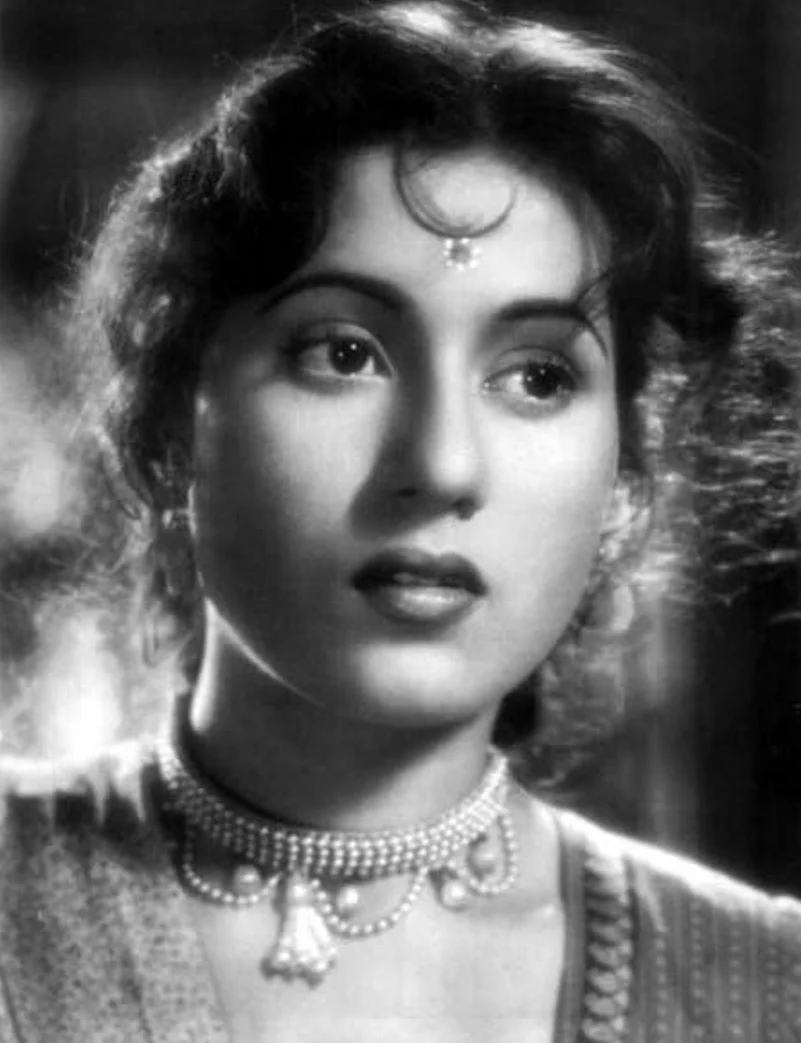
Madhubala’s stardom was not just national mythology. In a potent illustration of pre-internet global fandom, her star image also travelled in unexpected ways to far off places like Greece. The song “Mandoubala” is one of those delightful cultural glitches where cinema leaked across borders and turned into pop folklore. This kitschy novelty pop song recorded by singer Stelios Kazantidis essentially treats Madhubala as a romantic fantasy figure, a pop-culture crush crystallised into melody. The lyrics framed “Mandoubala” as an object of fascination—a face seen on screen, a distant star, someone whose image produces longing.


This was at a time when European pop occasionally referenced Indian imagery as shorthand for romance and spectacle. Global circulation of Hindi cinema in the 1950s and 60s often centred on stars whose expressiveness survived language barriers. And “Mandoubala” sat inside that ecosystem as evidence of soft cultural diffusion before globalisation had a name. Madhubala’s screen presence, her strong facial acting, musicality and ethereal close-ups made her extremely exportable. In short, she read well without subtitles.
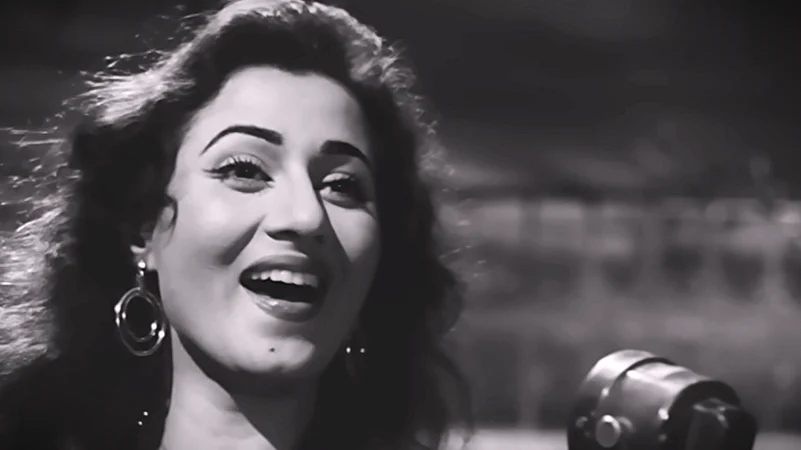
Actual opportunities beyond Indian cinema also appeared briefly for Madhubala. Director Frank Capra [It Happened One Night (1934), It's a Wonderful Life (1946)] reportedly expressed interest in bringing her to Los Angeles to work with her. The proposal, however, was declined by Madhubala’s father, who remained protective amid health concerns and uncertainties about working conditions abroad. Thus, knowledge of the hole in her heart shaped and narrowed paths that might have extended her international reach.
Madhubala’s performance style was marked by responsiveness that could easily transcend language barriers. She had an ability to react in real time to co-actors, to shift tone within a scene and to use silence as deliberately as dialogue. Her musicality also contributed to her effectiveness. Although playback singers provided the recorded vocals, Madhubala’s lip-syncing was unusually evocative. She could sing informally as well and colleagues often noted her instinctive understanding of melody and rhythm.
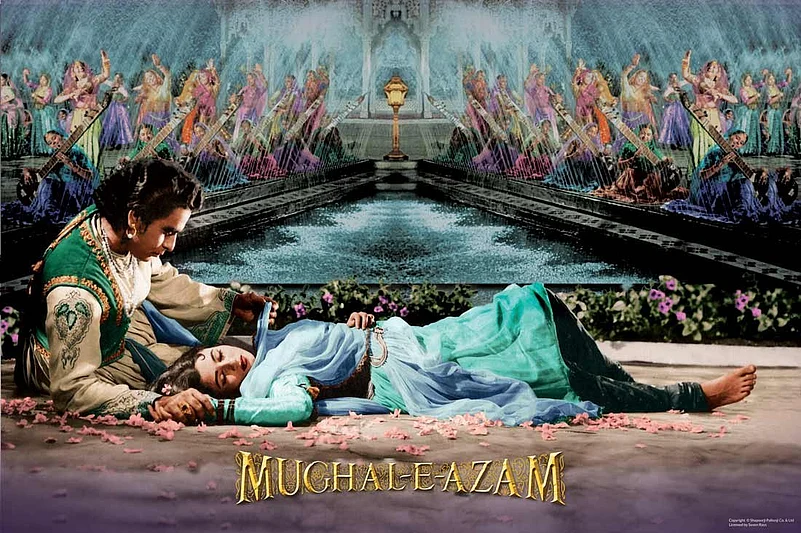
She appeared to inhabit the song rather than illustrate it. Breath patterns, head movement and eye focus aligned with phrasing, giving the illusion that voice and body originated from the same emotional impulse. This skill—increasingly rare in modern-day Bollywood—helped breathe life into her song sequences.
Frequent collaborations shaped the consistency of her work. With Guru Dutt, she delivered one of her most enduring comedic performances in Mr. & Mrs. 55 (1955), where his controlled visual style and her buoyant spontaneity created a dynamic tension. Her pairing with Dilip Kumar—across films such as Tarana (1951), Sangdil (1952) and the monumental Mughal-e-Azam (1960)—demonstrated her ability to match an actor associated with emotional intensity without mirroring his heaviness. With Dev Anand in films like Kala Pani (1958), she leaned into urbane modernity, calibrating her performance to his breezy charm and helping establish the chemistry that defined several 1950s romantic thrillers.
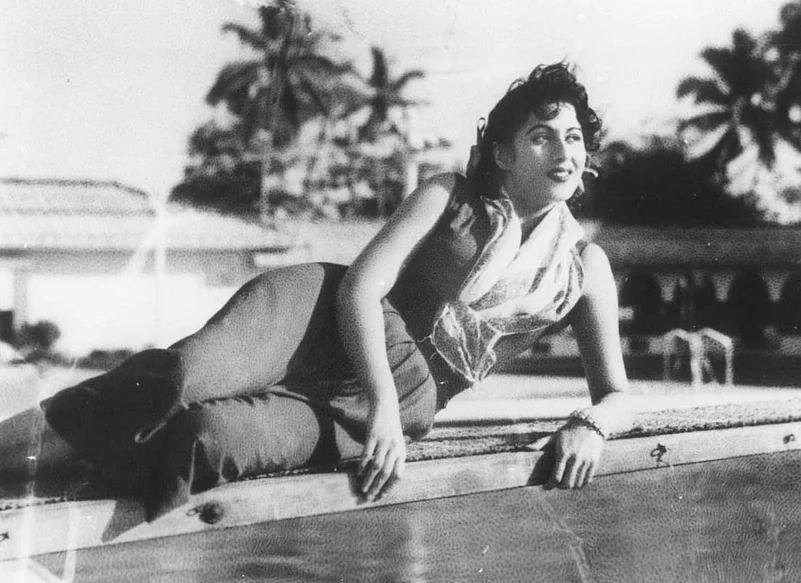
Collaborations with directors including K. Asif, whose meticulous staging demanded precision, pushed her toward stillness and sculptural expression, most famously in the prison sequences of Mughal-e-Azam (1960). Even in lighter fare with actors known for comic energy, such as Kishore Kumar—whom she also married—she adjusted tempo rather than competing for attention.
Her comedic instinct remains one of the most underappreciated aspects of her work. In films like Mr. & Mrs. 55, she demonstrated this. Comedy not only requires control, but a willingness to be vulnerable and foolish and Madhubala understood this.
Mr. & Mrs. 55’s plot revolved around a wealthy young woman manipulated by her domineering, man-hating aunt into entering a sham marriage to secure an inheritance—a narrative that framed women’s independence and feminist politics as misguided, excessive and misandrist. The story ultimately steered its heroine toward traditional domesticity, suggesting that romantic love and male guidance were corrective forces against modern female autonomy.
But even when scripts carried ideological limitations, including the film’s distinctly anti-feminist undertones, Madhubala’s presence complicated the material particularly because she was one of the highest-paid female actors in Hindi cinema at the time. Her earnings signalled a rare level of economic power for a woman in mid-century film culture. Of course, the very fact that she was a working woman supporting a large family, negotiating contracts and commanding box-office value was thanks to feminism.
So, the fact that one of her most memorable roles peddled regressive gender roles as the superior set-up, her very success as a working female artist defied that philosophy. This duality—working within conservative storytelling while embodying modern independence—defined her function in cultural memory as it did for most women artists in the past century.
Debiparna Chakraborty is a film, TV, and culture critic dissecting media at the intersection of gender, politics, and power.