Nina Berman argues that the primary failure in conflict reporting lies in linguistic framing rather than a lack of visual evidence.
Photojournalists must navigate the tension between the legal right to document public events and the ethical need to avoid retraumatising vulnerable subjects.
To combat digital "emotional deactivation," some photographers are moving toward context-driven work that promotes solidarity over aesthetic spectacle.
The documentary photographer exists in a state of permanent tension. They are tasked with producing the "first draft of history," yet they must do so within a framework that often prioritises spectacle over substance.
This paradox was at the core of the recent lecture, Unbroken: Solidarity Through the Lens, delivered by Professor Nina Berman. As a Professor of Journalism at Columbia University, her work explores the intersection of political thought and visual documentation.
The lecture mapped the ethical landscape of the field, dissecting the 'danger of a single story' and the surveillance-heavy nature of modern media. Outlook reached out to Professor Berman for her perspective on how a visual practitioner operates within those difficult boundaries. Her responses offer a rigorous framework for what it means to bear witness, moving beyond the role of a passive observer to becoming a participant committed to documentation without exploitation.
The primary divergence between photography and other forms of reportage, as noted in the lecture, is the physical requirement. Photographers must "show up." This is not merely a logistical necessity; it is an emotional and ethical imposition. In the lecture, it was suggested that this presence carries the constant risk of intrusion. When asked how she navigates the emotional weight of witnessing trauma—and whether the camera serves as a shield or a barrier to her own humanity—her response clarified the role of purpose in the act of documentation.


"When you’re witnessing, you’re intensely focused on doing the best you can possibly do to render the people you’re seeing and their stories as accurately and powerfully as possible," Professor Berman explains. She does not see the camera as a way to "deactivate" or detach; rather, she uses it as a grounding mechanism. "Paying attention to my purpose in that moment and making sure I do my job well allows me to be grounded and effective and not overwhelmed by the emotion."
For Berman, professionalism is not the absence of emotion, but the disciplined application of it. To her, the act of making the image is the act of anchoring oneself.
This discipline is tested most severely when the photographer is working not on a singular event, but on an ongoing catastrophe. The lecture highlighted the "optics" of the “genocide” in Palestine, noting the stark contrast in how Western media portrays different lives. The question arises: are we failing because we lack documentation, or because of the way this documentation is presented?

"We have more than enough images. Palestinian photojournalists have made tens of thousands of pictures and videos showing us everything we need to see. And their work has been instrumental in educating the public about the extent of the genocide. The problem is not with the images themselves, but the linguistic framing used by influential western media companies like the New York Times and the BBC which despite enormous evidence to the contrary, continue to position themselves as objective and neutral actors. And so, you can have images showing the reality of the genocide, but these images are then packaged in language that replicates Israeli state propaganda.”
This framing forces the genocide into a template of a "war between two parties," one a Western ally and the other a "terrorist entity."
According to her, this linguistic packaging is not a neutral act; it is an active legitimisation of atrocities. By refusing to report these events through the context of the Nakba, or the mass displacement and dispossession of Palestinians during the 1948 Arab-Israeli War, these companies ensure that the images remain stripped of their historical reality.
"The significance of this cannot be overstated: the fact that Israel is actively targeting journalists for murder proves that the images are, in fact, powerfully persuasive. If they were truly irrelevant, they would not be treated as a threat to state power," she says.
The ethics of the "street"—where the photographer operates in public spaces—is another point of contention. US law states photography in public places is legal but this legality is a low bar for ethical conduct. During the lecture, concerns were raised about "aggressive" press tactics and the potential for photographers to become mere agents of surveillance. When Outlook asked Professor Berman for her "litmus test" about knowing when to step back. She admits there is no universal rule. When she is operating in a small group or alone, she is constantly assessing her impact. "I try to stay very quiet, make few pictures, frequently step back and assess," she said. But the situation shifts when the press corps is at large. She often chooses to walk away rather than join a "hoard."

This raises the question of whether the Press is performing a necessary function or retraumatising those who are already vulnerable. Using the example of immigration proceedings at the Federal building in New York, Professor Berman acknowledges the difficulty of the trade-off. While the photos have revealed horrific practices, the photographer must constantly interrogate their own presence.
Are they witnessing, or are they producing a "spectacle of violence"? The responsibility, she suggests, lies in the continuous questioning of that function.
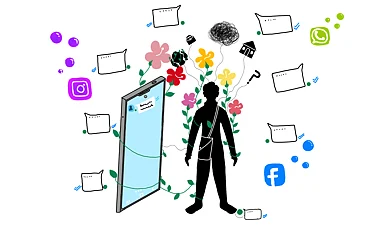
The final challenge discussed was the "blitz" of images on social media and the "emotional deactivation" that follows. In an era with a saturation of digital images, how does a photographer prevent their work from being consumed and discarded? The lecture talks about the loss of the "old days" of magazines, where there was at least a structural separation between the story being told and the commercial advert.
Professor Berman’s strategy is to bypass the feed. She prioritises mediums that force a slower, more deliberate consumption. "I do talks, I make books and exhibitions in order to extend and deepen the work," she says. While using social media, she refuses to let the image exist in a vacuum. She adds context, ensuring the audience is forced to engage with the underlying issues rather than just the aesthetic appeal of the photograph.
This shift in strategy reflects a broader change in the profession. The "old guard" models of extractive journalism—where the photographer takes, leaves, and publishes—are being challenged by a younger generation.
She sees a clear move towards an "ethics of care." This framework, coupled with "power sharing" models of reporting, marks a departure from the transactional nature of the past.
As Professor Berman says, the reassessment is already underway. Journalism is evolving. If it is to retain its legitimacy, it must move away from the aggressive pursuit of the single "shot" and toward a model of equity. It must recognise that the camera is not just a tool for capturing the world, but a participant in making it, bearing a responsibility that extends far beyond the shutter release.