The History of Sound is directed by Oliver Hermanus and adapted by Ben Shattuck from his own short stories.
It stars Josh O'Connor and Paul Mescal in lead roles.
The film traces a love story stretched thin by time, war and silence.
The History of Sound is exquisitely made. The meticulous attention to period details is immediately evident. The costume and set designs are top notch, recreating early 20th-century America that never tips into ostentation. This is a film that wants you to trust its seriousness and its restraint.
Directed by Oliver Hermanus and adapted by Ben Shattuck from his own short stories, The History of Sound follows Lionel Worthing (Paul Mescal) and David White (Josh O’Connor), two young men who meet in 1917 at the New England Conservatory of Music.
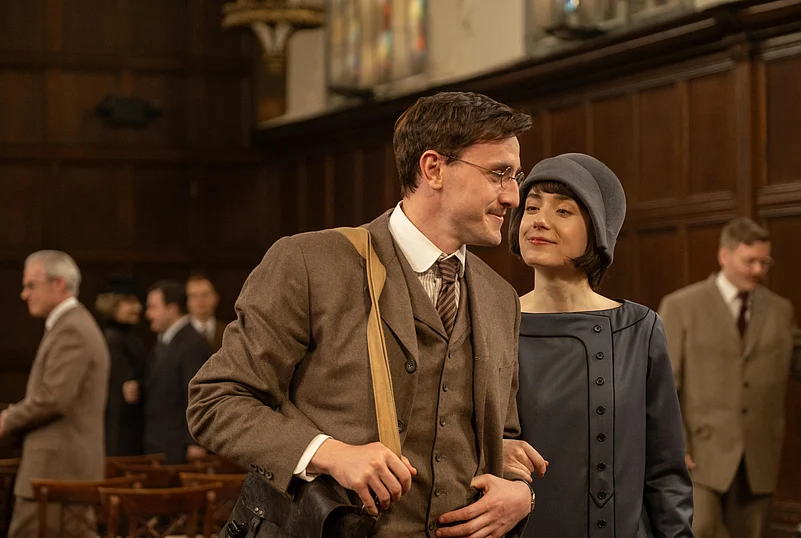
The film traces a love story stretched thin by time, war and silence. Lionel and David meet in Boston, bond over folk music and begin an affair just as America enters World War I. David is sent to fight; Lionel, unable to enlist, returns to Kentucky, where family duty forces him to abandon his musical aspirations for a while. They reunite in 1919 for a roaming project across rural Maine, recording disappearing folk songs on wax cylinders while briefly reclaiming their intimacy. When the journey ends, so does the relationship. Letters go unanswered. Life moves on, unevenly. Lionel drifts through Europe, academia and unsatisfying relationships, carrying an unresolved absence like an unhealed wound.


There is something radical about having two bisexual protagonists played without any contemporary signalling or explanatory hand-holding. The film trusts the audience to understand desire without labels. On paper, the premise is rich: queer, unrequited love, memory, sound, history and loss braided together. And yet, despite all this, the rootedness of its core subject (early days of recording folk music, the preservation of cultural memory), its cultural significance and impact oddly seem detached. The project of preservation, of archiving disappearing voices, remains largely inert—more aestheticised than unearthed for all its joys and warmth and sorrows.
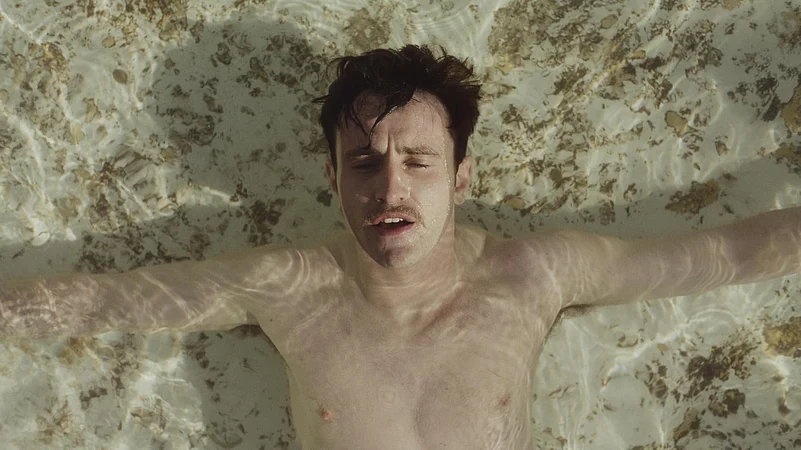
The performances are strong, though that is hardly surprising. It is difficult to get bad performances from the likes of Mescal and O’Connor, two of the brightest actors of our generation. Mescal, in particular, is exemplary.
By design, Lionel is not a reactive character. His emotions are not carved out in big gestures. His facial muscles and body often move in millimetres rather than inches. Each twitch of his lips, even his breathing is measured, especially when he meets David’s wife Belle (Hadley Robinson). It is tremendously impressive because such nuanced emotions are much harder to enact than one might imagine. Claire Foy did it beautifully in The Crown (2016-2023). And Mescal joins that lineage of actors who understand that withholding can be a form of generosity.
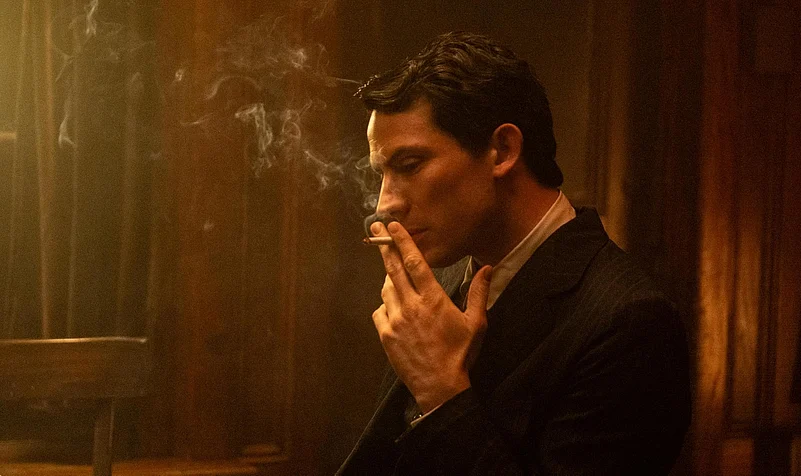
O’Connor’s David, by contrast, is warmer, but even he is bogged down by an overwhelming sense of sadness. Mescal and O’Connor’s chemistry is gentle, credible and maddeningly muted. This is a love story that does not tug at your heartstrings right away. That may be intentional. It is perhaps an attempt to depict love as something more internalised. However, this, paired with the overall lack of narrative dynamism, limits the film.
The History of Sound has a singular emotional register. You have beautifully crafted scenes that project nothing but a prolific kind of melancholia—be it while floating through vignettes of memories or going through moments of discovery in motion. Lionel’s life unfolds as a series of losses: personal, romantic, historical as he moves from heartache to loss to punishingly tragic inevitability. The sadness is deliberately mined from every aspect of his life and almost lacquered onto the film’s surface.
There is a moment before David heads off to war when Lionel tells him, “Write. Send chocolate. Don’t die.” It is so earnestly human in its plea. It lingers longer than many of the film’s more formally curated sequences, because it feels unguarded. The History of Sound manages to handle grief and loss with lilting grace, particularly in its refusal to dramatise pain. However, the film remains far too emotionally restrained for its own good. It admires its own stillness so much that it forgets to rupture it and breathe free.
The second half is more evocative than the first. As the film shifts from romance to aftermath, from possibility to the terrains of lost chances and regrets, it finds a rhythm. But ultimately, The History of Sound is a film that inculcates more dispassionate admiration than emotion. Its craftsmanship is beyond reproach. Yet the film’s emotional austerity, its refusal to let messiness or urgency seep in, leaves it bloodless.
Debiparna Chakraborty is a film, TV, and culture critic dissecting media at the intersection of gender, politics, and power.