A factor binding Bobby Deol and Akshaye Khanna is the magnitude of the virality that followed after Animal and Dhurandhar.
Experts believe comebacks in today's age stand on algorithm, strategy and reinvention.
There same is missing for female actors, even the biggest of names. The absence of virality is connected to deep-set bias, stereotypes and how the gendered understanding of aging.
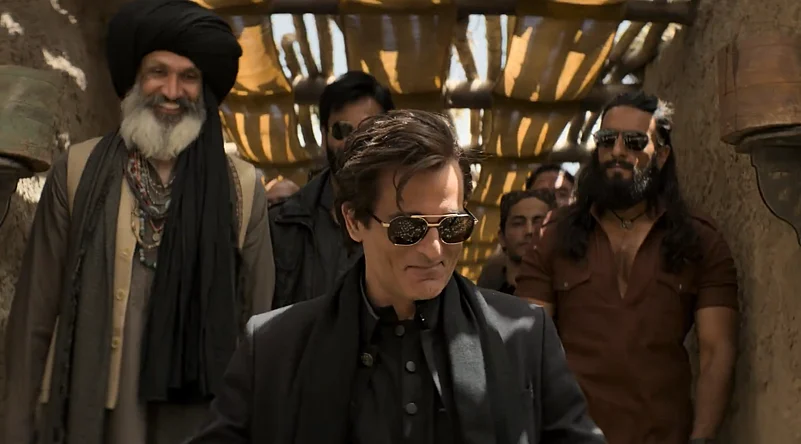
In a recent trend flooding Instagram, women are refusing to do something when an early 2000s Akshaye Khanna, in his tight tees, asks them, but gladly obey when he does the same in his all-black and bold Dhurandhar look. One out of the many trends centred around Khanna’s feted ‘comeback’ as Rehman Dakait in Aditya Dhar’s Dhurandhar, it falls in line with a pattern that has been associated with comebacks of male actors in Bollywood recently.
Khanna's look in Dhurandhar has manufactured itself as a template for desi masculine swagger and aura on social media. People are dressing up in the all-black ensemble and mimicking the dance steps that he has popularised in a viral scene from the film, set against the Bahraini track “Fa9la”.
Riding on its coattails are numerous conversations on his underused versatility, impact of the ‘comeback’, and how Bollywood failed to realise his potential over the last decade and more. The last time these conversations were this intense was after Bobby Deol’s performance in Animal (2023), which was also touted as a grand ‘comeback’ for the actor.
One factor binding Deol and Khanna here is the magnitude of the virality that followed. More than a discussion on performance, the impact of their scenes on social media pushed the conversation to the centre of Bollywood. The other commonality is the hit track which accompanies their viral scene/snippets on social media—the Iranian number “Jamal Kudu” for Deol’s entry in Animal and “Fa9la” for Khanna in Dhurandhar. A social media leitmotif, the tracks have not only proved to be earworms, but also Pavlovian elements that have made people associate them to a certain style and template.


Standing on similar grounds, the connection presents a scope for a dive into the conversations, impact and virality in these two instances.
The Feted Comeback?
“If you wish to have a comeback in life, make it like Bobby Deol’s.”
It is no news that Instagram has its own flavour of motivational quotes. Doomscrolling or not, it was not uncommon to find a reel or a meme on Instagram pushing one to cling on to patience like Bobby Deol. And that life would certainly give us a Deol-esque comeback. Following Animal, Deol has been on a springful career-high with much-hyped appearances in Kanguva (2024), Ba***ds of Bollywood (2025) and Bandar (2025). For Khanna, however, Dhurandhar was the bouncer in a stretch of strong, yet sidelined performances. While Ittefaq and Mom in 2017, Accidental Prime Minister, Section 375 in 2019, and Drishyam 2 (2022) hardly had the murmur gaining momentum, Chhaava and Dhurandhar this year had people talking about Khanna 'again'.
“Again?” A few people have asked on social media. “When did we ever talk about Akshaye Khanna?”
Madhuja Mukherjee, filmmaker and professor of film studies at Jadavpur University, Kolkata, attributes this to a certain kind of ‘new media condition’, where the idea of a comeback is manufactured. “The comeback in question is not on the lines of Amitabh Bachchan’s return with Khuda Gawah (1992) or Shah Rukh Khan’s return with Pathaan (2023). It does not work like that anymore. It is going to be a trail of media events, things going viral for a week, and then subsiding.”

Beyond good-ol' promotional events, content seeding has played a crucial role in triggering conversations and setting up the template where if you scroll, you are fed, hungry or not. For both Animal and Dhurandhar, influencers catering to national and regional audiences were not just talking about the films but pinning the idea and the mood with a deluge of reels using the visuals and the music. Mukherjee notes that the ‘comeback’ stapled to Khanna and Deol is more algorithm than phenomenon. “The algorithm is going to show you more of what you see. The hashtag pushes the vehicle, more than the sense of a comeback. Harnessing social media enables excessive expression, which is there but for a short time when it peaks,” she adds.
Deol and Khanna, through the turn of the century, were known constants, but never the primary billing. “With Deol, there is a sort of campy memory associated but neither of them was a bona fide star,” says Mukherjee. Aura, once the monopoly of the top shelf, is no longer a denominator in an era trying to move beyond the 'star'. With Animal and Dhurandhar, swagger-loaded images of both 'Lord Bobby' and Khanna, hardly ever mainstay names of on-screen desirability, have been cooked in the digital wok of ‘aura farming’ —a social-media image cultivation technique vastly different from how Bollywood had ever understood the word.
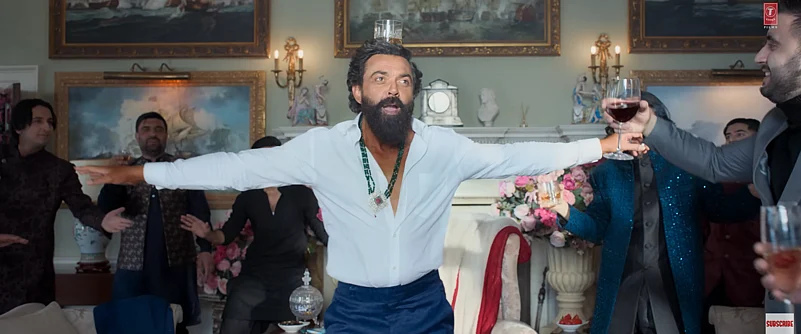
The conversations and opinion pieces flooding the internet have common pegs—of the industry failing to utilise the prowess of a Khanna or the ability of Deol to grind his way back to the headline. However, as many in the industry have pointed out, in Bollywood, it is hardly a linear understanding of popularity.
Arnesh Ghose, editor-at-large and image architect who has crafted identity and positioning for Dharma Cornerstone Agency talents and other celebrities, talks of the correlation between reinvention and demand. “It is important to note that both Bobby and Akshaye are actors who could not keep up with the times in their primes. They were stars when they were young but failed to stay relevant. Look at where Aamir (Khan) and Saif (Ali Khan) are today, Akshaye's co-stars from Dil Chahta Hai (2001), or even Anil Kapoor, way senior to him, and his co-star from Taal (1999). Having noted that, we need to understand that Bobby and Akshaye's ‘comebacks’ were not necessarily built like comeback vehicles,” he notes.
More than the industry’s urge to make space for Khanna or Deol in the previous decades, Ghose talks about the importance of establishing a brand for oneself to keep afloat. “Stars' attractiveness depends on their direct audience demographic. Ajay (Devgn) evolved from his soft boy era to Singham era because his audience grew up and weren't turned on by soft boys anymore. It is how one moves on from their childhood pop idols. Shah Rukh, Salman Khan, and Akshay Kumar have been able to position themselves as enduring brands for their audiences. Bobby and Akshaye had failed to do that. So, as millennials grew up, they lost interest in them,” he says.
The Brand of Excess
Although both Deol and Khanna were involved with a number of projects preceding Animal and Dhurandhar, the discourse on ‘comebacks’ never found any momentum for either- almost pushed to a space of inconsequence. With Chhaava, however, Khanna delivered a convincing performance which pressed the rage-bait button hard enough for people to tear up screens, and kill Aurangzeb all over again. Despite not being a comeback in the true sense of the term, it is important to interrogate what then led to the virality of their current avatars and the celebration of the same.
In the case of both Deol in Animal and Khanna in Dhurandhar, the virality stands on a distinct style of heterosexual masculine expression and a testosterone-fuelled brand of cinema. Numerous men have taken to Instagram to dress up as the characters or mimic the mannerism, which places an attractive male figure as the aspirational template.
“We know how Bollywood works and that is not in isolation from the political sphere or institutions which are so deeply masculine. It is just men everywhere. So, this is in tandem with the ever-prevalent worship of masculinity in Bollywood,” says Mukherjee, attributing the tone to the global rise of masculinity, right-wing politics, and a kind of violence which is “never enough”.
Talking of the ‘masculine’ excess as a sellable element, the rise of sexual and right-wing violence, Mukherjee says, “At the core of it, we have a really virulent right-wing audience. The audience and the trolls represent the major cross section of voters through which the culture of excess has not only been glorified but also normalised.” She adds, “When the parties in power believe that you can be anti-women or anti-Muslim and get away with it, it is certain to reflect on screen as well. With Animal and Dhurandhar, the cycle of more is ever-expanding.”

The Vacuum: The What and the Why
Over the last decade, numerous big female actors of the 80s, 90s and the early 2000s have also come back to the fore with mainstream films and OTT. However, none of them have invited the kind of forward and aggressive virality, with most of them being short-lived chamber conversations, even with big names like Sridevi, Madhuri Dixit, Raveena Tandon or Zeenat Aman.
Mukherjee connects the pattern of gendered virality to the scope of the medium and the general masculine control of cinema in general. “It relates to the virility associated with the medium along with the modes of accessibility and circulation. What media is circulating is related to fanfare and a general rise of a certain brand of masculinity. We see how popular flashback footage of award shows or nostalgia chips like Filmfare covers of bare-chested actors work...”
She also relates it to the question of stardom and the economy of cinema.“There are popular female actors, but I don’t think they are figures people, rather men, would pay to catch a first show. Sridevi was there, maybe Rekha to an extent, but not the kind of stardom that the male heroes have commanded through the audiences. We are talking about single screen working class theatres which have been principally associated with male celebration—of an Amitabh Bachchan, Shah Rukh or a Salman Khan appearing on the screen to the applause of the crowd. So, this is, in a way, a reinforcement of that,” Mukherjee states.
Ghose associates the lack of celebration of female actors’ comebacks to a glaring difference in the way aging has been associated with them on screen. “It is important to unpack modern masculinity. Till the 2015s, ageing was a bad thing for a man. Then, with Milind Soman's sudden resurgence, or with SRK in Dear Zindagi (2016), millennials started seeing age as a good thing, a confident thing. The visual of a 40-year-old man changed. He wasn't a paunchy, balding, exhausted and henpecked anymore. And Instagram helped. We started seeing older men in great shape, successful, rich, etc. And when GenZ entered the conversation, the older man became desirable. Millennials now wanted to be that version of the older man. The GenZ found the older man desirable and wanted to be with them,” Ghose states.
Ghose also talks of the element of “Daddification” on the internet, of which he says, virality is a by-product. “If one compares, Bobby was “daddified”. He was sexually alluring. Akshaye, in Ittefaq or Chhaava wasn't daddified. But in Dhurandhar, he was. He has fabulous hair (also, he has mentioned in an interview that losing his hair was like a piano player losing his fingers) and is confident and stylish. Here, we must note that in India, the older man, the “daddified” man, is bold, strong, violent, aggressive. It has a lot to do with how we see/ react to/ contextualise authority,” he says.
However, for women it has been about tackling the ancient binary of the Madonna and the whore. For female actors, aging never got a newfound marketing definition. It was either a call for humble exit or a quiet slip into the template of being 'the dignified mature' or the mother.
The aggressiveness, the lure and the promiscuity that glorifies the aging “daddified” man kills the female, aging or not. Ghose, however, believes there is scope for mounting the female comeback and the feminine experience in a different way. “The scope exists. With OTT, we are seeing a change in the way the structure functions. However, the characterisation or archetype stapled on to an aging female actor wires itself around the fact that people who are at the top of the industry are all men. Mostly, men are ‘writing women’ in a way which is their lived reality.”
Highlighting the instance of casting a younger Shefali Shah as the mother of Akshay Kumar in Waqt: The Race Against Time (2005), Ghose attributes the perception to deep conditioning. “When it comes to the mainstream, it is convenient to put female actors into prescribed boxes, let alone female actors past their forties. For example, even for Madhuri, a huge star, the prescribed binary is still at play. Dharma (Productions) gave Madhuri a Kalank (2019). If not a mother, it is easy to see Madhuri as a prostitute or a tawaif or a courtesan. She's proven that before, we get it, so give her that again. We see people trying to fight it—Shefali Shah, Konkona Sen Sharma and others—but the only way to not give in to this, is to keep saying no, and that is where the vacuum is born,” Ghose points out.
Interestingly, for another section of men on social media, the comeback of the ignored male figure arrives as an emotional equivalent of a LinkedIn post. There is inspiration, aspiration and vindication. And in all of this, the vacuum expands. If Khanna and Deol, despite not being the biggest of stars, could command virality of such magnitude, why haven't the biggest of female stars of yore been able to do same? The audience has the answer and so does the industry.