Iran reportedly executed 19-year-old wrestler Saleh Mohammadi in a public hanging in Qom
He and two others were accused of killing security personnel during anti-government protests
Human rights groups raised concerns over a forced confession and lack of a fair trial
Iran has executed three protesters, including 19-year-old wrestler Saleh Mohammadi, in public hangings in Qom, in a move seen as a sharp escalation in its crackdown on dissent following recent anti-government protests.
The executions were carried out in public in Qom amid the ongoing war involving Iran, the United States and Israel, highlighting the country’s continued use of capital punishment in protest-related cases.
According to a BBC report, a member of Iran’s national wrestling setup was among those executed, pointing to the athlete’s background prior to his arrest.
Iran state media confirmed that Mohammadi, along with Mehdi Ghasemi and Saeed Davoudi, had been executed following convictions linked to alleged violence during anti-government demonstrations earlier this year.
Authorities in Iran said the three men were involved in the killing of two security personnel during unrest, alleging that the attacks were carried out using knives and swords.
The arrests took place during protests that spread across several regions, after which legal proceedings were initiated. The judiciary stated that the trials were conducted and the death sentences were upheld by the Supreme Court.


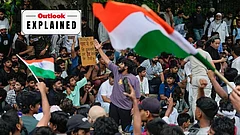
Human rights organisations have raised concerns about the process. They have alleged that Mohammadi’s confession was obtained under coercion and that he did not receive a fair trial. The charge of moharebeh, or “enmity against God,” was used in the case, which under Iranian law can carry the death penalty.
Who Was Saleh Mohammadi? What Did He Do?
Saleh Mohammadi was a 19-year-old freestyle wrestler from Qom and a member of Iran’s national wrestling team. He was arrested in January 2026 during protests in the city, which were part of a wider wave of demonstrations.
According to reports, Mohammadi and two others were accused of killing members of the security forces during clashes. Prosecutors charged him with moharebeh, describing the alleged actions as waging war against the state.
Human rights groups have disputed the allegations and the legal process, stating that the case involved a forced confession and lacked fair trial standards.
The case has been compared to that of wrestler Navid Afkari, who was executed in 2020 after being accused of killing a security guard during protests.
A few days earlier, amid the ongoing war involving Iran, the United States and Israel, members of Iran’s women’s national football team were offered asylum during the Women’s Asian Cup in Australia.
Several players initially sought protection visas over concerns about returning home, but most later withdrew their requests and returned to Iran, while two remained abroad.
The broader context involves ongoing protests in Iran, where demonstrations over economic and political issues have led to arrests and prosecutions.