The expanded FIFA World Cup has been thrilling yet exhausting, with time zones and off-field narratives shaping the experience
For Indian fans, every World Cup revives the question of India's absence from football's biggest stage
For Indian media, the tournament has become a largely second-hand, digital-first experience driven by trends over reporting
Here comes a football World Cup soliloquy!
The ongoing tournament already feels like a seemingly endless stretch. Following the tournament in North America, it skews our perception of time, destroys our daily routine, and blurs one match into the next. When an already massive tournament is scaled to this size and magnitude, managing sensory overload becomes a part of the game.
But that doesn't mean we are immune to its charms. After all, we are witnessing the 'beautiful game' in its grandest spectacle.
Teams representing 48 Member Associations -- FIFA's preferred naming convention for countries and territories -- assembled to stake their claim as the world's best footballing ensemble. A lot to choose from!
It has been whittled down to seven following France's humbling of Morocco in their quarter-final. Le Bleus, who lost the title clash four years ago on penalties, are playing probably the best football in this edition, and Kylian Mbappe & Co. are primed for a third successful final appearance.


When Football Becomes Too Much Football
And now, with the Atlas Lions' exit, African presence in the 23rd edition of the World Cup has ended, leaving six from Europe and one South American team, Argentina - the defending champions. By Sunday morning, we will know which four teams head to the semi-finals. The biggest-ever football tournament will then conclude on July 18.
In this still-extending period of footballing gala, 282 goals have been scored in 97 matches, with Lionel Messi and Mbappe hitting the back of the net eight times each. Erling Haaland has seven and is third in the Golden Boot race, ahead of Harry Kane (6).
And 13 is an interesting number. 13 players have scored 14 own goals (two by Egyptian Mohamed Hany), and 13 have been shown straight red cards, plus four who got send-offs following a second booking.
That's a brief on the on-field action.
Then there are the side shows, playing out like a Hollywood production, borrowing the American theme: the constant geopolitical posturing, FIFA politics, and pre-defined media narratives, to name a few.
The public discourse remains fixated on ageing icons (you know who), while institutional biases and underlying racism continue to simmer beneath what's actually happening on the field of play.
And for fans in India, this chaos is compounded by the sheer tyranny of time zones. Following the tournament religiously means sacrificing sleep and breaking routine.
The FIFA World Cup happens only once every four years, in stark contrast to the relentless, non-stop cricket calendar. We push our bodies to the limit. Spare a thought for the ones tuning in from the traditional Indian football heartlands of West Bengal, Kerala, and the Northeast. The geographical divide can't be this brutal for a single sporting event.
Then again, there is no middle ground. Irrespective of India's presence or absence, the football World Cup remains the ultimate global showpiece, only rivalled by the Olympics.
What The FIFA World Cup Teaches Indian Fans Every Four Years
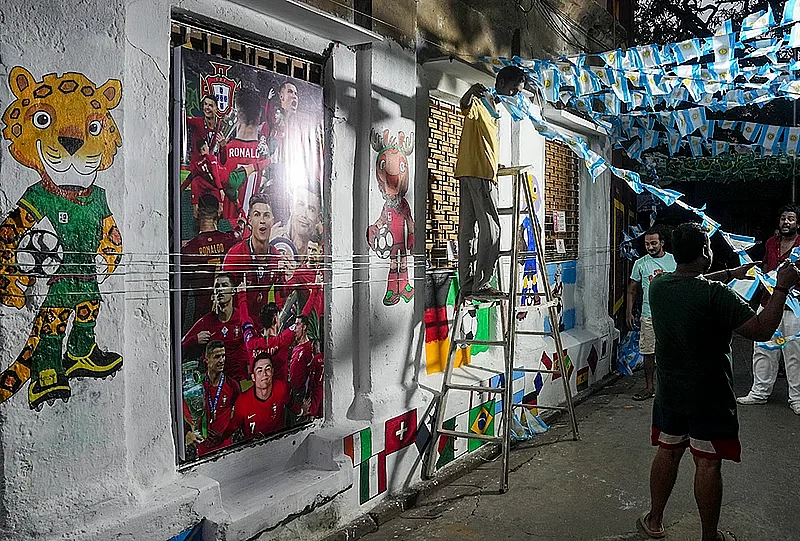
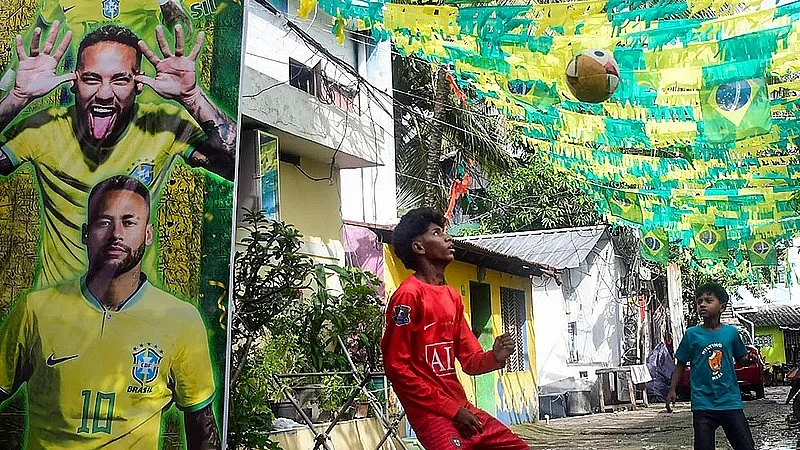
For Indian fans, the journey itself began long before the first whistle, clouded by the national team's poor performances over the years and the perpetual structural chaos that defines the sport in the country. Yet, that has never diminished their passion for the game.
Many found their own connections to the tournament by following Indian-origin players representing other nations, such as New Zealand's Sarpreet Singh, cheering for familiar roots even in India's absence.
Every World Cup inevitably brings back the same question -- Why is a country of 1.47 billion people still not playing at the FIFA World Cup? It's a question that surfaces every four years, and by now, we all know the answer.
Population has never been India's problem; the football ecosystem has. Decades of administrative uncertainty, poor governance, fragmented grassroots structures, inadequate infrastructure and inconsistent long-term planning have ensured that India remains a spectator at football's biggest festival.
This misery was further compounded by a literal broadcasting blackout panic just before kick-off.
While Zee stepped in at the eleventh hour to give Indian fans a lifeline, the viewing experience has felt compromised, unlike that watershed 2002 moment. When that edition of the World Cup in Japan and South Korea arrived on Indian television with a promise of full coverage, they delivered. It felt like a total, spectacular reinvention of sports broadcasting in India.
They followed it up with many good programs, both live and scripted, including the introduction of the Tour de France, among many, making our sports watching more memorable.
Witnessing the raw grit of Lance Armstrong's now-maligned mountain ascents, narrated by some of the best voices in sports, to cite one good example, allowed us to explore the sporting world beyond cricket, football, hockey, and the occasional dalliance with the Olympics and Asian Games.
Reporting A World Cup Without Boots On The Ground
Of course, it's a different media landscape now. New realities, new expectations. And for many of us covering this FIFA World Cup 2026 professionally, that reality is frustrating.
Lack of boots on the ground forces Indian newsrooms into an endless cycle of digital scavenging. Without reporters physically present at the venues, most domestic media houses rely on social media feeds, press releases, agency copies, and, not to forget, disconnected editorial calls made from thousands of miles away.
The coverage is reduced to viral sensations, off-field controversies, and engagement bait. It's a second-hand experience at best, stripped of depth. Sadly, though, not many can be blamed, and for obvious reasons.
In many ways, this World Cup coverage is no different from the IPL ecosystem, where the biggest talking points often revolve around what's trending rather than what's unfolding on the pitch. Too often, the football itself takes a back seat to the algorithms that decide what trends and what gets ignored.
This limitation feeds an obsession with hero worship. For the majority of us, this 48-team tournament begins and ends with the cults of personality surrounding icons like Lionel Messi or Cristiano Ronaldo. Somewhere along the way, the stories of smaller nations, lesser-known players and first-time qualifiers disappear from the conversation.
When a global sporting event is reduced to a two-man soap opera, the actual sporting stories get lost somewhere. The rise of small teams, the tactical innovations, and human-interest stories from unheralded countries are ignored.
Of course, there will still be fleeting moments of magic to cherish when the curtains finally draw after the final. But we, in India, will be celebrating them through a gloomy lens, not as a lived sporting experience.