Egypt accused FIFA of favouring Argentina after a controversial 3-2 Round of 16 defeat, questioning key refereeing and VAR decisions
Disputed incidents included a disallowed Mostafa Ziko goal, rejected penalty appeals and the build-up to Argentina's winner, prompting a formal complaint to FIFA
The controversy has reignited debate over VAR, refereeing consistency and FIFA's decision-making, though no evidence has emerged of systematic bias
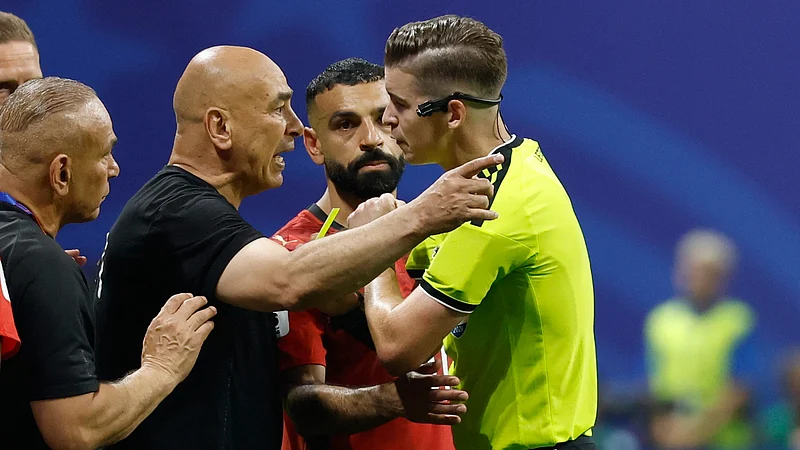
Egypt's FIFA World Cup 2026 campaign ended in heartbreak, but the fallout from their dramatic Round of 16 defeat to Argentina has become just as significant as the match itself. Following the 3-2 loss, Egypt head coach Hossam Hassan protested a series of refereeing decisions and accused FIFA of favouring Lionel Messi and Argentina, alleging the defending champions received support to stay in the tournament.
The accusations followed a thrilling contest at Mercedes-Benz Stadium in Atlanta, where Argentina recovered from 2-0 down to win 3-2 through goals from Cristian Romero, Lionel Messi and Enzo Fernandez.
While Argentina celebrated another memorable comeback, Egypt insisted a series of refereeing and VAR decisions had changed the outcome of the tie.
Hassan's post-match comments quickly ignited debate across the football world. His allegations of bias, coupled with controversial officiating moments, sparked fierce discussion among fans and pundits over the role of VAR, the consistency of refereeing decisions and whether football's biggest stars receive preferential treatment on the sport's grandest stage.


Why Egypt Accused FIFA Of Favouring Argentina?
The controversy stems primarily from Hossam Hassan's explosive post-match remarks. The Egypt coach claimed his side had been the better team and suggested that forces beyond football influenced the result.
Speaking after the defeat, Hassan said Argentina "received support at every level" and questioned whether there was a desire to keep Messi in the tournament.
"Perhaps they wanted to keep the world champion in the competition. Perhaps they wanted Messi to stay in the running. In football, there are sometimes external factors that go beyond the technical aspects. The world champion received support at every level."
Hassan also claimed Egypt had not been treated fairly by the match officials and questioned the integrity of the officiating.
However, it is important to note that Hassan did not present evidence to support claims of FIFA interference, corruption or match manipulation. His comments reflected his opinion after the defeat rather than verified facts.
Which Decisions Sparked The Controversy?
Several incidents became the focus of Egypt's anger during and after the match.
VAR ruled out Mostafa Ziko's goal: The biggest flashpoint arrived in the 59th minute when Ziko thought he had doubled Egypt's advantage. After a VAR review, officials ruled out the goal after identifying a foul earlier in the attacking move.
Penalty appeals ignored: Egypt also believed Mohamed Salah should have been awarded a penalty after going down inside Argentina's penalty area following a challenge from Nicolas Tagliafico. Referee François Letexier allowed play to continue, while VAR did not recommend an on-field review.
Build-up to Argentina's winner: Egypt further argued Alexis Mac Allister committed a foul during the attacking move that led to Enzo Fernandez's stoppage-time winner. Again, there was no VAR intervention.
The Egyptian bench also questioned an earlier first-half incident involving Nahuel Molina and Emam Ashour, believing Argentina had benefited from multiple decisions throughout the contest.

Egypt Take Their Protest To FIFA
According to a report by publication Diario AS, Egypt Football Association president Hany Abo Rida has lodged a formal complaint with FIFA against French referee François Letexier and his officiating team.
The complaint reportedly asks FIFA to investigate the refereeing decisions that Egypt believe unfairly influenced the outcome of the Round of 16 tie. The Egyptian Football Association has also requested that Letexier and his officiating team be removed from officiating the remainder of the FIFA World Cup.
The complaint reportedly centres on the VAR decision to disallow Mostafa Ziko's goal, the refusal to award Mohamed Salah a penalty and the alleged foul in the build-up to Argentina's winning goal.
At the time of writing, FIFA has not publicly responded to the complaint or announced whether it will open a formal investigation.
What Exactly Happened In Argentina Vs Egypt?
For much of the match, Egypt looked on course to produce one of the greatest upsets in World Cup history.
Yasser Ibrahim gave the African side the lead before Mostafa Ziko eventually made it 2-0 after an earlier goal had been ruled out. With only 11 minutes of normal time remaining, Argentina were staring at elimination.
The defending champions then produced a remarkable turnaround.
Cristian Romero headed home from Lionel Messi's cross in the 79th minute to reduce the deficit. Messi volleyed in the equaliser four minutes later before Enzo Fernandez scored the winner in second-half stoppage time to complete a stunning 3-2 comeback and send Argentina into the quarter-finals.
Instead of celebrating a famous victory, Egypt were left wondering what might have been after seeing both their lead and their World Cup dream disappear.
Why Does VAR Remain So Controversial?
The Egypt-Argentina encounter has become another high-profile example of football's ongoing debate over VAR.
While the technology was introduced to eliminate clear and obvious errors, many decisions still rely on subjective interpretation. Fouls in attacking phases, penalty appeals and physical contact inside the penalty area often leave room for disagreement.
Supporters argue VAR corrected mistakes and ensured the correct application of the Laws of the Game. Critics believe inconsistent intervention creates even greater frustration because similar incidents are not always judged in the same way.
Egypt's complaints reflect that wider debate. Their frustration was not simply about VAR's existence but about how and when it was used.
Have Other Teams Accused FIFA Of Bias Before?
Allegations of bias and inconsistent officiating have followed several FIFA World Cups. During the 2002 World Cup, Spain and Italy criticised refereeing decisions in matches against South Korea, while the 2022 edition saw the Netherlands question officiating after their quarter-final against Argentina and Morocco express frustration following their semi-final defeat to France.
Portugal and several other teams have also raised concerns over refereeing and VAR decisions in recent tournaments, keeping the debate over consistency alive.
The scrutiny has continued at the 2026 World Cup. Earlier in the tournament, US President Donald Trump confirmed he had asked FIFA to review United States striker Folarin Balogun's one-match suspension following his red card.
FIFA subsequently lifted the ban, allowing Balogun to feature in the United States' Round of 16 clash against Belgium. Although unrelated to Egypt or Argentina, the decision sparked criticism and further fuelled debate over whether external influence could affect football's biggest tournament.
However, despite repeated allegations and controversial refereeing decisions over the years, no credible evidence has established systematic bias by FIFA in favour of any team or player.
Did Egypt Have A Valid Case?
Egypt undoubtedly have legitimate reasons to question certain refereeing decisions.
The disallowed goal, Salah's penalty appeal and the sequence leading to Argentina's winner are all incidents that can be debated and analysed by refereeing experts.
However, questioning refereeing decisions is different from proving institutional bias.
As of now, no evidence has emerged to support claims that FIFA deliberately favoured Argentina or wanted Lionel Messi to remain in the competition. Hassan's comments, while strongly worded, remain allegations rather than established facts.
Whether the officiating was incorrect is open to interpretation. Whether it proves FIFA interference is an entirely different question.
How Social Media Reacted To The Controversy
The controversy quickly spread across social media, where clips of the disputed incidents were widely shared.
Many supporters backed Egypt, arguing that Ziko's disallowed goal and Salah's rejected penalty appeal significantly altered the match. Hashtags questioning the officiating and VAR trended on X, while fans shared slow-motion replays of the controversial moments.