CAF president Patrice Motsepe confirmed AFCON will switch to a four-year cycle from 2028
Coaches including Tom Saintfiet and Hossam Hassan accused CAF and FIFA of prioritising European interests
Morocco coach Walid Regragui offered support, suggesting it could boost prestige and player value
The decision to overhaul the Africa Cup of Nations (AFCON) calendar has triggered a strong backlash from coaches at the tournament, with several questioning whether the shift serves African football or European interests.
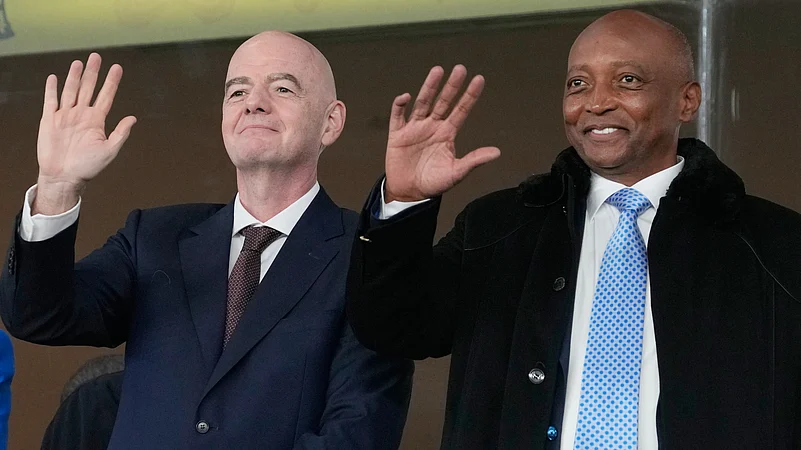
Confederation of African Football (CAF) president Patrice Motsepe surprised the continent on December 20 by announcing that AFCON will move from its traditional biennial format to a four-year cycle starting in 2028.
This will make the competition align with FIFA’s international calendar, and the announcement was made alongside FIFA secretary general Mattias Grafstrom. However, for many within the game, the change represents an erosion of African football’s autonomy.
‘Europe Cannot Decide For Africa’: Coaches Voice Anger
Mali head coach Tom Saintfiet was among the most vocal critics, describing the move as a break from decades of tradition and respect.
“Since the first tournament in 1957, Africa has had the Africa Cup every two years,” Saintfiet said. “We need to respect Africa. It cannot be that Europe decides – the big clubs, FIFA, UEFA – what we have to do.”




Egypt coach Hossam Hassan echoed those concerns, questioning who truly benefits from the revised AFCON cycle.
“It seems designed for African players based in Europe whose European clubs do not want to release them for their national teams,” Hassan said. “So, what did they actually work on? They worked on ensuring that the Africa Cup of Nations is not played every two years.”
Hassan argued that African competitions were increasingly being shaped to fit “European conditions and to serve European teams”.
“FIFA often speaks of respect. Respect must apply to everyone, to all the national teams in the world,” he added. “It is essential to respect African football, including the conditions of the players, the fans, and the national teams.”
Doubts Over Nations League Plan
Morocco coach Walid Regragui offered a more balanced response, acknowledging both “good points and bad points” of the AFCON reform.
He pointed to the recurring struggle national teams face when attempting to secure player releases from European clubs, suggesting the four-year cycle might change how African footballers are valued.
“Maybe there will be a silver lining,” Regragui said. “Maybe the fact that European clubs know an African player only plays in the Africa Cup of Nations every four years will make them pay these players what they deserve. And maybe they’ll trust these players more because they’ll know they’re less likely to lose them during the tournament.”
Calling AFCON “as strong as the Euros,” Regragui added that a less frequent tournament could enhance its prestige. “The AFCON, every four years, will inevitably be a real event that no one will want to miss. There are interests everywhere. My interest is to see African football grow,” he said.
However, the national coaches showed little enthusiasm for Motsepe’s proposal of a new African Nations League, which CAF claims would effectively deliver a major continental competition every year. The plan excludes World Cup years.
Scheduling Chaos Persist
AFCON’s calendar has long been a problem. The current edition was originally scheduled for Guinea, which lost hosting rights in 2022 after CAF ruled the country lacked adequate infrastructure. Since 2013, every Africa Cup has been relocated due to host-related issues.
Grafstrom referenced these challenges while explaining that the tournament had already been shifted away from the summer window to avoid clashing with FIFA’s revamped Club World Cup.
Veteran French coach Claude Le Roy, who won AFCON with Cameroon in 1988 and later managed Senegal, DR Congo, and Ghana, questioned the motivation behind the decision. “It’s not at all for Africa,” Le Roy said. “It’s for FIFA.”
(With AP Inputs)