Women make up 15 per cent of the lawyers in India, but only two per cent of the leadership in the Bar Council.
The BCI has never had a woman president.
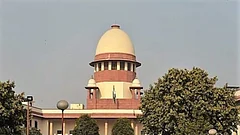
Two petitions before the Supreme Court seek proportionate representation for women lawyers.
Of the 426 elected seats across 18 State Bar Councils, only nine are filled by women. In 11 of the 18 state bars, there are no women representatives. Female lawyers who comprise about 15 per cent of the lawyers in India represent a lowly 2.1 per cent of the elected officers of the state bar councils. The petition before the Supreme Court states, “This scorecard establishes that women’s underrepresentation is systemic, structural, and a direct outcome of the current electoral framework under the Advocates Act, 1961, rather than an incidental or region-specific anomaly.”
Building on this, the petition notes that except for Bihar—with eight per cent women in its bar council—there is a “uniform and nationwide pattern of gender imbalance” among India’s lawyers.
The petition points out that in January 2026, the state bar council elections will commence, and adds that there are no “special provisions, safeguards, affirmative measures, or structural mechanisms "that have been introduced to ensure adequate women’s representation.”
Such a large gender gap “cannot be dismissed as a statistical irregularity; it reflects entrenched institutional barriers that make meaningful participation of women practically impossible without mandatory reservation or equivalent corrective measures,” it adds. The petition also invokes Articles 14, 15, and 16, arguing that the data show a compelling constitutional necessity for intervention.



Law Is An Old Boys’ Club
“The legal profession is an old boys' club, there's no doubt about it,” says Senior Advocate Mahalaxmi Pavani, who was the only woman to be nominated to the Supreme Court Legal and Advisory Council of India after Justice NV Ramana nominated her. “Out of 49 people, 50 people were nominated, 49 were men, and I was the only woman standing out,” she recalls.
Other women lawyers who spoke with Outlook echoed Pavani’s statements. Many say that the situation for women is more difficult at the state level.
“You, a woman, are my lawyer?”
Saudamini Sharma began her legal career in Chandigarh but later moved to Delhi for better opportunities and fairer treatment.
She says that while the state bar associations aren’t openly hostile to women—“no one is coming to your face and saying, ‘oh you’re not worth this profession’,”— there is a subtle sort of bias that women face.
“It is difficult to source cases. Secondly, the way men network in smaller cities is very different. Like, in Delhi, as a woman, you can go out and network. In smaller places, as a woman, you can't really do that. You can't really run around all these conferences. And you can't really go for all these dinners and drinks, nights and, you know, dinner meetings where all the decisions are made,” she says.
Sharma recalls one incident during her practice in Chandigarh, when she was drafting a police affidavit, when the cop in question asked her in Punjabi: “Madam, are you the criminal lawyer?” The young lawyer was shocked—not just at the question, but also the tone. “I was like, Yes, I am…I am right in front of you. drafting your affidavit.” The cop was “stunned” that a woman could be a criminal lawyer.
Networking Trumps Merit
Pavani points out that bar association elections often come down to networking, money, and status, rather than merit. “It's not that we are bad or we are not good. The only thing is that we don't walk that extra mile. We can't sit with those men and network—I cannot throw parties or socialise with them that way. So then, when we cannot, who is going to vote for us, you see?”
Supreme Court lawyer Shilpi Jain points out that men often do not like to see women in positions of power over them. “The thing is: men don’t like to take orders from women, and then imagine a woman will be on the bar council and she can take their license from them?” She adds, “If there is an option between a man and a woman, they will vote for the man.”
Currently, there are two petitions before the SC urging the top court to take decisive action and ensure adequate representation for women in the Bar. One petition calls for reserving up to 30 per cent of seats for women. The petitioners emphasise, “It is respectfully submitted that the principle of proportional representation must necessarily extend to underrepresented classes within the legal profession, including women advocates,” who have been systemically excluded from statutory bodies.
The petitions also point out that the bar elections come every five years, hence the urgent need for the SC to step in to provide equality in representation.
“Unless this Hon’ble Court intervenes now, the prejudice will extend just to women across all 16 States and UTs,” the petition points out.