Song Sung Blue (2025), directed by Craig Brewer, is inspired by Greg Kohs’ 2008 documentary about real-life couple Mike and Claire Sardina.
The film stars Hugh Jackman and Kate Hudson in the lead roles.
It follows a Neil Diamond tribute band duo navigating love, family and the challenges of building a life together.
Set in the 1990s and steeped in the reassurance of familiar ballads etched into collective memory, Song Sung Blue (2025) opens with a premise that appears disarmingly simple: two working-class performers fall in love, form a tribute act and try to build a life around music. What begins as family-oriented comfort cinema slowly reveals something far more resilient. Craig Brewer’s film understands nostalgia as both texture and tool, leaning into the warmth of an older Hollywood grammar, while quietly questioning the emotional stakes that accompany raw, real-life experiences. Released on Christmas Day in the US, the film feels well-placed as a return to classic family melodramas that are generous in spirit, clear-eyed about struggle and quietly affirmative. Brewer, whose career stretches from Hustle & Flow (2005) to Footloose (2011), returns to familiar terrain: music as survival and the internal worlds of underdogs.
Inspired by Greg Kohs’ documentary Song Sung Blue (2008), the film follows Mike and Claire Sardina, known on the impersonator circuit as “Lightning and Thunder,” a Neil Diamond tribute duo. Hugh Jackman and Kate Hudson play the husband and wife, anchoring a story about artistic devotion and building a life together, beyond the template of the happily-everafter. This is a world of carnivals and modest bar stages, where performers live in the shadow of the artists they embody. There are Elvis impersonators, Patsy Cline impersonators and even Buddy Holly impersonators. Old record players, flashy clothing and puffy hair define the visual atmosphere. The film lingers on the labour of impersonation, on the strange dignity of singing someone else’s songs with absolute sincerity and on protagonists who want to carve a niche of their own. Here, gigs are scarce and recognition is fleeting.




Claire performs Patsy Cline covers, moving from venue to venue. Mike, a former Marine who served in Vietnam, is on a steady path to recovery from alcohol addiction and drifts between odd jobs and half-hearted tribute gigs, briefly pressured into becoming a Don Ho act before refusing on principle. While he surveys the night’s lineup from the sidelines, he meets Claire. The attraction is swift and unmistakable and it proves durable. Mike is precise about the distinction. He is not an impersonator. What he offers is a Neil Diamond “experience,” a re-interpretation shaped by celebration, not caricature. He steps into the lead, she anchors the sound from behind a keyboard and the alignment feels natural. Both are single parents and carry the fatigue shaped by responsibility. Claire brings two children, the perceptive and self-assured teenager Rachel (Ella Anderson) and her more reserved younger brother Dana (Hudson Hensley), while Mike brings a daughter, Angelina (King Princess), whose composed, deadpan demeanour establishes an immediate rapport with Rachel.
The film contains moments of overt sentimentality that may strike some viewers as excessively corny and Jackman’s performance occasionally does border on heightened theatricality. Yet, by sustaining this intensity consistently, it becomes evident that he embodies Lightning as someone fully inhabiting the role of the frontman he aspires to be. Claire mirrors this energy, matching his commitment, thereby demonstrating that their shared fervour is central to how they choose to live their artistic and emotional lives. Brewer stages these early passages with warmth and ease. The first half glides on comfort, humour and music, building a familiar sense of upliftment that feels deliberately reassuring. That ease, however, is strategic.
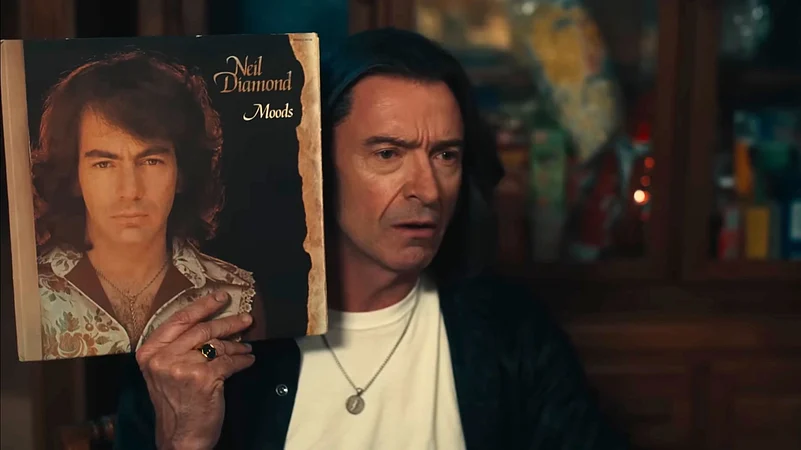
At the midpoint, the film shifts its tone dramatically and this is exactly what makes it so much more compelling. The upheaval in Mike and Claire’s marriage and family gives the film an emotional weight that no rational reasoning could diminish. You do not need to be a Neil Diamond fan to connect with this film. You do not even need to love “Sweet Caroline,” though Mike certainly hates it. Even when skepticism creeps in—a full-length story about a Midwestern Neil Diamond tribute act might sound absurd—Brewer has a way of redirecting attention to what truly matters, both on screen and beyond it.
Jackman approaches the music with near-reverence. His performances are grounded in breath and intention, away from flashy hypermasculine tones, embracing a resilient yet charming masculinity that makes him a standout presence.

For much of her career, Hudson has been cast in variations of the rom-com archetype: a witty, fun, blonde and perpetually youthful figure. In Song Sung Blue, she undertakes a more nuanced and mature role while retaining her characteristic charisma. Claire is neither a glamorous socialite nor a city sophisticate; she is a middle-aged mother, portrayed with grace and authenticity, navigating a Midwestern accent with notable precision. Hudson delivers her most assured work in years, balancing softness with angst as she calls it. Her Claire is neither idealised nor diminished by hardship, but emerges as a portrait of strength redefined by the transformational power of love and music.
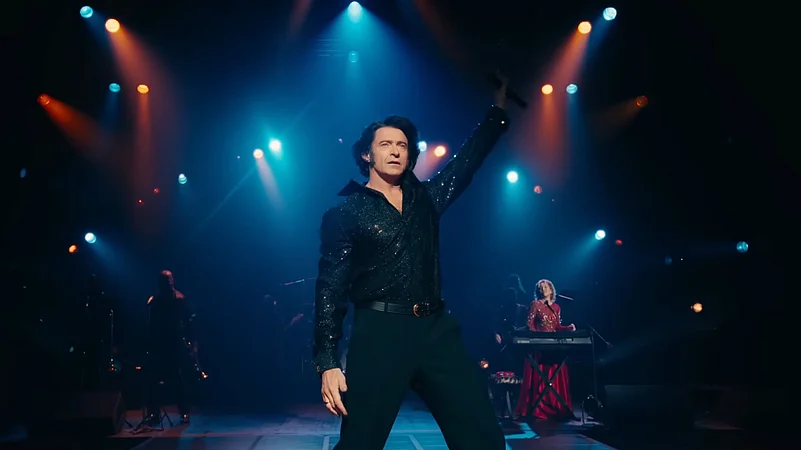
The film’s greatest strength lies in its refusal to mock sincerity. Neil Diamond’s music functions as a shared love between the protagonists and a cultural memory for the audience, instantly recognisable even to casual listeners. Songs surface at moments of intimacy and fracture, allowing the characters to articulate what spoken language otherwise cannot. It could be contended that Song Sung Blue adheres to a predictable narrative structure. Yet, there is a certain appeal in such predictability: the depiction of ordinary blue-collar individuals navigating adversity without the need for constant exuberance or performative courage. Mike and Claire do not escape Milwaukee, nor do they transcend class. Fulfilment arrives through persistence, belonging and creative devotion.
In an era wary of earnestness, Song Sung Blue commits to it fully. The result is a film of humour, ache and conviction, one that believes in ordinary people and trusts the audience to do the same.