Opinion in India is divided over whether New Delhi should accept Trump’s invitation.
It goes against India’s long-held belief on reforming and strengthening multilateral institutions like the UN.
Trump’s contempt for the UN and multilateral bodies is well known.
There is no word yet from India whether Prime Minister Narendra Modi will accept President Donald Trump’s invitation to join his "Board of Peace"’ to oversee disarming of Hamas, technocratic governance and reconstruction of the enclave reduced to rubble by Israeli bombardments.
This is the second phase of the 20-point US peace plan that took effect from October 10, last year. While the plan brought in a ceasefire and the release of Israeli hostages, the first phase has been tardily implemented with the IDF not following the agreed proposals.
The proposal puts India in a tight spot, as the US-led initiative sidesteps the United Nations and places Washington firmly in the driver’s seat of a post-war political arrangement. At a time when India is hoping to repair its ties with the US — battered last year by Trump’s tariffs and his pivot to Pakistan — further antagonising Washington with negotiations for a bilateral trade agreement underway, would not help India’s cause. Avoiding the perception of distancing from Washington at a sensitive time will not go down well with Trump.
At the same time, it goes against India’s long-held belief on reforming and strengthening multilateral institutions like the UN. Despite disappointment with the UN in its current avatar, India does believe that conflict resolution cannot be based on ad-hoc coalitions shaped by great-power interests. With American commercial priorities and Israel’s security concerns expected to dominate the plan, questions are already being raised about how far the interests of Gaza’s residents will feature. In fact, before reconstruction and issues of governance are taken up, the immediate need for the people of the enclave is better temporary living conditions and protection from the bitter winter cold.


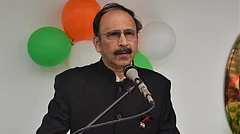

"Of course, India should be onboard. It is always a relative advantage to be inside rather than outside. We just want to make sure that all of these moves are in line with the international law and adopted UN resolution,’’ says Palestine’s ambassador to India Abdullah M. Abu Shawesh. He is hopeful that New Delhi will keep a watchful eye on the proceedings and ensure that the UN resolution on the peace plan is not breached.
However, opinion in India is divided over whether New Delhi should accept Trump’s invitation. India will be one of the 60 countries, including Pakistan who got the Trump invite. One section of the establishment feels India should keep away from any attempt to by- pass the UN and its institutions, and politely turn down the offer.
"No. India should not accept it. But the response should be conveyed diplomatically and at the right time. To start with, the MEA should acknowledge receipt, praise Trump, and add that for comprehensive examination we need to see the text of the charter,’’ says retired ambassador K.P.Fabian.
"We need to note that Trump has drafted a charter for a new International organisation displaying his arrogance and ignorance. According to International law, such a charter should be drafted at a diplomatic conference, in fact in a series of such conferences,’’ says Fabian.
Trump’s contempt for the UN and multilateral bodies is well known. Earlier this month the US walked out of more than 66 multilateral organisations, including 31 UN bodies and 35-groups like PM Modi’s international solar alliance. The reasons given were that these outfits were redundant and wasteful. The Peace Board is nothing more than Trump’s strategic intent to control the framework of the agreement rather than negotiate it seriously.

But pragmatists and realists in the establishment know the perils of offending Washington at this juncture. Modi had turned down Trump’s invitation to attend the ceasefire agreement in Sharm el- Sheikh in Egypt, attended by more than 20 world leaders, including British PM Keir Starmer, French president Emmanuel Macron, Germany chancellor Friedrich Merz as well as Pakistan’s PM Shehbaz Sharif. But in October last year India-US ties were in deep freeze. Since the arrival of ambassador-designate Sergio Gor, things have looked up. In fact he had posted Trump’s invitation to Modi on X.
Being a permanent member of the peace board comes at a price of one billion USD. But for a three-year stint it is free. Many Indian analysts including retired diplomats say that India could come on board only for three years, with the choice to continue or drop off at the end of the term. This would give New Delhi a ring side view of proceedings as well as an opportunity to shape outcomes from inside the process and get an idea of how the board is functioning. It will kill two birds with one stone, it will not antagonise Trump and after three years it has the option to drop off if New Delhi finds that sitting on the board without a voice is not worthwhile. By that time Trump’s tenure too would be over...Not accepting will raise unnecessary eyebrows and not help India’s interests at the moment.
However so far there is no indication what decision Prime Minister Modi’s government will take.