The Supreme Court asked the committee of judges at the Allahabad High Court to take action against Bar Association officials.
A bench consisting of Chief Justice Surya Kant and Justice Joymalya Bagchi issued the order while hearing a case filed by Virendra Singh.
During the proceedings, CJI Kant said that the president of Gautam Buddha Nagar Bar Association has repeatedly ignored the court's direction.
For the common citizen, a court date is often the culmination of months, if not years, of waiting—a single morning where the machinery of justice is finally supposed to turn in their favour. But at the Gautam Buddha Nagar district court, that machinery has frequently ground to a halt, not because of legal complexity, but because of empty chairs. On Thursday, the Supreme Court of India signalled that its patience with repeated lawyer strikes has finally run thin, demanding accountability for those who choose protest over the podium.
A bench led by Chief Justice Surya Kant and Justice Joymalya Bagchi took a stern view of the local Bar Association's habit of "abstaining from work." The irony of the situation was not lost on the court: those sworn to uphold the law were reportedly bypassing a December 2024 judgment that explicitly forbade such strikes. CJI Kant noted with visible concern that the leadership of the Gautam Buddha Nagar Bar Association seemed to have treated the apex court’s directions as mere suggestions rather than mandates, leading to a "repeated" disregard for the judicial process.
Behind these high-level legal rebukes lies a very human cost. Every day a Bar Association passes a resolution to strike, a victim’s testimony is delayed, a bail hearing is postponed, and the heavy emotional burden of a legal battle is extended for another day. Seeking to end this cycle, the Supreme Court has now ordered the district judge to compile a "strike diary" of sorts—a detailed report of every day work was stalled. This report will head to a committee at the Allahabad High Court, with a clear directive: identify the office-bearers responsible and ensure they face the consequences. In the hallowed halls of justice, the message from the top is now loud and clear—the right to protest cannot come at the expense of a citizen’s right to be heard.


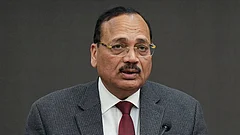

The Supreme Court’s directive serves as a stark reminder that the "strike culture" within local bar associations has consequences far beyond the courtroom walls. By demanding a meticulous record of every working day lost, the bench is effectively putting a face to the systemic delays that plague the Indian judiciary. For the thousands of litigants in Gautam Buddha Nagar, these strikes aren't just professional disputes; they are lost hours of wages, delayed closures to family traumas, and a persistent feeling that the scales of justice are being held hostage by those meant to balance them.
This firm stance marks a turning point in the relationship between the higher judiciary and local bar leadership. By insisting on "punitive action" against specific office-bearers, Chief Justice Surya Kant and Justice Joymalya Bagchi are moving past mere warnings and toward a framework of personal accountability. As the Allahabad High Court committee prepares to review the district judge's report, the legal community watches closely—waiting to see if this crackdown will finally restore the uninterrupted rhythm of the courts or if the tension between the bench and the bar will continue to simmer.