

Summary of this article
Like Singapore, infrastructure in UP is no longer symbolic. It is functional, scalable, and investment-oriented.
In Uttar Pradesh, administrative fear was replaced with administrative accountability.
Unlike Lee’s secular technocracy, Yogi’s leadership openly integrates spiritual identity into governance.
When Lee Kuan Yew took charge of Singapore, the country was dismissed as too small, too chaotic, and too fragile to matter. What changed its destiny was not geography or luck, but a governance model that placed vision above noise and execution above ideology.
Nine years ago, Uttar Pradesh faced a similar credibility crisis. Not in scale, but in reputation. Investors avoided it. Governance was reactive. Law and order was negotiable. Development announcements rarely translated into delivery on the ground.
The transformation since then explains why Lee Kuan Yew’s governance model offers a useful parallel to understand Yogi Adityanath’s approach to Uttar Pradesh.
Order before opportunity
Singapore’s economic rise began with discipline. Lee understood that capital does not chase sentiment; it chases certainty. Clean streets, predictable enforcement, and swift justice came before global branding.
Uttar Pradesh followed the same sequence.
The first visible shift under Yogi Adityanath was not infrastructure, but enforcement. Criminal syndicates were dismantled. Administrative fear was replaced with administrative accountability. The message was unambiguous: the state would no longer tolerate disorder, inefficiency, or negotiated governance.
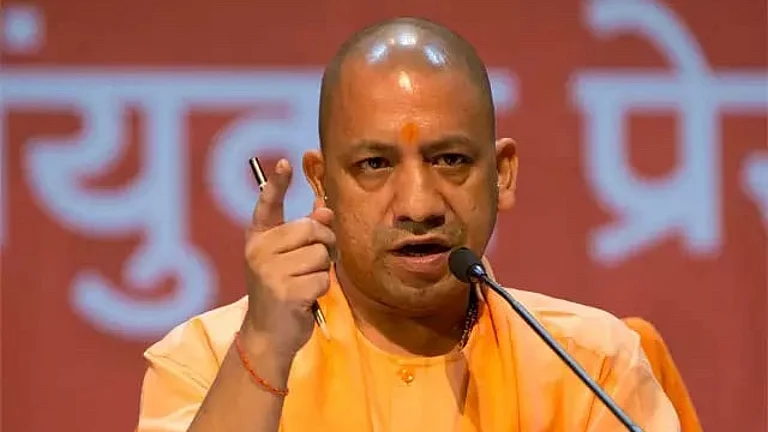



This reset created the conditions for development to follow. Order was not the outcome of growth. It became its prerequisite.

Infrastructure as proof, not promise
Lee Kuan Yew believed infrastructure was not a public good alone; it was a signal of seriousness. Ports, housing, transport, and utilities were built rapidly and visibly to tell the world that Singapore meant business.
Uttar Pradesh’s last nine years show a similar infrastructure-first approach.
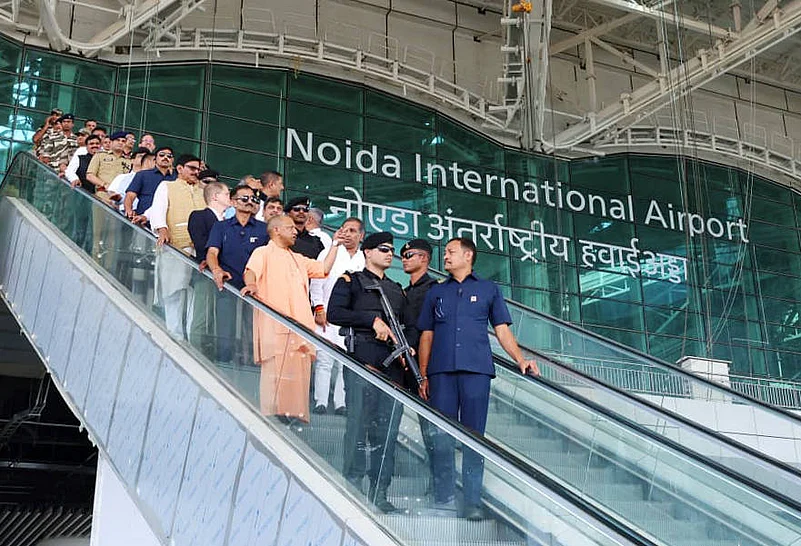
Expressways have stitched together regions that were once logistically isolated. Airports in cities like Ayodhya, Kushinagar, and Jewar have reframed UP as a connected investment destination rather than a landlocked challenge. Industrial corridors, logistics parks, and power infrastructure have shifted development from policy documents to physical reality.
Like Singapore, infrastructure in UP is no longer symbolic. It is functional, scalable, and investment-oriented.

Governance that measures itself
Lee governed through metrics. Ministries were judged by outcomes, not intent. Efficiency was non-negotiable. Corruption was treated as an existential threat, not a political inconvenience.
Yogi’s administration mirrors this outcome-driven discipline.
Development projects are tracked publicly. Timelines matter. Delays attract consequences. Welfare delivery has moved toward digitisation and direct benefit transfers, reducing leakages that once defined the state’s governance culture.
This shift from narrative governance to performance governance marks a structural break from the past.
Economic repositioning at scale
Singapore repositioned itself from a trading port to a global financial and manufacturing hub through aggressive investment facilitation, ease of doing business, and policy stability.
Uttar Pradesh’s economic repositioning has followed a comparable logic, adjusted for scale.
Investor summits are no longer ceremonial. They are backed by land banks, single-window clearances, and follow-through mechanisms. Manufacturing, electronics, defence production, and food processing are being actively courted. Religious tourism, once treated as seasonal, is now integrated into year-round economic planning.
The ambition is no longer to catch up. It is to compete.
The leadership equation
Lee Kuan Yew governed with moral authority rooted in competence. He was feared, respected, and followed because systems delivered.
Yogi Adityanath governs with a different kind of authority, one that blends administrative control with cultural confidence.
In both cases, leadership is not transactional. It is transformational. The state is expected to change, not negotiate its inertia.
A larger lesson beyond politics
Singapore’s success did not emerge from perfect democracy or ideological purity. It emerged from clarity, courage, and consistency.
Uttar Pradesh’s last nine years suggest that India’s most complex states do not need softer governance. They need decisive governance that creates conditions for growth before debating its aesthetics.
Lee Kuan Yew proved that vision without execution is rhetoric. Yogi Adityanath’s Uttar Pradesh demonstrates that execution, sustained over time, can rewrite even the most entrenched reputations.
Development is not accidental. It is enforced, built, and institutionalised.
History rewards those who understand that early enough.
Mrityunjay Sharma is the author of Broken Promises: Caste, Crime and Politics in Bihar and an experienced political analyst with deep on-ground exposure to India’s electoral processes and governance structures. His work combines field insight with sharp analysis of power, policy, and political accountability.
(Views expressed are personal)