Odisha's Sentence Review Board has recommended Dara Singh's premature release after considering his prison conduct and over 26 years of incarceration.
The recommendation does not guarantee release; the Odisha government will take the final decision on Singh's remission plea.
The move has revived debate over the 1999 Graham Staines murders, remission policy and the balance between justice and rehabilitation.
Dara Singh, also known as Rabindra Kumar Pal, convicted in the 1999 murder of Australian missionary Graham Staines and his two minor sons, is back in focus after the Odisha State Sentence Review Board recommended his premature release.
On Tuesday, the Supreme Court (SC) asked the Odisha government to take a decision on Singh's remission plea by August 19, 2026. A bench of Justices Manoj Misra and Vijay Bishnoi granted the State time after it informed the court that the Sentence Review Board had sought additional records before taking a final decision.
The court observed that it expected the committee to decide the matter before the next hearing. The recommendation is yet to receive final approval from the Odisha government.

Who Takes The Final Decision?
The State Sentence Review Board only recommends whether a life convict should be considered for premature release. The final decision rests with the Odisha government.
The SC has not directed Singh's release but has only asked the State to decide his remission plea within the stipulated time.
Singh has argued before the apex court that he has spent over two decades in prison and has sought remission under Odisha's policy governing premature release.



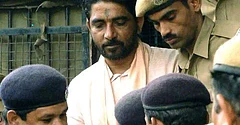
He also relied on the Supreme Court's 2022 judgment allowing the premature release of convicts in the Rajiv Gandhi assassination case, arguing that he has reformed and should be allowed to rejoin society.

What Is The Graham Staines Case?
The case dates back to 22 January 1999, when Australian missionary Graham Staines and his sons, Philip (10) and Timothy (6), were burnt alive after a mob led by Dara Singh set fire to the vehicle in which they were sleeping at Manoharpur village in Odisha's Keonjhar district.
A designated CBI court convicted 14 persons, including Dara Singh, in 2003. While Singh was awarded the death penalty, the Orissa High Court commuted his sentence to life imprisonment in 2005. The Supreme Court upheld the life sentence in 2011.
The judicial commission headed by Justice D.P. Wadhwa found no evidence that Staines was involved in forced religious conversions. It also concluded that Bajrang Dal had no role in planning or executing the attack, while noting that Singh and some members of the mob were associated with the Sangh Parivar.

Why The Case Still Divides Opinion?
The recommendation has revived debate nearly three decades after one of India's most widely reported communal crimes.
If the Odisha government accepts the recommendation, Singh would become eligible for release after serving more than 26 years in prison. If released, no person convicted in the Graham Staines murder case would remain behind bars.
The State government is yet to take a final decision on the recommendation.