Confusion over ceasefire talks and backchannel negotiations continues, with Iran denying any engagement claimed by the US.
Unclear and shifting objectives, from reopening the Strait of Hormuz to regime change, have blurred the war’s direction.
Escalation on the ground continues even as leaders speak of winding down, leaving the endgame uncertain.
As the United States and Israel’s war against Iran enters its fourth week, the conflict is increasingly defined not by clear strategy but by a series of unresolved questions. Governments, analysts, and markets alike are attempting to piece together a coherent narrative from statements that often fail to align with developments on the ground.
On paper, Washington has spoken of a five-day pause and ongoing negotiations. Tehran, however, has categorically denied that any such talks are taking place. The gap between these two positions has only widened uncertainty around whether diplomacy is genuinely underway or merely being projected.
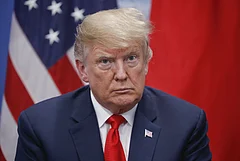
This disconnect is visible across multiple fronts. In one 24-hour period, US President Donald Trump suggested that the war was nearing its objectives and could be wound down. Almost simultaneously, his administration confirmed the deployment of additional warships and thousands of Marines to the region, expanding an already significant military presence.
Economic policy has followed a similarly complex trajectory. The temporary easing of sanctions on Iranian oil, reportedly aimed at stabilising global markets disrupted by the Strait of Hormuz blockade, has created an unusual situation in which the United States is both escalating militarily and easing economic pressure.



Meanwhile, the Strait of Hormuz remains central to the conflict. Carrying roughly a fifth of the world’s oil supply, its disruption has had immediate global consequences, pushing up fuel prices and unsettling financial markets. Despite its importance, there is little clarity on who will ultimately secure or control the passage, or how long the disruption might last.
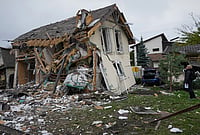
On the ground, the war continues to intensify. Strikes on nuclear facilities, attacks on civilian areas, and fires at critical energy infrastructure across the region have underscored the widening scope of the conflict. Each development has further complicated claims that the war may be nearing an end.
Israeli Prime Minister Benjamin Netanyahu has continued to signal a willingness to escalate, even as Washington speaks intermittently of de-escalation. Iran, for its part, has warned of retaliation across the region, including potential targeting of energy infrastructure.

Biggest Unanswered Questions Driving the War
Several key questions remain unresolved, shaping both the trajectory of the conflict and global perceptions of it.
Are negotiations actually underway?
While Washington has pointed to “productive conversations” and a temporary pause in strikes, Iranian officials have denied any direct or indirect contact. Meanwhile, an Iranian official told state media: “There is no direct or indirect contact with Trump. He retreated after hearing that our targets would be all power plants in West Asia.” Negotiation, in other words, existed in Washington’s telling, but not in Tehran’s. The absence of verifiable diplomatic channels raises doubts about whether a negotiated exit exists. This pattern, assertion, contradiction, escalation, denial, repeats across nearly every dimension of the conflict.
What are the United States’ objectives?
The goals articulated so far range widely, from dismantling Iran’s nuclear programme to reopening the Strait of Hormuz, weakening the regime, or even pursuing regime change. These aims are not interchangeable, and the lack of prioritisation has made the endgame unclear. Key objectives, as per the US include “preventing Iran from developing nuclear weapons, destroying its ballistic missile capabilities, eliminating its air force and navy, dismantling terror proxy networks, and ensuring security in the Strait of Hormuz.”
Can the Strait of Hormuz be reopened without escalation?
The blockade remains one of the most immediate global concerns. Any attempt to forcibly reopen it risks broader regional escalation, yet leaving it closed carries significant economic costs.
How weakened is Iran, really?
Despite repeated claims that Iran’s military capabilities have been severely degraded, it continues to launch strikes and threaten regional assets. This raises questions about the extent of damage inflicted and the sustainability of current military assumptions.
What does ‘victory’ look like?
Perhaps the most fundamental question remains undefined. Without a clear benchmark for success, it is difficult to assess whether the war is nearing its conclusion or entering a more prolonged phase. “The real question is: What ultimately are we trying to accomplish?” asked Senator Thom Tillis in one of his recent statements.