Pakistan has unveiled a 142-point governance and economic reform plan in line with IMF conditions tied to its USD 7 billion bailout programme.
The plan, to be implemented over three years, aims to shift the government’s focus from crisis management to long-term institutional building.
Pakistan's Prime Minister Shehbaz Sharif has unveiled a set of economic and governance reforms aimed at addressing vulnerabilities identified in the International Monetary Fund’s (IMF) Governance and Corruption Diagnostic report.
The 186-page report, released late last year, flagged extensive economic leakages stemming from weak governance and corruption. As part of the conditions attached to its ongoing USD 7 billion bailout programme, the IMF required Pakistan to publish a “governance action plan based on the recommendations of the Governance Diagnostic Assessment” by December 31.
According to The Express Tribune, the 142-point reform plan launched on Wednesday includes measures such as conducting a national corruption risk assessment, introducing rule-based appointments in key institutions — including the National Accountability Bureau (NAB) — and improving the bureau’s public credibility.
Sharif said the recommendations of international institutions had been incorporated into the reform agenda, but stressed that it was fundamentally a domestically driven effort to “shift from crisis management to institutional building”.

He said the governance plan in Pakistan comprises 59 priority actions and 83 complementary actions, bringing the total to 142 measures to be implemented over the next three years. Emphasising the urgency of reform, the prime minister said Pakistan’s people had paid a heavy price over the past two years and that “we cannot return to business as usual”.
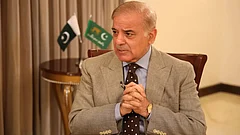


Speaking at the event, Finance Minister Muhammad Aurangzeb said the plan rests on three core pillars: growth-oriented fiscal and public investment governance, strengthening market confidence through regulatory simplification, and building trust in legal processes.
The Finance Ministry will serve as the secretariat responsible for implementing the plan, with technical support to be provided by the UK’s Foreign and Commonwealth Development Office (FCDO).
Following the ceremony, the Finance Ministry released a 240-page Economic Governance Reforms report outlining measures to improve governance and tackle corruption-related vulnerabilities across multiple sectors.
Among the key commitments made to the IMF is the publication of an annual report of the Special Investment Facilitation Council (SIFC) by June 2027. A draft report will be submitted in December 2026, with the final version due in March 2027. The SIFC is a military-led body tasked with revitalising the economy through increased investment.
By June 2026, the government plans to carry out a national corruption risk assessment and, within three months, establish a national anti-corruption task force. It will also identify the 10 agencies with the highest corruption risks by June 2027. By June 2028, annual reports on these agencies will be published, including assessments of demonstrated risk reduction.

The action plan also commits the government to reviewing the Anti-Money Laundering Act (AMLA) by June 2026 to remove ambiguities, followed by the submission of amended legislation to parliament. The amendments are expected to be notified by June 2027. Over the next 18 months, capacity-building programmes will also be introduced to train judges on AMLA-related matters.
Under IMF timelines, Pakistan will strengthen accountability and integrity mechanisms for civil servants within 18 months, including the deployment of a computerised system to generate risk-based cases for verification.
By June 2027, the government will notify rules of the Securities and Exchange Commission of Pakistan (SECP) to codify the appointment process for its chairman, commissioners and policy board members. The appointment process for the NAB chairman will also be reviewed by that date, with the aim of enhancing the bureau’s credibility as an anti-corruption body, according to the published plan cited by The Express Tribune.
(with inputs from PTI)