The US Supreme Court expanded presidential authority over independent federal agencies.
However, it blocked Trump’s attempt to remove a Federal Reserve governor, preserving limits around the central bank’s independence.
Polling and international surveys cited in the article show rising concern about the future of American democracy, increasing fears of political violence.
The US Supreme Court on Monday blocked US President Donald Trump’s attempt to remove a governor of the Federal Reserve, in a decision widely viewed as reinforcing the central bank’s institutional independence.
In a narrow 5–4 ruling, the court said the administration had not given Federal Reserve Governor Lisa Cook sufficient "due process" to challenge her dismissal.
The case will now return to lower courts, where the Trump administration must substantiate its allegations that Cook committed mortgage fraud if it wants to pursue her removal. Cook will also be allowed to formally contest the accusations.
Cook has denied the allegations, while supporters of the Federal Reserve argue the claims are being used as a justification to expand presidential influence over the central bank. Under US law, Federal Reserve governors can only be removed "for cause".
However, in a separate ruling issued the same day, the court delivered a major win for the Trump administration. In a 6–3 decision authored by Chief Justice John Roberts, the justices ruled that presidents have broad authority to dismiss members of independent federal agencies.


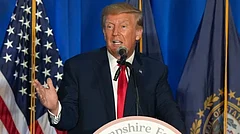
The judgment makes institutions such as the Federal Trade Commission (FTC) more exposed to changes in political leadership and effectively overturns the nearly 90-year-old legal precedent established under Humphrey’s Executor.
How Presidential Powers Have Expanded In Recent Years
In a significant ruling on June 29, the US Supreme Court expanded presidential authority by allowing Trump’s dismissal of leaders of independent federal agencies, while separately blocking his attempt to remove a governor of the Federal Reserve.
In a 6-3 decision, the court upheld Trump’s firing of Democratic FTC Commissioner Rebecca Slaughter, strengthening presidential control over the executive branch.
The ruling overturned the Supreme Court’s 1935 Humphrey’s Executor precedent, which had long recognised Congress’s authority to shield leaders of certain regulatory agencies from removal without cause.
Slaughter, who was appointed by former President Joe Biden and whose term was due to continue until 2029, had been removed shortly after Trump returned to office. The administration cited policy disagreements and said her position had become "inconsistent with [the] Administration's priorities".
A lower court had initially blocked the dismissal by relying on the 1935 precedent, which protected members of independent agencies from being removed arbitrarily.
Chief Justice John Roberts, writing for the majority, said officials serving on independent agencies carry out executive functions and therefore remain subject to presidential authority and oversight.
AP reported that with Congress controlled by Republicans and largely aligned with the White House, the courts have increasingly emerged as the main institutional check on President Donald Trump’s agenda.
Trump has repeatedly criticised judges who ruled against his administration, while his government has at times resisted or challenged court directives.
At the same time, efforts to broaden presidential authority have received support from the conservative majority on the US Supreme Court, which has repeatedly ruled in Trump’s favour after lower courts imposed limits on his actions.
A major example came during the 2024 presidential campaign, when the Supreme Court ruled that presidents enjoy broad immunity from prosecution for official acts.
The judgment disrupted several legal cases linked to Trump’s first term, including an investigation into efforts to overturn the outcome of the 2020 election.

What The Constitution Says About Executive Authority:
As per the US constitution’s Article II, Section 1, executive power in the United States is vested in the President, who serves a four-year term alongside the Vice President. The President is elected through the Electoral College, with each state appointing electors based on its representation in Congress. Members of Congress and federal officeholders cannot serve as electors.
Article II, Section 2:
The President serves as Commander in Chief of the US military and can seek written advice from executive department heads. The President also has the authority to grant pardons, except in impeachment cases. With Senate approval, the President can negotiate treaties and appoint ambassadors, Supreme Court judges and other federal officials, while Congress may allow certain lower-level appointments to be made without Senate confirmation.
Why Critics Talk About An 'Imperial Presidency'
To mark his 80th birthday this month, Trump hosted a UFC event on the White House lawn. The fight was broadcast by a network owned by the son of a major Trump donor and drew criticism over the use of public office for private interests.
California Governor Gavin Newsom condemned the event, writing on X: “The White House was built to serve the American people. Tonight it was used to promote a company the President owns stock in, sell subscriptions, promote corporate sponsors, push Trump crypto, and enrich the President and his family.”
He added: “The founders warned us about kings enriching themselves from public office.”
Days later, Newsom said that Trump’s Department of Justice had opened an investigation into him and his wife, according to AP.
As the US readies itself to celebrate the 250th anniversary of America’s liberation, debates about the president’s powers have come to the forefront.
Since returning to office in January 2025, President Donald Trump has taken a series of steps that critics argue have expanded presidential authority and blurred traditional limits on executive power. His actions have included nominating one of his personal lawyers as attorney general, directing the Department of Justice to pursue political opponents, deploying US Marines to the country’s second-largest city and facing scrutiny over allegations that he has used the presidency to benefit himself and his family.
Trump has also demanded the dismissal of comedians who mocked him, filed lawsuits against news organisations over coverage he opposed and launched legal action against the US government seeking $10 billion in damages.
His approach has prompted comparisons with King George III, the British monarch whose rule helped spark the American Revolution — a characterisation Trump has rejected.
“I’m not a king,” Trump told CBS’ 60 Minutes earlier this year. “If I was a king, I wouldn’t be dealing with you.”
According to AP, Princeton University historian Julian Zelizer said the comparison reflects broader concerns about Trump’s understanding of executive authority.
“It’s more about how he imagines who is he and what the presidency is,” Zelizer said. “We’re celebrating founding principles, and that was a driving issue — fears of how a centralized power can be corrupted. And here we are again.”
The symbolism has also surfaced in public messaging. During King Charles III’s visit to the US this year, the official White House X account posted an image of the two leaders with the caption “TWO KINGS.” Earlier in his second term, after announcing the end of a New York City transport programme, Trump posted: “LONG LIVE THE KING.”
Those moments were widely interpreted as embracing a label that has become central to criticism of his presidency.
Opposition groups have adopted the slogan “No Kings” in response.
Trump has previously pointed to Article II of the US Constitution to defend an expansive view of presidential powers. During his first term, he told participants at a youth summit: “I have the right to do whatever I want as president,” adding that Article II “gives me all of these rights at a level nobody has ever seen before.”
In an interview with The New York Times this year, Trump said the only real constraint on his global authority was “my own morality. My own mind. It’s the only thing that can stop me.”
At the same time, Trump has rejected accusations that his leadership style is authoritarian.
“I’m not a dictator,” he told reporters last year.
Asked by Time whether he was concentrating power in the presidency, Trump responded: “I don’t think so. I think I’m using it properly, and I’m also using it as per my election.”

How America Compares With Other Democracies
The United States ranks 64th out of 180 countries in the 2026 World Press Freedom Index compiled by Reporters Without Borders. Yet Trump has repeatedly lashed out at reporters and criticised media coverage he viewed unfavourably.
The US marks its 250th anniversary this July 4 and has long presented itself as one of the world’s leading democracies. However, debates over press freedom, political polarisation and the concentration of presidential power have increasingly fuelled questions about the strength and future of its democratic institutions.
According to a Reuters/Ipsos poll, nearly two in five respondents said they did not believe the US would remain a single country another 250 years from now, including 40% of Democrats and 26% of Republicans. Overall, 62% said they believed the country would endure.
Concerns about democracy were even more widespread. Around two-thirds of respondents, including 85% of Democrats and half of Republicans, said American democracy was at risk of failing. That figure rose from 57% in a similar poll conducted last August, driven largely by growing concern among Republicans.
The survey comes amid continued debate over elections and democratic institutions. Trump has repeatedly claimed, without evidence, that his 2020 election loss was caused by widespread voter fraud and has pushed for changes to voting laws.
The poll also found that 77% of respondents expect political violence to increase over the next five years.
According to a recent Pew Research Center report, global perceptions of the United States remain largely sceptical when it comes to foreign policy. Across most countries surveyed, majorities said Washington does not promote global peace and stability and fails to adequately consider the interests of other nations in its international decision-making, although Americans themselves remain divided on these questions.
In the 36 countries surveyed outside the US, a median of 39% of respondents said the American government respects the personal freedoms of its citizens, while 56% disagreed.
Views of the US role internationally were also largely negative: a median of 35% said the US contributes to global peace and stability, compared with 63% who said it does not. Only 32% believed Washington takes the interests of countries like their own into account when shaping foreign policy.