Spanish PM Pedro Sanchez says “unilateral military action” of the US and Israel lacks the authorisation of the US Congress and the UN Security Council
Spain, which became a NATO member in 1982, was one of the first countries to decline to join US President Donald Trump’s ‘Board of Peace’ initiative
Whatever direction US-Spain ties may take, the Iberian country’s commitment to upholding international law remains firm
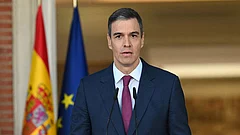
Spanish Prime Minister Pedro Sanchez has not been muted in expressing his country’s response to the US-Israel attack on Iran launched on February 28. Unlike other European leaders, Sanchez has outrightly criticised the “unilateral military action” of the US and Israel, which lacks the authorisation of the US Congress and the UN Security Council therefore “violating international law”. Spain stands out in Europe for directly criticising US foreign policy with regard to the current US-Israel strikes on Iran as well as Israel’s war in Gaza. As the US-Israel combat operations on Iran carry on and Iran retaliates, Sanchez has clarified that it is possible for Spanish society to be against the Iranian regime, its suppression of domestic dissent and the repressive Revolutionary Guard, and simultaneously oppose a war that was started with zero respect for international law. While warning that the war could worsen regional tensions and contribute to “a more uncertain and hostile international order”, the prime minister called for immediate de-escalation.
Sticking to its stance, Spain has rejected the US’ request to use jointly operated military bases on Spanish territory for attacking Iran. Spain’s foreign minister José Manuel Albares said that the government wants “democracy and fundamental rights” for Iranians, but it would not grant permission to use its bases in the ongoing military offensive. Defense Minister Margarita Robles emphasised that the agreement between Spain and the US regarding military bases on Spanish territory has to operate “within the framework of international law”. However, the bases could offer humanitarian support if needed, provided an international resolution authorises it, she said.


The US has withdrawn a dozen of its tanker aircraft stationed in Spain at the bases of Morón de la Frontera (Seville) and Rota (Cádiz), which are required for refuelling its Airforce that is bombing Iranian targets. These aircraft then headed to the United Kingdom, France and Germany—the European countries which have announced their willingness to work with the US to defend their interests and those of their allies in the region by taking “necessary and proportionate defensive action” to destroy Iran's capability to launch missiles and drones. British Prime Minister Keir Starmer has reiterated that the UK will stick to defensive actions “to protect our people in the region and support the collective self-defence of our allies”, but will not join the US and Israel in offensive strikes on Iran.
Spain, which became a NATO member in 1982, was one of the first countries to decline to join US President Donald Trump’s recent ‘Board of Peace’ initiative, which aims to rebuild places destroyed by war, and monitor and broker ceasefires. While passing up the invite to join the Board, Sanchez cited Spain’s commitment to international law, the UN and multilateral diplomacy as the main reasons for declining to participate. He also pointed out that the initiative did not include the Palestinian Authority. Spain, a vocal supporter of Palestinian statehood, formally recognised a Palestinian state in 2024 along with Ireland and Norway. The three countries expressed the hope that this would encourage other European nations to follow suit and strengthen the efforts to find a political solution to the war in the Middle East.
Sanchez has been a scathing critic of Israel’s military campaign in Gaza. In a televised address late last year, the socialist leader remarked that the international community has ended up “paralysed between indifference over a conflict without end and complicity with the government of Prime Minister Netanyahu”. In 2025, Spain announced a slew of measures to put more pressure on the Israeli government to stop its military offensive and to help the Palestinian people. Sánchez said that while the Spanish government would always respect Israel’s right to exist and to defend itself, it felt the need to try to “stop a massacre”.
Spain’s condemnation of the US-Israel attack on Iran and its refusal to let the US use jointly operated bases to strike Iran will have a significant impact on the bilateral relationship between the two countries. The Sanchez administration has not hesitated to voice its opposition to Russia’s invasion of Ukraine and to take a strong stand against Israel’s military offensive on Gaza after the October 7 Hamas attack. US-Spain ties appear to be at a crossroads at the moment. Over the years, bilateral ties between the two have had their ups and downs. In the 2000s, after the September 11 terrorist attacks on the World Trade Centre in New York, Spain actively supported US counter-terrorism efforts. In 2003, the country, led by then prime minister José María Aznar, backed the US-led invasion of Iraq and joined the ‘coalition of the willing’. Aznar made the decision despite overwhelming popular opposition to the move within Spain. His electoral defeat after the 2004 Madrid train bombings went on to spark a serious national conversation about US-Spain relations and the future direction of Spain’s foreign policy.
Whatever direction US-Spain ties may take, at the moment, the Iberian country’s voice on the US-Israel attack on Iran rings out loud and clear, and its commitment to upholding international law remains firm.