

Summary of this article
The IFFK controversy has sparked debates on what a festival owes its audience
Critics, curators and filmmakers feel the state should have stood in defiance.
When films are excluded without reasoning, it certainly raises questions, because festivals remain a cultural statement
Newly appointed Kerala Chalachitra Academy chair (that conducts the IFFK) Resul Pookutty is in the eye of a storm. Of the 19 films that were denied censor exemption for the IFFK (clearance a film gets from the central government that they can be exempted from the censor board for screening), the number of cancelled films was brought down to six, after which Pookutty gave in to the MEA, citing “administrative” reasons, not “political” ones, while at the same time taking an “Indian First” stand, which is strikingly different from the state’s original defiance.
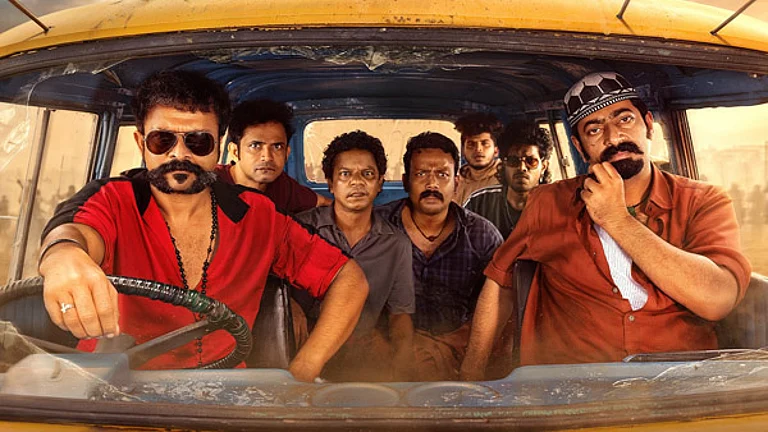
The six films which were denied censor exemption were Yes (Israel, 2025), All That's Left Of You (Palestine, 2025), Clash (Egypt, 2016), A Poet (Columbia, 2025), Eagles Of The Republic (Egypt, 2025) and Flames (India, 2025).
Among these, the Israeli film Yes was made by Nadav Lapid, who, in 2022, had called the inclusion of The Kashmir Files at the International Film Festival of India “inappropriate”.
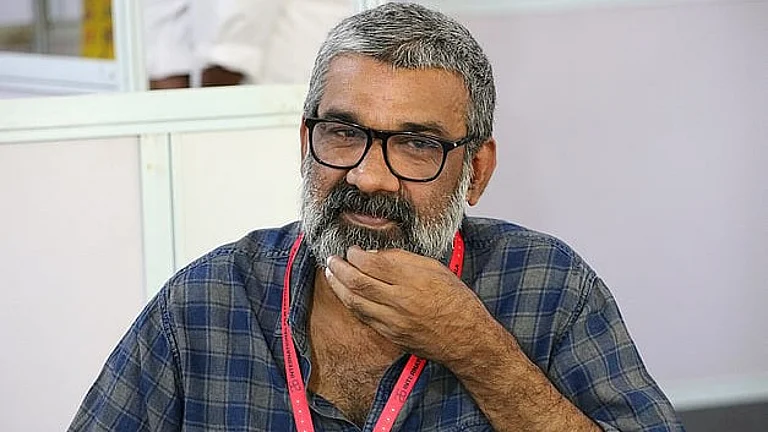
Filmmaker Praveen Morchhale, an internationally acclaimed director, whose film White Snow was in the competition section at IFFI recently, has consistently examined power, marginalisation and dissent through his work. For him, the controversy exposes a quieter form of censorship. “I believe IFFK in India is a festival where cinema of political realities and dissenting voices are shown. That legacy has shaped how filmmakers and audiences perceive the festival as a cultural statement. When films are excluded without reasoning, it certainly raises questions.” He adds that festivals reflect the values they stand by. Exclusions of the six films, he claims, suggests a ‘growing anxiety around political expression’ and raising questions. “This shift is worrying, because IFFK is the last remaining film festival in India, where difficult stories and cinema which questions can still be shared with an audience,” Morchhale says.

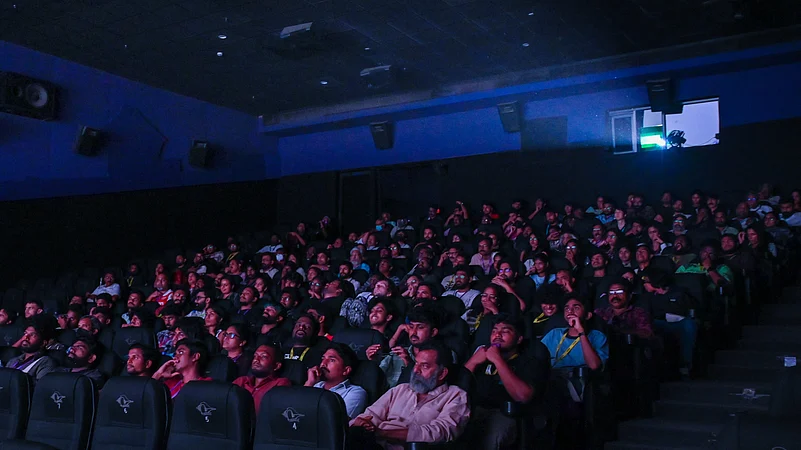
The episode raises another question: When films in a festival are barred for content, does the idea of a “festival audience” change? For a filmmaker who works at the margins, outside mainstream systems of finance and distribution, what do these exclusions signal?
“I believe this subtly changes the idea of the festival audience. The audience is no longer trusted as thinking, discerning participants, but is instead treated as something that needs to be protected or managed. I feel that these exclusions narrow the cultural space to start meaningful dialogues and discussions with the audience and in the society. It tells us that even festivals, which once acted as shelters for critical and political cinema, are becoming cautious. What is lost at IFFK is not just a few films. It has lost the confidence of the audience that cinema can still function as a space of dialogue,” laments Morchhale.
IFFK’s justification has leaned heavily on “administrative constraints” and “national interest.” But film festivals are often described as cultural rather than political spaces. Does claiming neutrality itself become a political position?
“Films are by definition culture, so if someone suppresses films it’s a political decision, no question”, says Meenakshi Shedde, an independent curator who has been programming South Asian and world cinema for the Toronto, Berlin and other festivals for 30 years.
Shedde agrees that it is both unusual and dangerous for a festival to publicly accept such reasoning for excluding films. “Government censorship is a dangerous trend but not a new one at all. Notable is that Kerala CM and Culture minister initially defied the central government ban, which hardly any other state would do,” she adds.
“International film festivals provide vital oxygen to our films as they don’t need a censor certificate for screening. Apart from banning acclaimed films, including two on the Oscar shortlist—Palestine 36 (Palestine) and All That’s Left of You (Jordan)—they have banned Indian film Flames on a farm labourer and his son accused of murder, as well as UKs Oscar entry Santosh that has still been denied á censor certificate,” says Shedde.
Film critic and former member of the Kerala Chalachitra Academy, C.S. Venkiteswaran, argues that an international festival inevitably depends on central government support, particularly for visas and logistical clearances, and cannot afford open confrontation. “We all know the majoritarian ideologies at play and what to expect from the central government. We just have to find a way to work around it in the interest of artistic freedom,” he says. In his view, strategic negotiations work much better than public standoffs and one way the state can negotiate these things is by having conversations, which the academy programmers and curators need to plan well in advance so if there is a rejection or denial of exemption, things can be negotiated. Given Kerala’s long history of hosting major cultural events, he adds, it is time for IFFK to operate with a clear mandate and stronger institutional capacity. He points out that for the last three years, the festival hasn’t had an artistic director and attributes the confusion to institutional laxity and a lack of clear ownership.
In a social media post, filmmaker Rakesh Sharma reminds us that the Ministry of External Affairs has no legal locus standi under the Cinematograph Act or the Cinema Certification Rules to “ban” or suggest censoring or controlling the screenings of a film at such a festival. “Have Cannes, Berlin, Venice or Toronto ever suddenly dropped scheduled films because their government advised them to do so? If their government ever tried, do you think the Fstival will bow down and accept the advisory, or will they just ignore it and screen the film(s) nonetheless?" he states. "“Administrative aspect” is not some apolitical process on autopilot, shorn of partisan politics, or even direct instructions from the political masters,” he further adds.
What the IFFK episode ultimately reveals is not merely a disagreement over six films, but a crisis of institutional confidence. Film festivals are not neutral administrative exercises; they are curated cultural statements shaped by choices, priorities and courage. When exclusions are defended as routine, inevitable or “non-political”, it signals a dangerous shrinking of cultural space—where dissent is not banned outright but quietly edited out.
As Morchhale, Sharma and Shedde point out, the loss is not just cinematic but relational: the erosion of trust between a festival and its audience. Venkiteswaran, meanwhile, reminds us that negotiation with power is inevitable—but it requires preparation, mandate and ownership, not public capitulation. Between these positions lies the uncomfortable truth that compliance, once normalised, becomes a precedent.