The more the drama, the more intense is the love, is what cinema and TV has trained us for.
Some creators decided to break the rules to show love in all its ordinariness, all its messiness.
Contemporary romances are less about 'before' and 'after' and more about being in the mundane moment together.
We have all been groomed for a grand romance, thanks to cinema and television - the belief that ‘if it’s easy, it’s not love’. We had internalised that true love is tough, it has to be fought for and other such balderdash. Finding ‘the one’, chasing ‘the one’, making ‘the one’ want you as much as you want them—these are seen as par for the course of any romantic relationship. Making two people ‘soulmate’ is usually about drama. The more the drama, the more intense is the love. Drama is what kept Rachel and Ross on Friends (1994-2004) going for years too. They are attracted to each other but never seem to know what they really want and never fully understand each other; instead, they are plagued by serious communication and jealousy issues as they each date (and marry) other people and even end up having a baby together. Beyond a point, you either get tired rooting for them or are unsure if you want to.
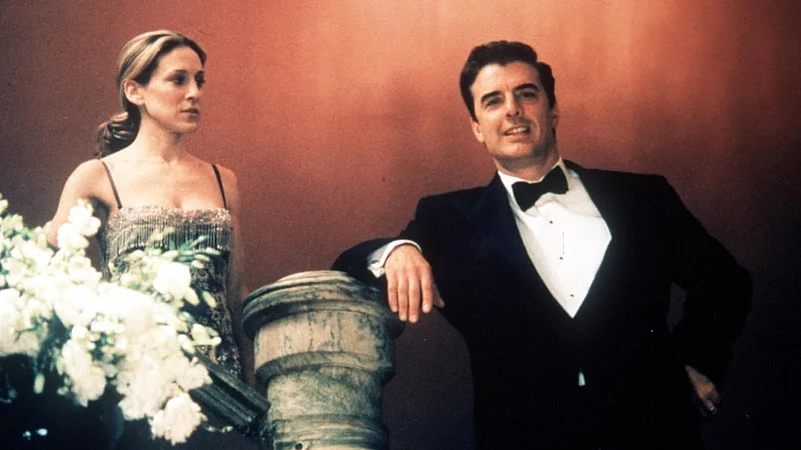
Take Carrie and Mr. Big in Sex and the City (1998-2004). Creator Darren Star writes that she made Carrie marry Mr. Big as her fantasy, but in reality that could never happen. But then, why couldn’t she write a love story that could happen?
Even so, these ambivalent relationships ridden with will-he-won’t-he and other forms of insecurities kept us on the couch for 10 seasons of Friends and six seasons of Sex and the City.
This falsified idea of the happily-ever-after kind of love is meant to make the “before” look dismal, as if a life without all-consuming romance is one inherently lacking something.


But we still choose to consume these movies, again and again, knowing they completely skew our perception of realistic love. Because who wants to watch a secure, healthy relationship? It doesn’t make good TV. However, some creators decided to break the rules to show love in all its ordinariness, all its messiness. And they leave us feeling that may be we all deserve love and don’t have to earn it.

In Mark Duplass’s wonderfully acted and directed Blue Jay (2016), Jim (Duplass) and Amanda (Sarah Poulson) are former high school sweethearts who bump into each other a couple decades down the line in the town they grew up in. They have both returned home at key moments—Jim’s mother has died; Amanda’s sister is giving birth. When they lock eyes at the grocery store, an old flame is rekindled and it still burns brightly. It’s the perfect setting for a secret affair that disrupts their lives but Blue Jay is after something less dramatic. They go for coffee, they talk, and at the end of it, neither wants the conversation to end. They return to Jim’s childhood home, where they look at old photos, revisit the past, and in an extended flight of nostalgia, play house for the evening, pretending that they stayed together after high school and are now a boring, married couple.

In Schitt’s Creek (2015-2020), local vet Ted (Dustin Milligan) is combing out lice from co-worker and ex-heiress Alexis’s (Annie Murphy) hair when she contracts a lice infestation from community college—the most mundane romantic gesture and yet so thoughtful, especially after her family shuns her. Later, when no one turns up for her graduation, Ted shows up and says he was just there to take pictures of her graduation

In a scene from Love Life, (2020-2021) a series on Netflix, Darby (Anna Kendrick) and Augie (Jin Ha) are trying to sleep-train their new born through a sequence of nursing, letting him cry out, self-soothe, as they count minutes and hours through the night. In another, she books herself into a hotel suite to prep for her friend’s wedding and even as she sits in silence on the hotel bed, relishing her time alone, she straps on her breast pump to pump milk for her infant (something she talks about openly to a potential mate she later meets at the wedding).

Netflix’s queer romance Heartstopper (2022 -2024) is the normalisation of a same-sex happy teen couple Nick (Kit Connor) and Charlie (Joe Locke) taking centre stage and has a wholesome simplicity that is moving in its expression of friendship—an honest high school experience and perseverance. We see what it’s like to truly be accepted by someone else in the face of difficulties.
Truth is that most of the time, genuine love and affection requires the bare minimum effort, because you are with someone who genuinely cares about you and tries to make things easy for you as much as possible. Even though the person doesn’t resemble the grand prize you thought you deserved. Being ordinarily happy is underrated in real life and may be the contemporary screen pundits are just playing into that.