Muthu Alias Kaattaan (2026) premiered on JioHotstar on March 27.
The series is directed by M. Manikandan and B. Ajith Kumar with Vijay Sethupathi also serving as producer.
The cast features Vijay Sethupathi, Vadivel Murugan, Milind Soman, Sudev Nair, Muthukumar, Singampuli, Irshad, Abi Nakshatra and Risha Jacobs.
Muthu Alias Kaattaan (2026) opens with an arresting premise set in a quiet Tamil Nadu village, where a police station faces the threat of closure due to a complete absence of crime. This uneasy calm is disrupted by the discovery of a severed human head on a hilltop. With no body, but a bundle of cash and a letter left behind, the case immediately rouses suspicion but lends no easy answers. What follows is an investigation led by three officers, though the series gradually reveals that its true interest lies elsewhere.
Created by National Award-winning filmmaker M. Manikandan along with B. Ajith Kumar, the ten-episode series on JioHotstar adopts a self-assured and measured storytelling style. Rather than constructing a tightly plotted crime thriller, it moves with heavy patience, choosing to examine the life of Muthu in careful detail. It hence becomes a character study in the garb of a crime drama.
Viewers expecting a fast-paced conventional crime procedural may find the style misleading. The emphasis is not really on uncovering the mechanics of the crime, but on a deeper understanding the man at its centre. This shift in focus lends the series a reflective quality that distinguishes it from genre expectations.


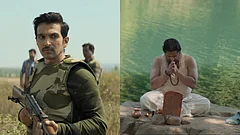

The early episodes dwell on the rhythms of rural life—capturing houses, cattle, fields and everyday routines laced with mundanity. While the setting is rendered with care, the initial stretch lacks emotional immediacy. K. Pandiyan (Vadivel Murugan), the investigating officer, is introduced as a man caught between his responsibilities as a goat herder and his job in the police force. This internal conflict, however, remains underdeveloped, making it difficult to fully invest in his predicament.
The image of Muthu’s smiling severed head, portrayed by Vijay Sethupathi, becomes a defining visual. Placed against an expansive mountainous backdrop and framed through wide shots, it creates a lingering sense of unease. This disquiet extends to the structure of the narrative itself, which unfolds through fragments and recollections, rather than a linear progression.
Pandiyan, for whom policing is secondary to his pastoral life, is drawn into the case as the threat of the station’s closure looms. The investigation pushes him toward an uncertain future that may require leaving his village behind. Alongside him, Sub-inspector Sidharthan (Muthukumar) and Thangamudi (Singampuli) pursue leads that take them beyond Tamil Nadu into Kerala, where their search reveals Muthu’s varied past.
Muthu’s identity emerges through multiple accounts—each offering a different perspective. He is remembered as a protector, a criminal, a troubled figure and a compassionate presence. The writing avoids a singular definition, suggesting instead that he exists within these contradictions. His life is explored through complex relationships, loyalties, failures and fleeting moments of hope, allowing the audience to grasp the motivations behind his actions.


The pacing remains deliberately slow, which may not appeal to all viewers. Certain portions extend longer than necessary and more precise editing could have strengthened the emotional impact. This restraint, however, encourages a gradual engagement with the character rather than immediate immersion. A subdued strain of dark humour runs through the interactions among the officers, whose initial confusion evolves into a sense of purpose.
As the narrative shifts to Kerala, new figures such as the composed businessman Sivettan (Milind Soman) and his rival Johny (Sudev Nair) enter the frame. These additions broaden the scope of the story, but also introduce a degree of narrative drift. The transition in setting affects the tonal consistency, and the storytelling begins to lose some of its earlier focus.
Muthu is portrayed as a man without permanence, moving through life without clear attachment. Despite this, he forms meaningful bonds, particularly with Sivettan and his charitable work. His past is marked by regret and unresolved grief, which continue to shape his choices. Whenever confronted with the possibility of love, he briefly embraces it, revealing a desire for stability that remains unfulfilled.

One of the series’ greatest strengths lies in its portrayal of human complexity and the many lives a person is capable of living. Muthu is presented as a composite of conflicting impulses and his story reflects how individuals leave varied impressions on those they encounter. The recurring image of his severed head acquires layered significance, functioning as a symbol of loss, memory and unresolved longing.
The cinematography by Shanmuga Sundaram and Madhu Neelakandan captures the rural landscape with authenticity. Ambient sounds and stretches of silence reinforce the atmosphere, grounding the narrative in a tangible environment. Supporting characters are sketched with enough detail to feel lived-in, whether through brief montages or passing moments.
In its later stages, the series shifts toward familiar territory, involving gang rivalries, hidden money and revenge. This turn reduces the earlier nuance, replacing introspection with spectacle. The move from rural Tamil Nadu to urban Kerala also coincides with a noticeable dip in narrative cohesion.

Despite these inconsistencies, the series regains some momentum in its concluding episodes. The investigation expands across regions, and the gradual revelation of Muthu’s layered identity sustains a measure of intrigue. It may not compel continuous viewing, yet it holds enough interest to justify its length.
Sethupathi delivers a restrained performance that anchors the series. His portrayal avoids overt dramatics, relying on subtle expression to convey emotional depth. This internalised approach lends credibility to the character, while occasional glimpses of his familiar charm provide moments of relief.
Muthu Alias Kaattaan ultimately presents a compelling concept shaped by an unconventional narrative structure. While uneven pacing and scattered subplots limit its impact, the series remains engaging due to its character study and central performance. In a landscape that often prioritises speed, it chooses reflection, offering a viewing experience that is imperfect yet thoughtfully constructed.