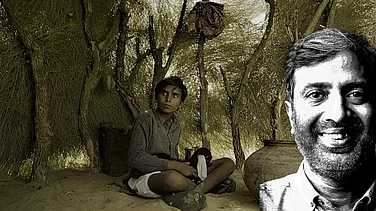
Babita Ashiwal speaks about shaping a narrative that moves away from stereotypical portrayals of mothers.
The conversation offers insight into the creative and technical decisions behind blending mathematics with emotional storytelling.
She reflects on character building, audience response and the evolving themes the series aims to explore.
As Maa Ka Sum continues to find its audience on Prime Video, the series has sparked conversations around single parenting, modern relationships and the idea of second chances at love. Backed by Eunoia Films, the show brings together mathematics and emotion in an unusual way, while placing a single mother's journey at its center.
Creative producer and showrunner Babita Ashiwal, an independent media professional with over two decades of experience across films, documentaries and commercials, has been closely involved in shaping the series from idea to execution. Drawing from her own life, Ashiwal brings a personal lens to the story, especially in its portrayal of a mother navigating love and identity beyond her role as a parent.
In this conversation with Aishani Biswas for Outlook, Babita Ashiwal speaks about building the world of Maa Ka Sum, developing its characters and the choices that shaped its storytelling. Edited excerpts:
When you came on board as a producer, what was the first thing you wanted to lock in creatively for Maa Ka Sum?
The story came to me from Prime Video, and I think they approached me because I am a single mother of a teenage son. It resonated with me instantly. One thing I was very clear about was that I did not want to portray a mother who always sacrifices her happiness for her child. We have seen that image too often. I did not want another helpless or suffering mother on screen. I wanted to break that idea and show a woman who can think about her own life as well.


The show mixes maths with emotion. How did you ensure the writing and treatment stayed balanced during development?
For me, it was important that even the maths felt real. We had two IIT graduates working on the algorithm used in the show. They spent months developing it so that every number and every calculation made sense. I did not want to put something random on screen. Even if not everyone understands maths deeply, those who do should feel that it is accurate.
The series also explores the idea of a single mother finding love again. What drew you to this theme of older women navigating dating?
It comes from life. When my son was quite young, I told him I wanted to start dating. He was not okay with it at first. We had long conversations about it, and eventually, he became part of that journey. We would even look at dating apps together. I have also seen similar situations among my friends. So the story comes from lived experiences rather than research. I feel that when you tell a personal story, people connect to it more honestly.


Vinita's journey feels both vulnerable and self-assured. How did you approach shaping her character within this space?
We wanted her to feel real. She is not always right. In the beginning, she makes wrong choices and does not fully understand what she wants. That is how people are in real life. We did not want a perfect character. We also wanted to show men differently. I believe in portraying what I call ‘green flag’ men. They can have flaws, but they should not be toxic. That was an important part of building the show's world.
How closely were you involved in shaping the screenplay and character arcs as the series progressed?
I was involved throughout. I am also the showrunner, so from the first page of writing to the final episode, I was part of the entire process. A lot of situations came from my own life, especially in terms of how a parent reacts or how a child behaves in certain situations. The writers would often come to me for small details and emotional resolutions.
Agastya’s graph shifts quite a bit through the show. Were there discussions around how far to push his character?
We had a lot of discussions around him. Agastya comes from a broken home and carries a sense of abandonment. When one parent leaves, the child depends heavily on the other. Even a small absence can affect them deeply. At the same time, I feel this generation is more self-focused. It is not necessarily wrong, but it is different from how earlier generations behaved. Agastya believes he is always right and that is why he has to learn things the hard way. He is not ready to bend or understand other perspectives, so his journey had to reflect that.

The visual treatment, especially the VFX used to represent mathematical thinking, stands out. How did that come together at the production stage?
We wanted a distinct visual language, something different from what has been done before. But we also realised that maths already has a certain visual familiarity for audiences. If we changed it too much, it might become confusing. So we found a balance where it felt fresh but still relatable. We worked very closely with the VFX team and pushed them quite a bit to get it right.
How did you approach casting, especially for roles like Vinita and Abhimanyu, to get the right emotional tonality?
Mona Singh was an easy choice. She looks at the story and the character first, and once she connected with it, she came on board immediately. For Abhimanyu, we wanted someone with a strong presence, and Ranveer Brar fit that perfectly. He brings a certain personality that stands out. Overall, we focused on getting strong actors. Mukesh Chhabra handled casting, and he has a great instinct for finding the right people for each role.
Looking back, was there anything in the development or execution phase that you feel could have been approached differently?
I would have liked more shooting days. No matter how much you prepare, there is always something more you can explore on set if you have the time. It gives you space to pause, rethink and even revisit scenes. But overall, I am happy that we got the opportunity to tell this story the way we did.


The show also touches upon themes like teen pregnancy. Where did that idea come from?
It is something that we wanted to explore more deeply, but we did not have enough time in this season. Any kind of pregnancy leaves a lasting impact on a woman, even if at that moment the decision feels simple. Over time, it does come back in different ways. It is not something that just goes away. I would like to explore this more in the next season.
The dynamic between Ira and Agastya is interesting, especially given the age difference. How did you approach that relationship?
For highly intelligent people, attraction is often about the mind. It is not always physical. When Ira meets someone who can match or even challenge her intellectually, that attraction is natural. The age difference is not the main issue. What matters more is that he is still a student and not fully mature. That is where the hesitation comes from.
Now that the show is out, what kind of response were you hoping for from the audience, and what have you received so far?
We did not expect teenagers to connect with the show the way they have. That has been a very pleasant surprise. We thought the primary audience would be women, but a lot of young people are also feeling seen through these characters. That has been very refreshing for us.