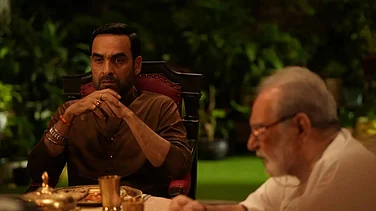
Don’t Interrupt While We Dance (2026) is a film centring queer joy, written, directed and produced by Anureet Watta.
The trans persons-led short follows a group of queer friends whose birthday party is disrupted by police. The film holds onto moments of joy, sensuality, romance and camaraderie within a shared home.
Against the backdrop of the trans bill, the film positions itself as an act of resistance, protection and reclamation of joy, with the team taking it to community screenings while crowdfunding its future.
It’s a terrifying thing to wake up and realise your own body is regulated by the state or by forces far beyond your control. This isn’t dystopian fiction but the lived reality for queer individuals in India, where progress feels like it’s slipping backwards by the day. Despite the chaos and the unfairness of it all, queer communities are able to create art as resistance and a tool to reclaim joy. Films, particularly, become a medium for filmmakers to reach out, to cope and to express themselves through the uncertainty of it all—bringing the mundane and the extraordinary onto the screen.
One such film is Don’t Interrupt While We Dance (2026), directed by Anureet Watta, which premiered at the International Film Festival Delhi (IIFD). The trans persons-led short film follows a group of queer friends, whose birthday party is disrupted by police. At its core, the film captures joy, sensuality, romance and camaraderie within a shared household that becomes a sanctuary. The film has emerged as a symbol of lived-in activism due to its involvement in protests around Transgender Visibility Day (March 31), along with resistance against the 2026 Transgender Persons (Protection of Rights) Amendment Act. Currently, the film continues to travel through community screenings to reach as many people as possible. Amidst all of this, the team remains open to crowdfunding support, though securing it continues to be an ongoing challenge.
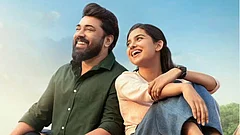


In conversation with Sakshi Salil Chavan from Outlook, director Anureet Watta, cinematographer Raqeeb and actor Bonita dissect the magic and madness behind making Don’t Interrupt While We Dance.
Edited excerpts:
Anureet, you’ve spoken about living within a queer household during the pandemic and how a poem you wrote inspired your crowdfunded film. How did that space and time shape the emotional and narrative fabric of Don’t Interrupt While We Dance?
Anureet: I think it came from this frustration I had when I started making films—that the moment you’re not a cis-het man making films, you get put into these boxes. You’re expected to make a certain kind of film. Even within that, when I started looking at queer cinema, a lot of it was just… sad. And I don’t think that’s the job of cinema.
Cinema is a place where people dream. Like when you watch Shah Rukh Khan in Dilwale Dulhania Le Jayenge (1995), you feel like, “I can also run after a train, I can also have that kind of love.” But when I watched queer films, it brought up the question— “Okay, if I survive… then what? What do I do after that?” There were no films telling me how to just live or have fun or have a love story that isn’t tragic.
During COVID, I was in a bad family situation. But after that, when I graduated and started living with my friends, queer joy became something very real to me. Our lives are still burdened by identity but there is also this lightness of just being. Cinema doesn’t give enough time to that. It keeps allocating time to suffering and to explaining queerness, as if it’s a problem. But being queer is not a conflict—it’s a way of seeing the world. It’s how we move through it, how we disrupt it and how it disrupts us.
So I think the film came from that. Then I kept asking—how do I make it more frivolous? More about pleasure? That’s why it became about dancing. Because I didn’t even know how to dance and I just felt like people who dance seem like they have it together. That became my aspiration—to understand that kind of freedom. And then also, the flip side, why are even these small pleasures interrupted?
A lot of films about queer and trans lives still orbit around the desire for acceptance from biological families even when chosen families exist. Your film seems to move beyond seeking that validation.

Anureet: Absolutely. I feel like that’s where most films stop—at acceptance. But what happens after that? Like even in my own life, my parents still don’t really get me. But I’m still making films because life doesn’t stop. I didn’t want the film to be about longing for acceptance. It was more on the tangent of, “Okay, even if that doesn’t happen, what do we do?” We still live, we still have friendships and build something. I feel like queer cinema shouldn’t be this separate category forever. It should just be…cinema. About queer people, yes, but also about everything else. Queerness shouldn’t be the problem that the film is solving.
Raqeeb: I think chosen family is something that is just part of queer lives. It’s not even a big idea, it’s just something we all experience. And also, it keeps changing. You build a home, then maybe that changes, then you build again. It’s not permanent. I think that’s something films are slowly starting to show—that it’s not just about coming out or being rejected. There’s a whole life beyond that. And that life also has its own complications, its own joys.
Bonita: Yes, I agree. For me, what I want to do is tell stories where the character is not just their identity. That their life doesn’t revolve only around being trans. They have personalities, they have their own habits, they fight, they joke. Even in a queer household, we fight a lot. I don’t want people to either hate me or love me because I’m trans. I just want to live my life. If I’m a bad person, call me that. If I’m good, call me that. Not because I’m trans. Stories that come from lived experience are something no one can take away.
In the current political climate in India, silence from those who have previously told stories about trans lives can feel particularly loud. How do you read that silence from filmmaker peers and acquaintances you once perceived as allies?
Anureet: I think… men will be men. Regardless of whether they are gay or not. Because patriarchy doesn’t disappear just because you’re queer. You grow up seeing certain structures, like your mother doing all the housework before you even understand your sexuality. This carries into how communities function. And I think the bigger issue is, people tell these stories, but they don’t include queer or trans people in the writing, casting or crew. So it feels like you picked up this identity as a “theme” for one film and then you move on to the next. Like today it is caste, tomorrow North-East, next queerness. It becomes opportunistic. And also, making political art means questioning who is making it and who is profiting from it. Because otherwise, it’s just token inclusion.
Raqeeb: I think Anureet explained it quite well. I would just add that sometimes we also need to understand that people might take time to process things. Especially people within the community—not everyone is in a position to speak immediately. But at the same time, if you are in a position of privilege and you have a voice and you’re choosing not to use it, then that’s also a choice which needs to be acknowledged.
How was the journey of crowdfunding for the film? Could you share any mundane or memorable bits from the same?

Anureet: When I started crowdfunding, it was actually very overwhelming because I was seeing who was contributing—like 100 rupees, 200 rupees, 500 rupees and it was mostly young people, like 18–19-year-olds, college students. Not people in power. That gave me a certain kind of freedom because I knew that if I had pitched this to a production house, they would have had so many conditions like who should act, what should be changed.
Even with the team, I wanted people I believed in, not just those with big resumes. Because how do you build a resume if no one gives you a chance? Especially for trans actors—if there’s barely one role a year, how do you gain experience? So a lot of people on set were doing things for the first time. Bonita was guiding actors, Raqeeb was sharing his experience with the crew. And we were also living together in my house for those six days so it became quite intimate.
The first two days we were all like, “Wow, this is so political, this is so great.” By the third day, “Now there’s drama.” People are like, “You didn’t match me on Hinge,” people are falling in love, falling out of love… all of that was happening. And I think that only happens when people feel free. Hence, dancing came out of that space. Most of the cast didn’t even know how to dance. We would just play music and everyone would just dance together.
Bonita: Yeah, I think when you’re working with friends, people see you as a friend first, not as someone who is in a certain position on set. You have to figure out how to say things without hurting each other, but also get the work done. But I think that’s also a learning experience. We were all figuring it out together and that comfort shows. Otherwise, everything becomes very controlled.
Raqeeb: Yeah, for me the dancing part was definitely the most fun. I remember I was literally dancing with my camera at one point. Like I wasn’t just shooting it, I was moving with them. I also think seeing people who don’t dance, just trying to dance…that’s always fun. Because there’s no pressure, no performance. It’s just people being themselves. And that energy is very different from something that is very rehearsed or technical.
There’s a deeply unsettling moment in Don’t Interrupt While We Dance where Safiya (Bonita) threatens to shoot herself, only to realise midway that the state does not care if she lives or dies. How did you arrive at writing a scene like that within a film that is otherwise rooted in joy?

Anureet: Every film has a kind of baseline of what is “normal” in that world. In most queer films, the baseline is that you’re queer, so you’re outside the norm. But here, the baseline was that they are already happy. They have lives and dreams. So when the police barges in, that’s actually the disruption. They’re trying to change that baseline. So Safiya aka Bonita’s monologue is about protecting what already exists. When I was writing it, I didn’t think it would become so close to reality later with the Trans bill and everything. But these things were always happening; maybe not in the same way.
For the performance also, we spoke a lot about the different stages of emotional transformation. Like at first, there’s hesitation; then there’s betrayal; then anger, when she turns the pistol towards the police. Bonita really captured those shifts. You can see it changing moment to moment.
Bonita: Yeah, I always saw that scene as more like a dream sequence. This scene is not about promoting violence, as some might see it on face value. It's more like a ventilation or a rant. You’re so angry, you want to say something, you want to react, but you can’t. So this becomes a conjured version of what you want to do.
This anger comes from very everyday things. Like even going out—it’s not simple. I have to think so many times before stepping out. People say trans people are very brave. But we don’t have a choice. If we are not brave, we don’t exist. So all of that builds up.
The songs in Don’t Interrupt While We Dance feel integral to its emotional and political language, from the closing track “Hum Khatarnak Hain”, which carries a defiant assertion to the end credits song that echoes the film’s title. Could you talk us through how these songs came into being, both in terms of songwriting and collaboration?
Anureet: The music was actually something I was very excited about from the beginning. I wrote the songs as well but it wasn’t like I was sitting and composing in a very structured way alongside our composer Geetanjali Kalta. It was instinctive. For example, we worked on the title track with a trans punk band and that collaboration was important to me because I didn’t want the sound to feel disconnected from the people the film is about.
Also, a lot of times when we talk about anger, we skip vulnerability. We go straight to rage. But for me, vulnerability comes first. There is fear, there is softness, there is confusion and then anger comes from that. I was also just interested in making something a bit excessive—almost an “angry queer item song,” if that makes sense. Because even in music, queer expression is often toned down or made palatable. At the same time, I think it’s important to acknowledge that even within marginalised communities, there are hierarchies, there are privileges. So the music also comes from that awareness.
What has it been like to watch the film travel through different audiences? Have any reactions or stories from viewers stayed with you in a way that altered how you see the film now?
Anureet: Our journey has just started, honestly. We’ve only just begun showing it in spaces, so it’s still unfolding. Right now, the most important thing is for the film to be watched, especially by people who may not already agree with it. Because it’s very easy to make films that only speak to people who already understand you.
I don’t think the purpose of this film is to be liked by everyone. It’s more about creating a conversation and making someone sit with something uncomfortable or rethink something. Even if two people change how they see something or question it, I think that’s enough.
Do you feel a tension between visibility and safety? What do you think about the afterlife of your film once it leaves your hands and enters spaces that may not always be empathetic?

Anureet: We’re living in a time where things are very unpredictable. People don’t just disagree quietly—reactions can be very extreme. So I don’t know what will happen. I don’t know how people will respond. But at the same time, I also feel like that can’t be the reason to not make something. And also, like I said, it’s important that the film doesn’t just stay within “safe” audiences. Because then, what’s the point? It has to reach people who might not agree, who might even be uncomfortable with it. Because otherwise we’re just talking to ourselves.
Bonita: Yeah, I think there is always going to be fear. We know the environment we’re in. But at the same time, we can’t stop. We have to keep speaking, keep making things and also support each other through it. Because if we stop, then nothing changes. You’re scared, but you still do it.
Over the years of conceiving, making and now releasing the film, has your understanding of joy shifted—particularly at a time where even joy can feel precarious? What does joy look like for you right now, outside of the film?
Bonita: Recently, I went back to my village for 12 days and I completely disconnected. I wasn’t on social media, I wasn’t really in touch with anything happening outside and that felt really nice. Just being with my family was very peaceful. Because otherwise everything becomes very overwhelming. So yeah, that brought me a lot of joy.
Anureet: For me, it’s been very small things. I have a lot of plants—around a 100 or something. So I spend a lot of time with them. I also like making things out of waste. I made this table out of cigarette boxes recently. And I’m making a lamp out of bottle caps right now. So it’s very small, tactile things. But they feel nice—creating something with your hands, without pressure.
Raqeeb: For me, it’s mostly just spending time with friends and being around people who support you. Especially in times like these, that becomes very important. Just knowing that you have people around you—that gives a lot of comfort.
What are your plans for the film going forward?
Anureet: Right now, we’re submitting it to festivals. We’ve already sent it to a bunch, waiting to hear back. But beyond that, something I’m really interested in is community screenings. Not just big cities, but also smaller towns and tier 2, tier 3 cities. We want to take the film to different spaces and also involve local artists, activists—people from those communities. We are doing community screenings across the country currently and crowdfunding for the same. The vision has always been to be a part of something larger and meaningful.