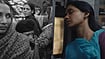
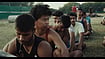
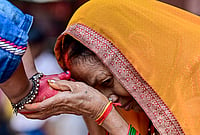
Abinash Bikram Shah's Elephants in the Fog won the Jury Prize in Un Certain Regard at Cannes Film Festival 2026.
It had made history for being the first Nepali selection in the category.
In this interview with Outlook, Shah talks about the film's birth, shaping up through the years, the wider landscape of State support in Nepal for cinema.
Abinash Bikram Shah’s debut feature, Elephants in the Fog, has been years in the making. After blazing through severable enviable incubation labs, the Nepalese film emerged in Un Certain Regard at this year’s Cannes Film Festival. Led by a ferocious, tender and altogether unforgettable Pushpa Thing Lama as the galvanising Pirati, the film circles travails and fragile dreams of a Kinnar community in a remote village flanked by a forest where wild elephants prowl. Embalmed with love and brittle fortitude, Elephants in the Fog traces a tenuous crisscross, a clash between private desire and survival entrenched in community kinship. When Pirati’s daughter goes missing, lines of prejudice and hostility sharpen as she sets out looking for answers and justice. The film slowly collects its seething wounds, cradled in Pushpa’s measured, bristling performance.
Few days after the film scooped up a historic Jury Prize at Cannes, Outlook’s Debanjan Dhar caught up with Abinash Bikram Shah for an exclusive interview. Edited excerpts from the conversation…
How deeply did the years of conversation you had with the Kinnar community breed into the way your script panned out? Did you have a prior basic narrative outline? What did that look like?
In practice, it was much simpler and far more human than that. It looked like living alongside people, listening, and slowly building trust. It meant sharing meals, listening to their personal histories, and understanding the minute mechanics of their daily survival.
This time was vital because I didn't arrive with a script. I arrived with a need to unlearn my own privileges and assumptions. I needed to understand their specific vocabulary, their humor, their fears, and how they navigate the changing landscape around them.
During that first year of meeting them, I didn't have a basic outline or a narrative structure. I only had 'what ifs' running through my head as I watched their lives unfold. That unstructured time is what ultimately gave the script its soul. It ensured that when I finally did sit down to write, every scene and every word was rooted in earned trust rather than cinematic fiction.


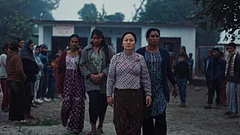
Pirati is in a singular dilemma. Her embrace of desire comes at the cost of losing her bearings within her community, the bonds of which are “mightier than blood”. In your interactions, how do you sense the community reflecting on these codes which might be borne of defence mechanisms?
The bonds within the community are mightier than blood because they were forged out of the sheer necessity for collective survival. When the outside world rejects you, the community becomes your sanctuary and your shield. The strict codes they live by were born as defense mechanisms to keep that sanctuary safe.
However, human nature is beautifully, tragically complex. While the collective codes demand total commitment to the group, the individual heart still longs for personal intimacy, romance, and love.
In my time with them, I realized that navigating this tension is a deeply private struggle. It is not about defying the community. It is about the quiet, universal human ache to be seen and loved as an individual. In Elephants in the Fog, Pirati’s dilemma reflects that exact, fragile boundary, the painful friction between the safety of the collective sanctuary and the deeply human pursuit of individual desire.

At what point of the script did the elephants enter as vital figures?
The elephants didn't enter the script as a pre-planned symbol. They arrived because of a truth shared with me by a mother within the community. She reminded me of an old story of the blind men and an elephant, how each man touches only a single part, the leg or the tail, and mistakes that fragment for the whole creature. She said society’s gaze toward the Kinnar or trans women community is exactly like those blind men. Mainstream society looks at them through a limited perspective. They refuse to see them as whole, complex human beings.
That conversation changed everything for me. It forced me to look deeper into the nature of the elephant itself. I realized that elephants, like the Kinnar community, live in a deeply matriarchal structure, fiercely protecting their own. Yet both are constantly dealing with the violent realities of displacement, vanishing sanctuaries, and a loss of belonging.
When you look closely, the way dominant systems treat nature is identical to the way they treat people. Whether it is based on caste, gender, or identity, it stems from the exact same human instinct: the urge to control, exploit, and push what we deem 'the other' into the margins. The elephants entered the script the moment I realized that their struggle for space and survival was a mirror of our own.
Besides the anxiety around rendering the community’s experiences with authenticity and dignity as a cis man, what facets did you feel you were most worried about?
Beyond the vital responsibility of authenticity, my deepest concern was about protecting the human dignity of my characters. I wanted to be incredibly vigilant about not falling into the familiar cinematic trap of victimization or what is often called 'misery porn.' It is far too easy to reduce marginalized lives entirely to their suffering, stripping them of their true dimensions.
I was focused on how to balance the heavy, political realities of their lives with their immense capacity for joy, humor, and everyday mundane beauty. They are not just victims navigating a harsh world; they are people who laugh fiercely, who look after one another, and who share quiet, deeply ordinary domestic moments.
I didn't want the audience to look at them with pity. Pity is distant and hierarchical. It judges from above. I wanted to replace pity with empathy, the kind that demands intimacy and absolute equality. For me, empathy means the audience doesn't just feel for them, but actually sits with them.
How much of Pirati’s steeliness came from Pushpa herself? Were there things to Pirati that you’d envisioned which Pushpa enhanced further or brought anew?
Pushpa is Pirati. There was never a distinct boundary between them.
During my initial research, I met Pushpa very briefly and was instantly captivated by her presence and personality. Much later, I went back to find her to see if she would be interested in acting. I will never forget that day. My casting director and I were an hour late, and when we finally arrived, the sheer, unmitigated anger in her gaze was unforgettable. Right then, I knew the search was over. She brought something extraordinarily special to the screen. She carried dignity, profound emotional intelligence, vulnerability, and a spine of pure steel all at once.
However, we faced a hurdle early on. Like many in Nepal, her idea of performance had been shaped by the heightened, over-the-top aesthetics of South Asian soap operas. She initially believed that 'acting' required a layer of artifice that she needed to show her performance. My greatest challenge was helping her unlearn that theatricality. I needed her to understand that Pirati wasn't a fictional caricature; she was a vessel for Pushpa’s own lived history and the histories of thousands like her. We spent months in deep conversation and workshops, but the breakthrough didn't come from a specific technique, it came from trust.
Once that trust was established, the performance evaporated. When Pushpa realized that she didn’t need to become someone else, that simply being herself was her most powerful cinematic tool, the character began to flow. It ceased to be an act. It was just the truth.

Can you expand on how you fine-tuned your cast’s approach to performance, dialling down their recourse to a heightened pitch given a Bollywood influence?
It required a total shift in their understanding of what a camera does. They treat the camera as a spectator they need to perform for. They externalize everything in front of it, tending to show every single feeling they have. My job was to teach them that the camera isn't a spectator, it is a quiet, intimate friend sitting in the room with them.
To dial down that heightened pitch, we didn't just talk about 'acting less'. We focused on doing more. I occupied them with the physical reality of their daily, mundane routines. When an actor is actively chopping vegetables, washing clothes, or managing the chaotic, physical rhythm of a household on camera, their brain naturally switches from 'performing' to pure instinct. The camera disappears because the body is too busy navigating the immediate reality of the task.

You didn’t rehearse with scripted dialogues per se? You’d give them situations to respond to?
Exactly. If you hand a non-professional actor a page of scripted dialogue, you instantly trap them in their own heads. They stop living in the moment and start trying to think how to act, remember the exact sequence of words, which immediately brings back that wooden, artificial 'acting' style. My process is entirely about drawing the story directly out of them.
Instead of lines, I would give Pushpa and the other actors an emotionally charged scenario. Because they didn't have pre-written lines to lean on, they had to listen to each other with absolute intensity. They had to respond using their own vocabulary, their own sharp humor, and their own defense mechanisms. If they argued, the anger was spontaneous. If they laughed, the joy was genuine.
We filmed and recorded these improvisations, watched what worked, and then my co-story and dialogue writer, Sandeep Badal, would rewrite the structure of the scene based entirely on the organic truths that came out of those sessions. By the time we actually shot the film, they weren't delivering lines, they were living out realities we had already discovered together.

Could you mention some of the visual references you’d discuss with your DP Noé Bach other than Nan Goldin’s photography? What about Bach made you wish to team with him?
Outside of Nan Goldin’s raw, intimate textures, Noé and I looked closely at the naturalistic lighting, cinematic language, and tight, tactile frames in the films of Andrea Arnold to create a sense of internal heat and physical atmosphere. We also drew immense inspiration from the quiet, domestic compositions of Hou Hsiao-hsien. We wanted to capture that same lived-in intimacy, but within our own 1.66:1 aspect ratio. We didn't want to look at Nepal through a tourist's lens. We wanted references that treated space and bodies with a sense of absolute reality.
What made me want to team up with Noé was his incredible sensitivity to human emotion, his background in contemporary French independent cinema, and the fact that he deeply connected with my short film, Lori. I have found that many European cinematographers tend to have a very distinct relationship with natural light and character-driven framing. They know how to be patient with a scene.
More than beauty, Noé and I were interested in presence. That was the guiding principle for both of us. We wanted the camera to feel close to the emotional life of the characters, not to observe them from a cold distance. We didn't want the images to feel 'composed' in a clinical way; we wanted them to feel discovered. The goal was to create an intimacy so deep that the audience forgets the camera is there, leaving only the truth of the people on screen. Because Noé was coming from the outside, he didn’t carry any preconceived notions or cultural biases about Nepal. He didn't look at our landscape or the Kinnar community as 'exotic.' He saw them simply as human beings moving through space.

I’m curious about the various incubation labs. It’s been a journey of five-six years. Garnering support from the Asian Project Market at Busan, both the Sundance Institute’s Screenwriters and Directors Labs, Berlinale World Cinema Fund, Hubert Bals Fund, Oxbelly, and Venice Gap-Financing Market…the list is incredibly illustrious. Talk to me about this long process of honing the script at all these labs, any suggestions from mentors and fellow participants that particularly affected an angle or how you perceived the script.
My subject matter is deeply local, and while international labs helped me sharpen its universal resonance, I want to be clear about what that resonance means. I completely refuse to make a story simple or easily accessible just to fit a Western or global market. I do not believe in translating, compromising, or simplifying a culture for a foreign audience. Exoticism or hand holding dilutes the truth of the work.
The reality of independent cinema is that gathering funding takes years. It is a long, grueling waiting game. For me, these labs became a sanctuary during that waiting period. They allowed me to stay completely immersed in the world of my film, keeping me anchored in the writing when the financial machinery was slow. As for the mentors themselves, I have immense respect. Even though it was genuinely hard for them to initially grasp the cultural nuances or keep track of the local names, they didn't just give surface-level advice. They actually went back and did their own deep research after reading my script just to understand our world better. To witness that level of dedication from international filmmakers was a truly beautiful thing. My ultimate suggestion to fellow filmmakers who are planning to step into these labs is to protect their core. The labs didn't change the direction of my film; they tested its foundations and made them unbreakable.

Going through so many labs, do you find it a task to preserve your original vision and voice amidst a surge of inputs? How do you stay centred?
It is an immense psychological challenge. The feedback across these labs was overwhelmingly generous, but when you hear so many brilliant, conflicting opinions from world-class mentors all at once, it is incredibly easy to get disoriented. You can easily lose your own compass. Sometimes, a mentor's feedback would be so intellectually captivating that I would try to force it into the script, only to realize weeks later that it didn't fit the soul of the movie. But even those wrong turns were invaluable. Trying on a bad note forced me to defend my story, and in doing so, I got to know my characters on a much deeper, more intimate level. I quickly learned that staying centered means knowing what advice to accept and what to reject. That clarity only comes when you are absolutely certain of what your film is about at its core.
Are there any marked differences between the final film and the first draft and treatment with which you attended the Sundance writing lab? Could you specify a few instances?
Of course. Cinema is a continuous process of rewriting. You rewrite when you are typing the draft, you rewrite on set with the actors, and you rewrite a final time in the editing suite. The only absolute constant throughout that entire evolution is the core thematic truth of what you want to say. Structurally, the first draft was much more crowded. It featured a larger ensemble of characters, and the narrative perspective constantly shifted between Pirati and Joon. Scriptwriting labs was a major turning point for me in terms of discipline, it helped me strip away the external noise and realize that the emotional spine of this film belonged entirely to Pirati. After the lab, I completely consolidated the point of view, focusing single-mindedly on Pirati’s internal journey.
Beyond structure, the micro elements changed constantly. The specific treatment of the scenes and the dialogue shifted organically based on my scenario workshops with the actors. Then, in the editing room, we dismantled the script's chronology once again, re-arranging the placement of key scenes to create a clearer, more evocative emotional rhythm for the audience.
I embrace these shifts entirely. Filmmaking is not about fiercely guarding a piece of paper; it is a living, breathing, collaborative process. Every actor who stepped in front of the lens and every crew member who worked behind it left a distinct fingerprint on the soul of this film.

The film boasts what I suspect will endure as one of the year’s most powerful, haunting finales. Did you have a sense of the shape and texture of the ending while developing the script?
Once the metaphor of elephants was brought into the script, the final fifteen pages of the film never changed, despite going through all those intensive international labs.
The reason that finale remained untouched is because it is the exact emotional and thematic summit of the entire film. Everything I wanted to say, everything the story carries, flows directly into that final movement. When you are developing a project for five or six years, you might experiment with the path, but you must remain absolute about the destination. I knew exactly what truth I wanted to leave the audience with, and it was my responsibility as a filmmaker to protect that ending fiercely.
Are you hopeful that Pirati will find her happiness? Or do you only see her moving from one place to another in a tenuous way?
For me, her journey isn't about 'happiness' in a conventional, neat sense. It is about belonging. Happiness can be fleeting, but belonging is something entirely different. It is an internal anchor. By the end of the film, she finds that belongingness not just with her family and community, but deep within herself.
Her physical movement from one place to another may still be a struggle, but she is no longer wandering lost. She has found her grounding because she finally knows exactly who she is. No matter how fragile her external world might be, her internal world is completely unshakeable. And in that self-realization, there is a profound, enduring hope.
Central to such an independent film is also the role of a producer who’s well-versed in the lab circuits and can leverage the project accordingly. Could you share how integral your key producer Anup Poudel has been in your directorial journey?
Anup is my creative backbone. We have been working together since 2011, and over the last fifteen years, we have developed a shorthand and a trust so deep that I know he is there to fiercely protect me and my work. Because Anup actually started his own journey as a writer-director, he possesses a rare empathy. He knows exactly how to handle the fragile mechanics of a director’s mind and vision with immense care.
Having said that, this film was a massive undertaking, and my co-producers stepped in with incredible dedication to make it a reality. However, a larger pool of producers inevitably means a surge of inputs, especially during the vulnerability of post-production. While every single note came from a place of love and a shared desire to make an excellent film, it also meant I had to step up as a filter. As a director, you have to look past the surface of the feedback and understand the perspective it is coming from, ensuring that amidst all the well-intentioned voices, the soul of the film remains entirely intact.

How vital is it for filmmakers today to have a keen understanding of sales agents and positioning their project for the best visibility long before the premiere?
It is absolutely vital, but you have to compartmentalize it. In today’s landscape, you cannot afford to be naive about the market. Understanding sales agents and strategic positioning long before your premiere is what bridges the gap between a film sitting on a hard drive and a film reaching a global audience.
However, there is a dangerous trap here, you must understand the market, but you can never let it direct your movie. If you start writing a script or framing a shot to please a sales agent or fit a festival trend, you kill the honesty of the work. The strategy must always be to make the most uncompromising, deeply truthful film first. Once the soul of the work is locked, you use your market knowledge to find the right partners to champion it. You use positioning to illuminate your vision, never to compromise it.
Are you optimistic that the Cannes prize and the recognition would ease the mounting of your next project? Do you already sense a certain interest from international financiers/programmers/sales agents/buyers in your journey?
The recognition and the award will definitely make the path somewhat smoother, particularly when it comes to navigating the industry, gaining momentum, and securing a budget. It opens doors that were previously heavy to push.
But while the financial and logistical mountain might become slightly easier to climb, the creative process remains completely unchanged. Prizes doesn’t give you a head start on the blank page. For the next project, you still have to start from absolute zero. You still have to face the same doubts, the same search for truth, and the same rigorous work of building a world from the ground up. The industry takes a step forward, but as an artist, you always begin again at the starting line.

Increasingly, one notices a strengthening spate of Nepalese filmmakers, producers and artists claiming the global stage: Nabin Subba, Min Bahadur Bham, Deepak Rauniyar, Ram Krishna Pokharel, Fidel Devkota, Rajan Kathet... It’s remarkable. Do you find State support being put in place? Do you see structural measures being implemented for the film industry, especially the independent lot?
Historically, not at all. The wave of global recognition we are seeing right now is entirely self made. It is the result of independent filmmakers bleeding, sacrificing, and navigating the global film grid completely on their own, without any foundational structural support or institutional funding from the State. Up to this point, our infrastructure has lagged far behind our talent. However, I am hopeful right now. We have entered a completely new era in our political landscape, a government forged in the wake of a powerful, youth led movement. For the first time, we have a leadership that instinctively understands contemporary culture and art. Our Prime Minister himself is an artist, a lyricist, and a creator.
Because of this generational shift, I am optimistic that the State will finally look at cinema not merely as fleeting entertainment, but as a crucial pillar of our national identity and a potent form of cultural diplomacy. The independent filmmaking community has proven its value on the world stage over and over again. My hope now is that this new government will meet us halfway, establishing the structural measures, soft loans, script development funds, production funds needed to turn these isolated global victories into a sustainable, thriving industry.

Are you thinking of any new project? Do you simultaneously think of several ideas of toying with? Is there a chance of A Season of Dragonflies being revived in the near future?
Yes, I am currently developing two projects. The first is indeed the revival of ‘Season of Dragonflies’, which has now evolved into a new title: ‘The Goddess, The Demon, and the Dragonflies’. The script is in its advanced stages, and I am planning to do one final rewrite to sharpen it completely before handing it over to my producers.
Simultaneously, I am working on a second project titled ‘Thar’, which is currently in early development and the treatment phase. It is always exciting to balance two different worlds at once. Both allow me to continue exploring the deep, complex human terrains that fascinate me. Right now, I am feeling a massive surge of creative excitement for ‘Thar’, but let's see how both shapes come together as they evolve.